


Exploring Colombian cuisine is like opening a treasure chest of flavors. Each dish, from comforting Ajiaco to hearty Bandeja Paisa, tells a story of tradition and community. Every bite offers a taste of the rich culture and warmth that Colombian food brings to gatherings. Let’s uncover the essence of these authentic meals together. Join me in celebrating the joy they add to our tables.
Ajiaco: The Heartwarming Chicken Soup
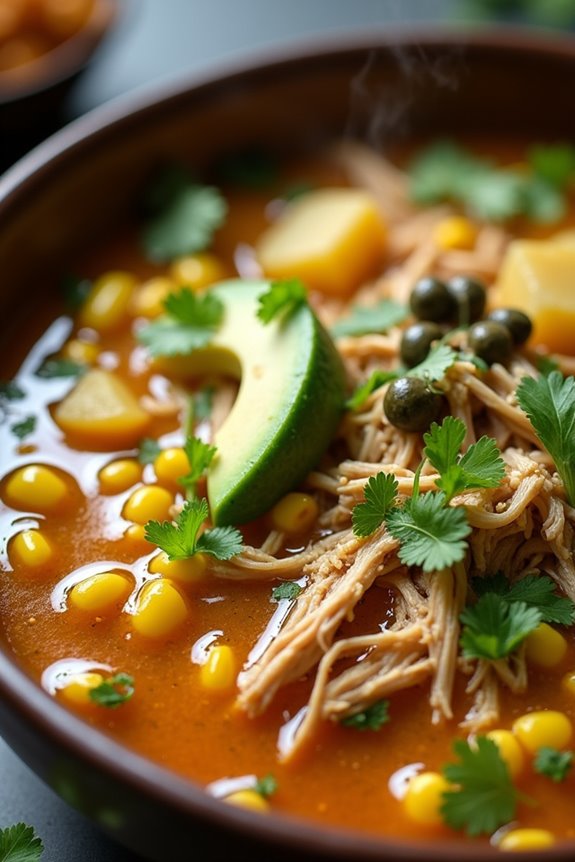
Ajiaco is a traditional Colombian chicken soup that’s particularly cherished in the capital city of Bogotá. This hearty dish isn’t only a comfort food but also a staple for family gatherings and celebrations. The combination of chicken, potatoes, and the distinct flavor of guascas (a Colombian herb) makes Ajiaco a soothing meal that warms the soul.
Often served with avocado and capers on the side, this soup is both nourishing and flavorful, making it a perfect choice for any occasion.
Making Ajiaco is a delightful culinary experience that brings together simple ingredients to create a rich and satisfying dish. As you prepare this soup, you’ll be enveloped by the wonderful aromas that fill your kitchen, inviting everyone to gather around the table.
Whether you’re new to Colombian cuisine or a seasoned enthusiast, this recipe will help you create a delicious pot of Ajiaco that’s sure to impress your family and friends.
Ingredients (Serves 4-6):
- 1 whole chicken (about 3-4 lbs), cut into pieces
- 8 cups of water
- 4 medium potatoes (2 Russet and 2 Yukon Gold), peeled and diced
- 2 ears of corn, cut into thirds
- 1 medium onion, chopped
- 2 garlic cloves, minced
- 1 cup of chopped fresh cilantro
- 2 teaspoons of dried guascas (available in Latin markets)
- Salt and pepper to taste
- Avocado slices (for serving)
- Capers (for serving)
- Cream (for serving)
Cooking Instructions:
- Prepare the Chicken Broth: In a large pot, combine the pieces of chicken and 8 cups of water. Bring to a boil over medium-high heat. Once boiling, reduce the heat to a simmer and skim off any foam that rises to the surface. This will help guarantee a clear broth.
- Add Aromatics: Once the chicken is simmering, add the chopped onion and minced garlic to the pot. These ingredients will infuse the broth with flavor. Continue to simmer for about 30 minutes, until the chicken is cooked through and tender.
- Remove and Shred Chicken: Carefully remove the chicken pieces from the pot and set them aside to cool slightly. Once cool enough to handle, shred the chicken into bite-sized pieces, discarding the bones. Return the shredded chicken to the pot.
- Incorporate Potatoes and Corn: Add the diced potatoes and the corn pieces to the pot. These will thicken the soup and add texture. Let the soup simmer for about 20 minutes, or until the potatoes are tender.
- Season with Guascas: Stir in the dried guascas along with the chopped cilantro. These herbs bring the unique flavor that makes Ajiaco special. Season the soup with salt and pepper to taste, and let it simmer for another 10 minutes to meld the flavors.
- Serve: Ladle the Ajiaco into bowls and serve hot. Provide slices of avocado, capers, and cream on the side for guests to add to their soup according to their preference.
Extra Tips:
When cooking Ajiaco, using a mix of different potatoes is key to achieving the perfect consistency; some will break down and thicken the broth, while others hold their shape for texture.
If you can’t find guascas, you can substitute with a mix of dried oregano and thyme, although the flavor will differ slightly. Additionally, feel free to adjust the seasoning according to your taste, and don’t skip the accompaniments—they add a delightful creaminess and acidity that perfectly complement the soup!
Arepas: The Versatile Corn Cake

Arepas are a beloved staple in Colombian cuisine, known for their versatility and simplicity. Made primarily from ground corn dough, these delightful corn cakes can be enjoyed at any meal of the day. They can be grilled, baked, or fried and are often stuffed or topped with a variety of fillings, making them a perfect canvas for different flavors.
Whether you prefer them filled with cheese, avocado, or meats, arepas are sure to please everyone at the table. This dish isn’t only easy to prepare but also customizable to suit individual preferences. You can experiment with different types of cheese, add spices to the dough, or even incorporate vegetables for a unique twist.
The beauty of arepas lies in their adaptability, allowing you to create a unique culinary experience with every batch. Now, let’s plunge into making these delicious corn cakes that serve 4-6 people.
Ingredients
- 2 cups of pre-cooked cornmeal (arepa flour)
- 2 ½ cups of warm water
- 1 teaspoon of salt
- 1 tablespoon of vegetable oil (for cooking)
- Optional fillings: cheese, avocado, shredded beef, or chicken
Cooking Instructions
- Mix the Dough: In a large mixing bowl, combine the pre-cooked cornmeal and salt. Gradually add the warm water while mixing with your hands or a spoon until a soft dough forms. The dough should be moist but not sticky. Let it rest for about 5-10 minutes to allow the cornmeal to absorb the water fully.
- Shape the Arepas: Divide the dough into equal portions, depending on the size you prefer. For medium-sized arepas, aim for about 6-8 balls. Roll each ball in your hands to form a smooth sphere and then flatten it gently to create a disc about ½ inch thick. Make sure the edges are smooth and even.
- Cook the Arepas: Heat a skillet or griddle over medium heat and add a tablespoon of vegetable oil. Once the oil is hot, place the arepas in the skillet, leaving space between them. Cook for about 5-7 minutes on each side or until they’re golden brown and develop a slightly crispy crust. If you prefer softer arepas, you may reduce the cooking time slightly.
- Bake for Extra Crispiness (Optional): If you like your arepas crispy on the outside and soft on the inside, preheat your oven to 350°F (175°C) after cooking in the skillet. Transfer the arepas to a baking sheet and bake for an additional 10 minutes.
- Fill and Serve: Once cooked, you can slice open the arepas to fill them with your desired ingredients, such as cheese, avocado, or any other fillings you prefer. Serve warm and enjoy!
Extra Tips
When cooking arepas, feel free to get creative with your fillings and toppings. Cheese is a classic choice, but you can also try adding sautéed vegetables, beans, or even scrambled eggs for breakfast-style arepas.
If the dough feels too dry, you can add a little more water, but be careful not to make it too wet. Additionally, using a cast-iron skillet will give you the best results for a perfect crust. Enjoy your culinary adventure with these versatile corn cakes!
Bandeja Paisa: A Hearty Medellín Platter

Bandeja Paisa is a signature dish from the Antioquia region of Colombia, particularly beloved in Medellín. This vibrant platter is a feast for the senses, showcasing a variety of flavors and textures that reflect the rich culinary traditions of the region. Traditionally, Bandeja Paisa is served on a large tray and features an array of ingredients including rice, beans, grilled meats, avocado, and fried plantains. It’s a meal that isn’t only satisfying but also tells a story of the hardworking paisas, who created this dish to fuel their demanding lifestyles.
This iconic dish brings together a medley of ingredients that harmonize effortlessly, each playing a significant role in the overall experience. The combination of savory, sweet, and creamy elements creates a well-rounded meal that can serve as a delicious representation of Colombian culture. Perfect for gatherings or special occasions, Bandeja Paisa is sure to impress your family and friends with its colorful presentation and hearty flavors.
Ingredients (Serves 4-6)
- 2 cups of cooked white rice
- 1 cup of red or black beans (cooked and seasoned)
- 1 lb of ground beef
- 1 lb of pork belly (chicharrón), fried until crispy
- 4 sausages (preferably chorizo)
- 2 ripe plantains, sliced and fried
- 4 eggs (fried)
- 1 avocado, sliced
- 1/2 cup of hogao sauce (a Colombian tomato and onion sauce)
- Fresh cilantro (for garnish)
- Salt and pepper (to taste)
- Lime wedges (for serving)
Cooking Instructions
- Prepare the Rice: Start by cooking 2 cups of white rice according to package instructions. Use a rice cooker or stovetop method, ensuring the rice is fluffy and well-cooked. Set it aside once done.
- Cook the Beans: If using canned beans, rinse and drain them. Otherwise, soak red or black beans overnight and cook them until tender. Season with salt and a bit of cumin for extra flavor. Keep them warm.
- Cook the Ground Beef: In a skillet over medium-high heat, add the ground beef. Season with salt and pepper, cooking until browned and fully cooked through. Drain any excess fat and set aside.
- Fry the Pork Belly (Chicharrón): In a separate skillet, fry the pork belly until it’s crispy and golden brown. Remove from the pan and drain on paper towels to absorb excess oil.
- Cook the Sausages: In the same skillet used for the pork belly, add the sausages and cook until browned and cooked through. Remove from heat and slice them into pieces.
- Fry the Plantains: Slice the ripe plantains diagonally and fry them in hot oil until they’re golden brown on both sides. Drain on paper towels and set aside.
- Prepare the Eggs: In a non-stick skillet, fry the eggs to your desired doneness (sunny-side up is traditional for Bandeja Paisa).
- Assemble the Bandeja Paisa: On a large serving platter, start by placing a generous portion of rice. Next to it, add the cooked beans, ground beef, pork belly, sausage slices, fried plantains, and fried eggs. Garnish with sliced avocado, hogao sauce, and fresh cilantro.
- Serve: Present the Bandeja Paisa with lime wedges on the side to be squeezed over the dish as desired.
Extra Tips
When preparing Bandeja Paisa, it’s important to use high-quality and fresh ingredients to enhance the flavors of the dish. Don’t hesitate to adjust seasoning to your preference, particularly with the hogao sauce, which adds a delightful depth to the meal.
If you’re short on time, consider prepping components like the beans and rice a day in advance. Finally, remember that the beauty of this dish lies in its presentation, so take your time to arrange the ingredients on the platter for a mouthwatering display. Enjoy your culinary journey into Colombian culture!
Sancocho: A Traditional Colombian Stew
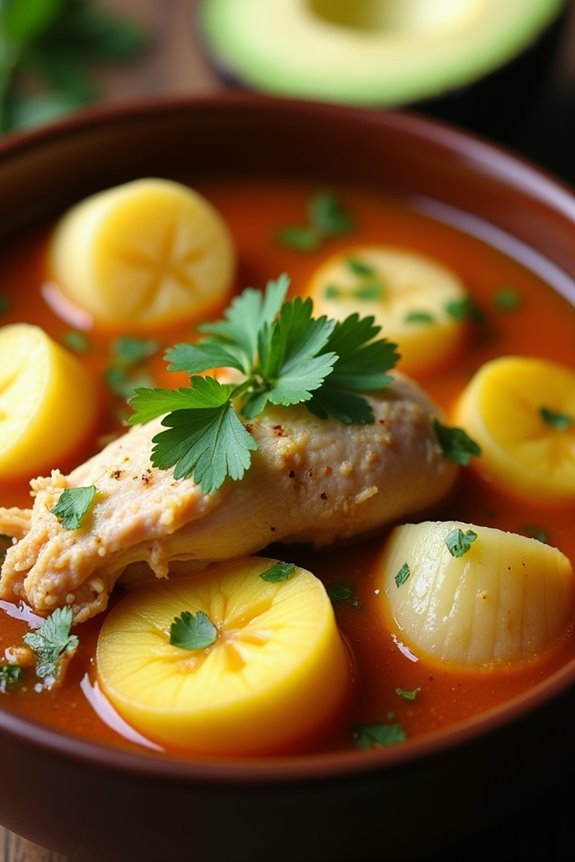
Sancocho is a hearty and flavorful stew that holds a special place in Colombian cuisine. This dish is a celebration of the country’s rich agricultural diversity, combining a variety of meats, vegetables, and spices to create a comforting meal that warms the soul. Traditionally enjoyed on weekends and during family gatherings, sancocho is often served with rice and avocado, making it a complete and satisfying dish.
The beauty of sancocho lies in its versatility; each region of Colombia has its own variations, often influenced by local ingredients and personal family recipes. While the base of the stew remains consistent, you can customize it by choosing different meats, such as chicken, beef, or fish, and incorporating seasonal vegetables. This dish not only showcases the flavors of Colombia but also brings people together, making it a cherished staple in many households.
Ingredients (Serves 4-6)
- 1 lb chicken pieces (or beef, or fish)
- 2 medium potatoes, peeled and cut into chunks
- 1 medium yuca, peeled and cut into chunks
- 1 plantain, peeled and sliced
- 1 medium carrot, sliced
- 1 onion, chopped
- 2 garlic cloves, minced
- 1 bell pepper, chopped
- 8 cups chicken or beef broth
- 2 tablespoons vegetable oil
- 1 teaspoon cumin
- 1 teaspoon oregano
- Salt and pepper to taste
- Fresh cilantro for garnish
- Lime wedges for serving
Cooking Instructions
- Prepare the Ingredients: Before you begin cooking, gather all your ingredients and prepare them by peeling, chopping, and slicing as necessary. This will make the cooking process smoother and more efficient.
- Sauté the Aromatics: In a large pot, heat the vegetable oil over medium heat. Add the chopped onion, bell pepper, and minced garlic. Sauté these ingredients for about 5 minutes, or until they become soft and fragrant. This step builds the foundation of flavor for your stew.
- Brown the Meat: Add the chicken (or your chosen meat) to the pot and cook for about 5-7 minutes, stirring occasionally until the meat is browned on all sides. This enhances the flavor and adds a rich depth to the stew.
- Add the Broth and Spices: Pour in the chicken or beef broth and bring it to a boil. Once boiling, add the cumin, oregano, salt, and pepper. Stir well to combine the flavors, then reduce the heat to a simmer.
- Incorporate the Vegetables: Carefully add the potatoes, yuca, plantain, and carrot to the pot. Stir everything together and let it simmer for about 30-40 minutes, or until the vegetables are tender and the meat is cooked through. Check occasionally and add more broth or water if needed to keep the stew from drying out.
- Finish and Serve: Once everything is cooked and the flavors have melded together, taste and adjust the seasoning if necessary. Serve the sancocho hot, garnished with fresh cilantro and with lime wedges on the side. It pairs beautifully with rice and avocado.
Extra Tips
To make your sancocho even more authentic, consider using a combination of meats such as chicken and beef, or adding corn on the cob for extra sweetness and texture.
Don’t be afraid to experiment with different vegetables depending on what you have on hand or what’s in season. Remember that the key to a great sancocho is allowing the flavors to develop, so let it simmer gently and enjoy the wonderful aromas filling your kitchen.
Empanadas: Flavorful Stuffed Pastries
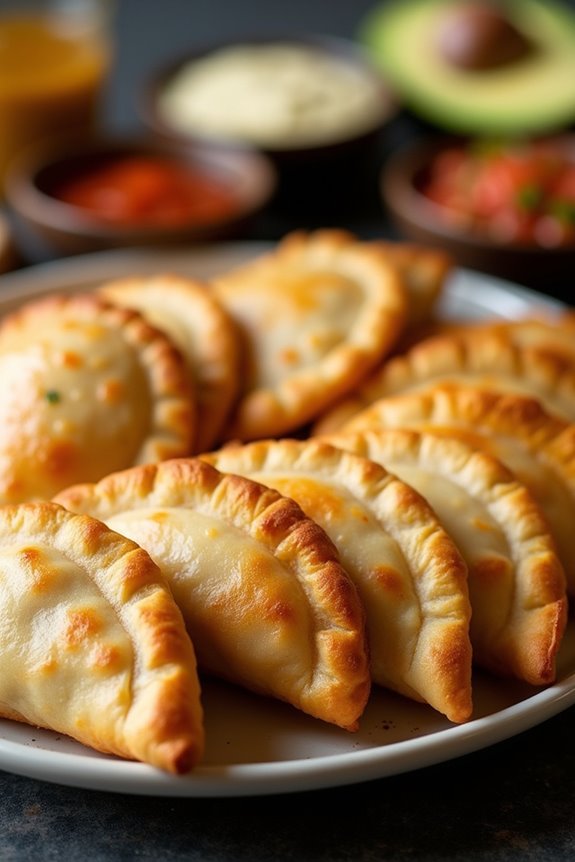
Empanadas are a beloved snack in Colombian cuisine, known for their crispy exterior and savory filling. These delightful pastries are often enjoyed as appetizers or snacks, making them perfect for gatherings or family meals. While there are various regional variations, Colombian empanadas are typically made with a cornmeal dough and filled with a combination of ingredients that may include meats, potatoes, and spices, offering a burst of flavor in every bite.
The beauty of empanadas lies not only in their taste but also in their versatility. They can be filled with a variety of ingredients to suit your palate, making them an easy dish to adapt. Whether you prefer a classic filling of ground beef and potatoes or a vegetarian option with cheese and spinach, empanadas are sure to satisfy everyone around the table. Here’s a simple recipe to create your own Colombian empanadas at home, serving 4-6 people.
Ingredients
- 2 cups of cornmeal (masa harina)
- 1 ½ cups of warm water
- 1 teaspoon of salt
- 1 tablespoon of vegetable oil
- 1 cup of cooked, shredded beef or chicken (or any desired filling)
- 1 cup of mashed potatoes
- 1 teaspoon of ground cumin
- ½ teaspoon of paprika
- ½ cup of chopped onions
- 1-2 tablespoons of vegetable oil for frying
- Optional: avocado, salsa, or ají for serving
Cooking Instructions
- Prepare the Dough: In a large bowl, combine the cornmeal, salt, and warm water. Mix the ingredients together until a soft dough forms. You may need to adjust the water or cornmeal slightly to achieve the right consistency. The dough should be pliable and not stick to your hands.
- Make the Filling: In another bowl, mix the cooked, shredded meat (or desired filling) with the mashed potatoes, chopped onions, ground cumin, and paprika. Confirm that the mixture is well combined and seasoned to taste. You can add salt or pepper if necessary.
- Divide the Dough: Once the dough is prepared, divide it into small balls, approximately the size of a golf ball. Flatten each ball into a round disc, about ¼ inch thick. You can use a rolling pin or your hands to achieve this.
- Fill the Empanadas: Take a disc of dough and place a tablespoon of the filling in the center. Fold the dough over to create a half-moon shape and pinch the edges tightly to seal. You can use a fork to crimp the edges for an extra seal and decorative touch.
- Fry the Empanadas: In a large skillet, heat the vegetable oil over medium heat. Once the oil is hot, carefully add the empanadas in batches to avoid overcrowding. Fry them for about 3-4 minutes on each side or until they’re golden brown and crispy. Use a slotted spoon to remove them from the oil and place them on paper towels to drain excess oil.
- Serve: Serve the empanadas hot with avocado, salsa, or ají on the side for dipping. Enjoy your homemade Colombian treat!
Extra Tips
When making empanadas, it’s essential to ascertain that the filling isn’t too wet, as this can cause the dough to become soggy and difficult to seal. You can also experiment with different fillings, such as cheese, vegetables, or a mix of meats to cater to different tastes.
If you want to save time, consider preparing the filling a day in advance and refrigerating it. Additionally, empanadas can be baked instead of fried for a healthier option; just brush them with a little oil before baking to achieve a nice golden color.
Lechona: Roasted Pork With Rice
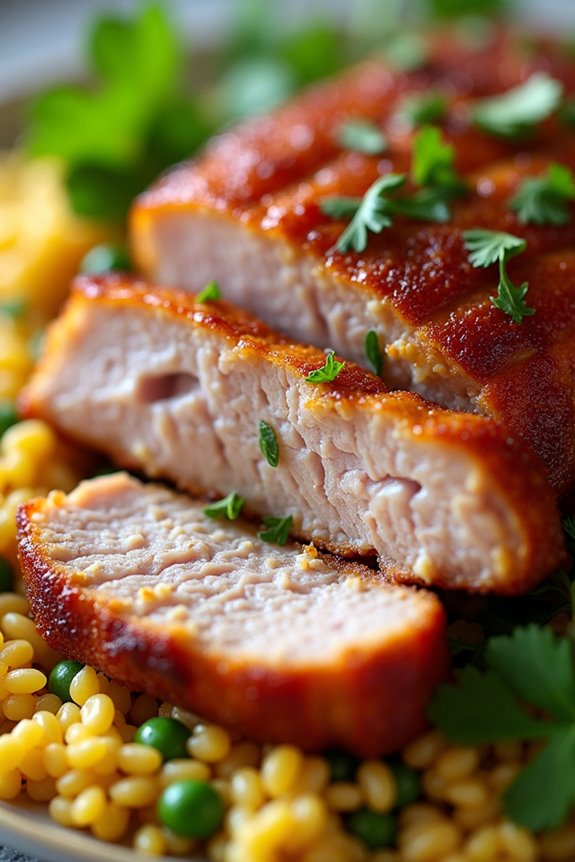
Lechona is a beloved Colombian dish that embodies the rich culinary traditions of the country. This festive meal is known for its succulent roasted pork, flavored with a variety of spices, and served alongside a delicious filling of rice and peas. Traditionally, lechona is prepared for special occasions and family gatherings, making it a centerpiece of celebration in Colombian culture.
The slow-roasting method guarantees that the pork is tender and infused with flavor, while the rice filling adds a satisfying element to the dish.
To make the perfect lechona, it’s vital to start with a good-quality pork leg, ideally one that’s been sourced from a local butcher. The marination process is fundamental, as it allows the spices to penetrate the meat, resulting in a flavor-packed dish. The combination of the crispy skin and the flavorful filling creates a harmony of textures and tastes that will delight your guests.
Now, let’s explore the ingredients and cooking instructions to prepare this authentic Colombian delicacy for 4-6 people.
Ingredients
- 1 whole pork leg (about 4-5 pounds)
- 2 cups cooked white rice
- 1 cup green peas (fresh or frozen)
- 1 tablespoon garlic powder
- 1 tablespoon onion powder
- 1 tablespoon cumin
- 1 teaspoon paprika
- 2 teaspoons salt
- 1 teaspoon black pepper
- 2 tablespoons vegetable oil
- 1 cup chicken broth
- 1 tablespoon vinegar
- 1 tablespoon fresh cilantro, chopped (for garnish)
Cooking Instructions
- Prepare the Pork Leg: Start by cleaning the pork leg thoroughly. Pat it dry with paper towels. Score the skin with a sharp knife in a crisscross pattern, being careful not to cut into the meat. This will help the skin become crispy during roasting.
- Marinate the Pork: In a small bowl, mix the garlic powder, onion powder, cumin, paprika, salt, and black pepper. Rub this spice mixture all over the pork leg, making sure it’s well-coated, particularly in the scored areas. Drizzle the vinegar over the pork and let it marinate for at least 2 hours, preferably overnight in the refrigerator.
- Prepare the Rice Filling: In a large bowl, combine the cooked rice and green peas. Add half of the chicken broth to keep the filling moist and mix well. Adjust seasoning with salt and pepper to taste. This will be the delicious stuffing for the pork.
- Stuff the Pork: Once marinated, gently lift the skin of the pork leg and begin stuffing it with the rice mixture. Try to distribute the filling evenly throughout the leg. Use kitchen twine to tie the skin and keep the stuffing secure, or you can use toothpicks to close the opening.
- Roast the Pork: Preheat your oven to 325°F (165°C). Place the stuffed pork leg in a roasting pan and pour the remaining chicken broth around it. Drizzle the vegetable oil over the skin to help it crisp up. Roast the pork for about 3-4 hours, or until the skin is golden brown and crispy and the internal temperature reaches 160°F (70°C). Baste the pork every hour with the pan juices to keep it moist.
- Rest and Serve: Once cooked, remove the lechona from the oven and let it rest for about 20 minutes. This allows the juices to redistribute. Carefully slice the pork leg and serve with the rice filling, garnished with fresh cilantro.
Extra Tips
For an even more authentic flavor, consider adding spices like annatto or a touch of orange juice to the marinade for additional depth.
While roasting, you can also add vegetables like carrots and potatoes to the pan for a complete meal. If you want extra crispy skin, you can increase the oven temperature to 400°F (200°C) for the last 20-30 minutes of roasting, keeping a close eye to avoid burning.
Enjoy your lechona with a side of arepas or avocado for a true Colombian feast!
Tamales: Wrapped Delicacies
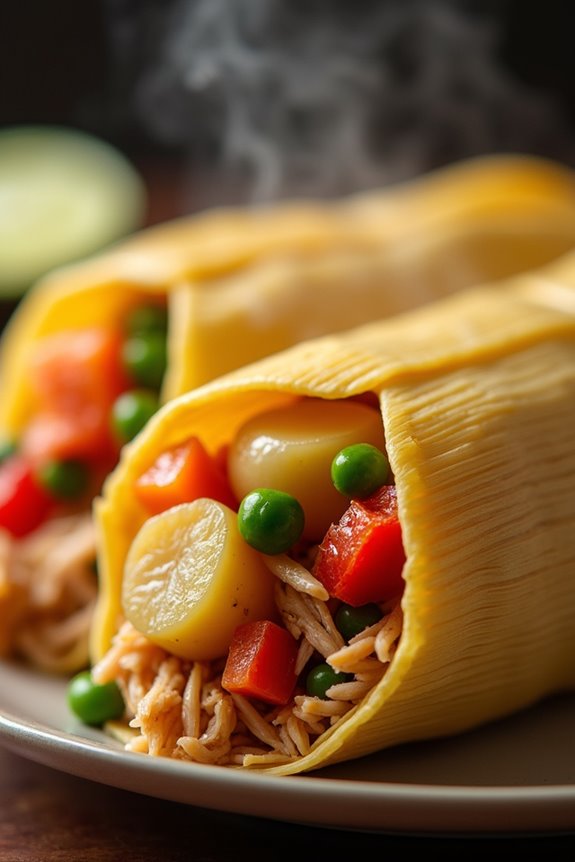
Tamales are a cherished dish in Colombian cuisine, often enjoyed during festive occasions and family gatherings. These delectable parcels are made from a rich masa (corn dough) filled with various ingredients such as meats, vegetables, or cheeses and then wrapped in corn husks or banana leaves before being steamed to perfection. Each bite offers a delightful combination of flavors and textures, making tamales not just a meal, but an experience to savor.
In Colombia, tamales can vary greatly from region to region, with each area adding its unique twist to the ingredients and preparation methods. The process of making tamales is often a communal activity, bringing family and friends together to share in the joy of cooking and eating. Whether you’re preparing them for a special occasion or simply to enjoy a taste of Colombia at home, this tamale recipe will guide you through creating these wrapped delicacies that are sure to impress.
Ingredients (Serves 4-6)
- 2 cups masa harina (corn flour)
- 1 cup chicken broth (or vegetable broth)
- 1 teaspoon baking powder
- 1 teaspoon salt
- 1 cup cooked, shredded chicken (or your choice of filling)
- ½ cup diced potatoes (cooked)
- ½ cup diced carrots (cooked)
- ½ cup peas (cooked)
- ½ cup diced bell pepper
- 1 teaspoon ground cumin
- 1 teaspoon garlic powder
- ½ cup sour cream (optional for serving)
- Corn husks or banana leaves for wrapping
Cooking Instructions
- Soak the Corn Husks: Start by soaking the corn husks or banana leaves in warm water for about 30 minutes. This will soften them and make them pliable for wrapping the tamales.
- Prepare the Masa: In a large mixing bowl, combine the masa harina, baking powder, salt, and cumin. Gradually add the chicken broth, mixing until the dough is smooth and has a spreadable consistency. Adjust the amount of broth as necessary.
- Prepare the Filling: In a separate bowl, mix the shredded chicken, cooked potatoes, carrots, peas, and diced bell pepper. Season the mixture with garlic powder, salt, and any additional spices you prefer. This filling can be customized according to your taste.
- Assemble the Tamales: Take a soaked corn husk or banana leaf and spread about ¼ cup of the masa dough onto the center, leaving space at the edges. Add a generous spoonful of the filling in the middle of the masa. Fold the sides of the husk or leaf over the filling and then fold the bottom up to enclose the tamale completely.
- Steam the Tamales: Place the tamales upright in a large steamer pot. If you don’t have a steamer, you can use a large pot with a steaming rack. Fill the pot with water until it reaches the bottom of the tamales without submerging them. Cover the pot and steam for about 1 to 1.5 hours, or until the masa pulls away easily from the husk.
- Serve: Once cooked, carefully remove the tamales from the steamer and let them rest for a few minutes. Serve them warm with a dollop of sour cream on the side.
Extra Tips
When making tamales, it’s essential to make certain that the masa is adequately seasoned and has the right consistency; it should be moist but not too sticky.
Feel free to experiment with different fillings based on seasonal ingredients or personal preferences. You can also prepare a large batch of tamales ahead of time and freeze them for later use. Just steam them directly from frozen, adding a bit more cooking time.
Enjoy the process and share the love of cooking with family and friends!
Patacones: Crispy Fried Green Plantains
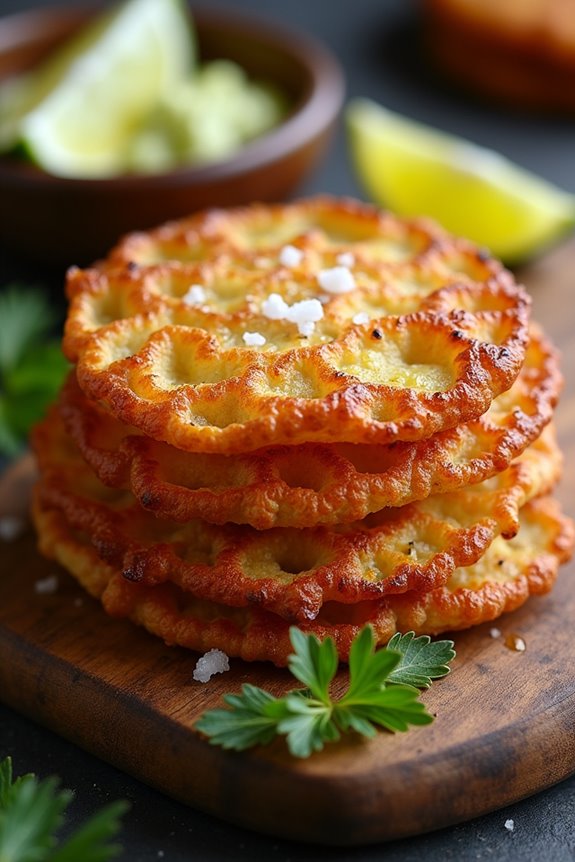
Patacones, also known as tostones in other Latin American countries, are a beloved Colombian snack made from green plantains. These crispy, fried disks are a delightful treat that can be enjoyed on their own or served with a variety of toppings. The preparation of patacones is a simple yet satisfying process that highlights the unique flavor of green plantains.
Traditionally served as an appetizer or side dish, they’re perfect for sharing at gatherings or enjoying during a casual meal.
To make the perfect patacones, you’ll need to select the right type of plantain—look for firm, green ones that aren’t overly ripe. The cooking method involves frying the plantains twice, which gives them that signature crunch. After the first fry, the slices are flattened before being fried again until golden brown.
Patacones are often served with a sprinkle of salt, a squeeze of lime, or even topped with avocado, cheese, or a spicy sauce for an extra kick.
Ingredients for Patacones (Serves 4-6)
- 3 large green plantains
- Vegetable oil (for frying)
- Salt (to taste)
- Lime wedges (for serving, optional)
Cooking Instructions
- Prepare the Plantains: Start by peeling the green plantains. Cut off the ends, then slice the plantains lengthwise to remove the skin. Once peeled, cut the plantains into 1-inch thick slices.
- Heat the Oil: In a large, heavy-bottomed pot or deep fryer, heat about 2 inches of vegetable oil over medium heat. You can test if the oil is ready by dropping in a small piece of plantain; if it sizzles, the oil is hot enough.
- First Fry: Carefully add the sliced plantains to the hot oil in batches, ensuring not to overcrowd the pot. Fry them for about 3-4 minutes on each side until they’re lightly golden and cooked through. Remove them from the oil and drain on paper towels.
- Flatten the Plantains: While the plantains are still warm, use the bottom of a heavy plate or a flat surface to gently press down on each slice until they’re flattened to about half an inch thick.
- Second Fry: Return the flattened plantains to the hot oil and fry them again for about 2-3 minutes on each side until they’re crispy and golden brown. Make sure to keep an eye on them to avoid overcooking.
- Season and Serve: Once fried to perfection, remove the patacones from the oil and place them on paper towels to absorb excess oil. Sprinkle with salt to taste. Serve hot with lime wedges on the side.
Extra Tips
For the best flavor, choose green plantains that are firm and have no brown spots. You can experiment with different toppings such as guacamole, cheese, or even a spicy salsa to enhance the taste of your patacones.
If you’re looking for a healthier option, consider baking the flattened plantains instead of frying them, though they may not be quite as crispy. Enjoy your patacones fresh for the best texture, but they can also be reheated in an air fryer for a quick snack later on!
Lentejas: Hearty Lentil Soup
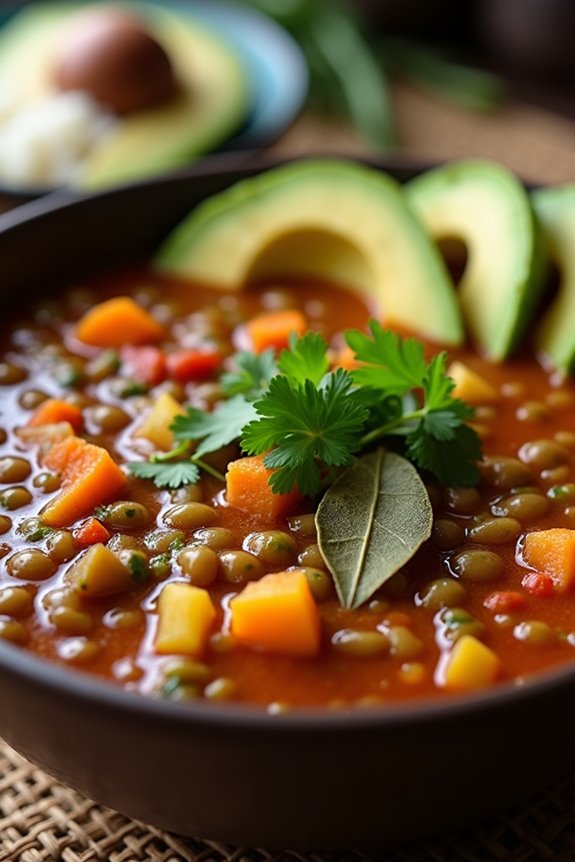
Lentejas, or lentil soup, is a beloved comfort dish in Colombian cuisine, renowned for its rich flavor and hearty ingredients. This nourishing soup is typically enjoyed as a main course and is perfect for family gatherings or chilly evenings. The combination of lentils, vegetables, and spices creates a dish that’s both satisfying and nutritious, making it a staple in Colombian households.
The beauty of Lentejas lies not only in its taste but also in its versatility. You can easily customize the recipe by adding different vegetables or meats according to your preferences. Traditionally served with avocado and white rice, this soup is a complete meal that brings warmth and joy to the table. Whether you’re a seasoned cook or a beginner, this recipe is straightforward and guarantees a flavorful outcome.
Ingredients (Serves 4-6):
- 1 cup dried lentils (preferably brown or green)
- 1 medium onion, chopped
- 2 cloves garlic, minced
- 1 medium carrot, diced
- 1 medium potato, diced
- 1 bell pepper (any color), chopped
- 1 tomato, diced
- 6 cups vegetable or chicken broth
- 2 tablespoons olive oil
- 1 teaspoon ground cumin
- 1 teaspoon paprika
- Salt and pepper to taste
- 1 bay leaf
- Chopped fresh cilantro for garnish
- Avocado slices (for serving)
- Cooked white rice (for serving)
Cooking Instructions:
- Prepare the Lentils: Rinse the dried lentils under cold water to remove any dirt or impurities. Check for any small stones or debris that might be mixed in. Set aside.
- Sauté the Aromatics: In a large pot, heat the olive oil over medium heat. Add the chopped onion and minced garlic. Sauté for about 3-4 minutes until the onion becomes translucent and fragrant.
- Add Vegetables: Stir in the diced carrot, potato, and bell pepper. Cook for another 5 minutes, allowing the vegetables to soften slightly. This step builds the foundation of flavor for the soup.
- Incorporate the Lentils and Broth: Add the rinsed lentils and diced tomato to the pot. Pour in the vegetable or chicken broth, ensuring all ingredients are covered. Add the ground cumin, paprika, bay leaf, salt, and pepper. Stir well to combine.
- Simmer the Soup: Bring the mixture to a boil, then reduce the heat to low. Cover the pot and let it simmer for about 30-40 minutes, or until the lentils are tender. Stir occasionally, adding more broth or water if the soup becomes too thick.
- Adjust Seasoning: After the lentils are cooked, taste the soup and adjust the seasoning with additional salt and pepper if needed. Remove the bay leaf before serving.
- Serve: Ladle the Lentejas into bowls and garnish with chopped fresh cilantro. Serve with slices of avocado and a side of cooked white rice for a complete meal.
Extra Tips:
For an extra depth of flavor, consider adding a smoked ham hock or chorizo while simmering the soup, which will infuse the broth with a delightful smokiness.
Additionally, feel free to experiment with different vegetables like zucchini or spinach, which can be added in the last few minutes of cooking for added nutrition.
To make the soup vegetarian, simply use vegetable broth and omit any meat. Enjoy your Lentejas with crusty bread or a fresh green salad for a balanced meal!
Ceviche: Fresh Seafood Delight
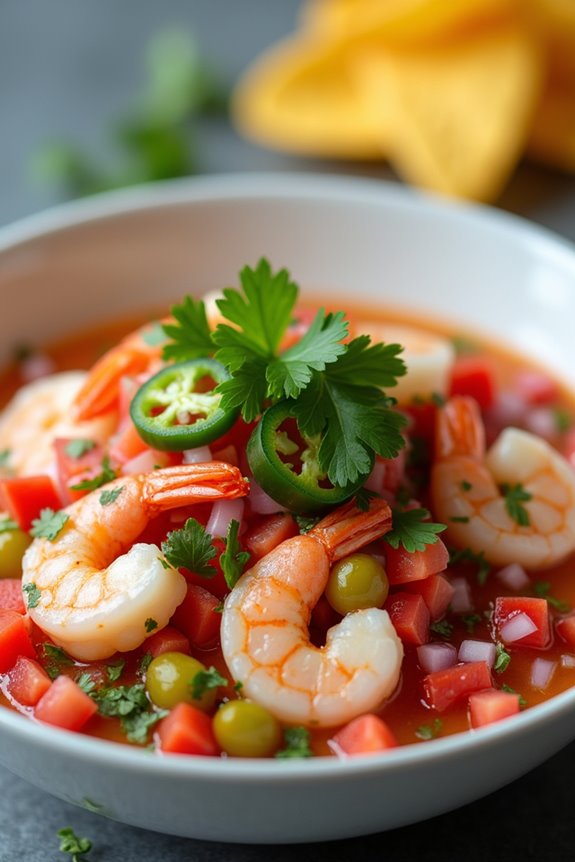
Ceviche is a traditional Colombian dish that highlights the country’s rich bounty of fresh seafood, often enjoyed along the coastal regions. This invigorating dish is typically made with raw fish or shrimp that’s “cooked” in a marinade of citrus juices, primarily lime. The acidity of the lime juice denatures the proteins in the seafood, giving it a firm texture and a bright, zesty flavor.
Ceviche is often served with sides such as plantain chips, avocado, or corn, making it a perfect appetizer or light meal for hot days. In Colombia, ceviche can vary by region, with different types of seafood and additional ingredients like diced tomatoes, onions, and cilantro. The dish isn’t only delicious but also visually appealing, showcasing the vibrant colors of the fresh ingredients.
Preparing ceviche is relatively simple and quick, making it a favorite choice for gatherings, parties, or an invigorating family meal.
Ingredients (Serves 4-6)
- 1 lb fresh fish fillets (such as tilapia or sea bass), diced
- 1 lb shrimp, peeled and deveined
- 1 cup fresh lime juice
- 1 medium red onion, finely chopped
- 1 medium tomato, diced
- 1 cup diced cucumber
- 1/2 cup fresh cilantro, chopped
- 1-2 jalapeños, finely chopped (optional)
- Salt and pepper to taste
- Tortilla chips or plantain chips (for serving)
Cooking Instructions
- Prepare the Seafood: Begin by dicing the fresh fish fillets into small, bite-sized pieces. Confirm your seafood is as fresh as possible for the best flavor and texture. If using shrimp, chop it into smaller pieces or leave them whole, depending on preference.
- Marinate the Seafood: In a large mixing bowl, combine the diced fish and shrimp with the fresh lime juice. Confirm all the seafood is well-covered with the juice. Cover the bowl with plastic wrap and let it marinate in the refrigerator for at least 30 minutes to 1 hour. The seafood will turn opaque as it “cooks” in the lime juice.
- Add Vegetables: After the marinating time, add the finely chopped red onion, diced tomato, cucumber, and jalapeños (if using) to the marinated seafood. Mix gently to combine all the ingredients without breaking the seafood pieces.
- Season the Ceviche: Add salt and pepper to taste. Be mindful of the salt as you can always add more, but it’s harder to correct if you overdo it. The seasoning should enhance the flavors without overpowering the freshness of the seafood.
- Add Cilantro: Finally, fold in the chopped cilantro. This herb adds a wonderful freshness and depth to the ceviche. Mix everything gently to confirm the cilantro is evenly distributed throughout the dish.
- Serve: Transfer the ceviche to a serving bowl and serve immediately while it’s fresh. Offer tortilla chips or plantain chips on the side for a crunchy contrast to the tender seafood.
Extra Tips
For the best results, always use the freshest seafood available, as the quality directly impacts the flavor of the ceviche. If you’re unsure about the freshness of the fish, consider purchasing it from a reputable fish market or seafood section.
Additionally, feel free to customize your ceviche with other ingredients such as mango or avocado for a unique twist. Remember that the longer the ceviche marinates, the softer the seafood will become, so adjust the marinating time based on your texture preference. Enjoy this delightful dish chilled and fresh!
Arroz Con Coco: Coconut Rice
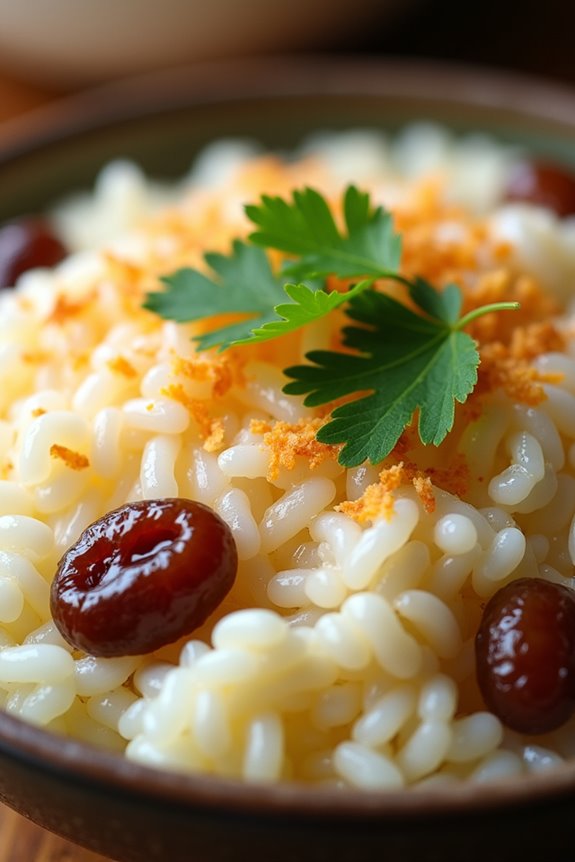
Arroz Con Coco, or Coconut Rice, is a delightful dish that embodies the tropical flavors of Colombia. This comforting rice dish is often enjoyed as a side with fish or meat, or even on its own, and is especially popular on the Caribbean coast of Colombia. The creamy texture of the coconut milk combined with the subtle sweetness of the rice makes it a favorite among locals and visitors alike.
With its simple ingredients and straightforward preparation, Arroz Con Coco is a dish that brings the essence of Colombian cuisine into your home. Making Arroz Con Coco isn’t only easy but also allows you to experience the rich culinary culture of Colombia. The dish typically includes long-grain rice, coconut milk, and a few additional ingredients that enhance its flavor.
Whether you’re looking to impress guests or simply enjoy a comforting meal, this recipe will have you savoring the taste of Colombia in no time.
Ingredients (Serves 4-6):
- 2 cups long-grain white rice
- 1 can (14 oz) coconut milk
- 2 cups water
- 1/2 cup grated coconut (fresh or dried)
- 1/4 cup sugar (adjust to taste)
- 1 teaspoon salt
- 1/2 teaspoon cinnamon (optional)
- 1/4 cup raisins (optional)
- Fresh cilantro (for garnish, optional)
Cooking Instructions:
- Rinse the Rice: Begin by rinsing the long-grain white rice under cold water. This step helps remove excess starch, which can make the rice gummy. Rinse until the water runs clear, then drain well.
- Combine Ingredients: In a large saucepan, combine the rinsed rice, coconut milk, water, grated coconut, sugar, salt, and cinnamon (if using). This mixture is what’ll give your rice its rich, creamy flavor.
- Bring to a Boil: Place the saucepan over medium-high heat and bring the mixture to a boil. Stir occasionally to prevent the rice from sticking to the bottom of the pan. Keep an eye on it to avoid it boiling over.
- Simmer the Rice: Once boiling, reduce the heat to low and cover the saucepan with a lid. Allow the rice to simmer for about 15-20 minutes, or until all the liquid is absorbed and the rice is tender. Avoid lifting the lid too often, as this can disrupt the cooking process.
- Add Optional Ingredients: If you’re using raisins, add them to the rice during the last 5 minutes of cooking. This will allow them to plump up and absorb some of the coconut flavor.
- Fluff and Serve: Once the rice is cooked, remove it from heat and let it sit covered for another 5 minutes. Afterward, fluff the rice with a fork to separate the grains. Serve warm, garnished with fresh cilantro if desired.
Extra Tips:
For an even richer flavor, consider using homemade coconut milk or adding a pinch of vanilla extract to the cooking liquid. If you’re looking to add a savory twist, sauté some chopped onions and garlic in the saucepan before adding the rice and liquids. This will enhance the overall flavor of the dish.
Additionally, Arroz Con Coco pairs beautifully with grilled fish or shrimp, making it a versatile side dish for any meal. Enjoy your culinary journey through Colombia!
Posta Negra Cartagenera: Black Beef Roast
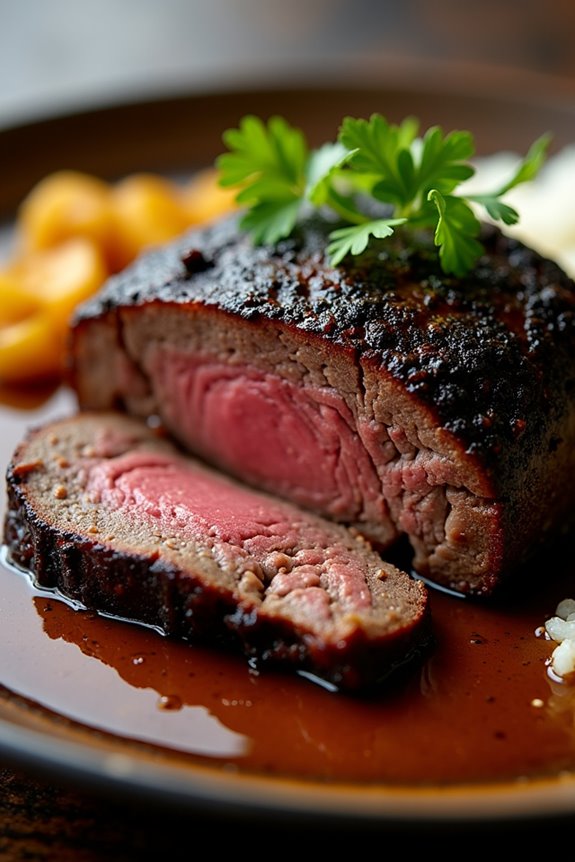
Posta Negra Cartagenera is a traditional Colombian dish that captures the essence of Caribbean flavors and the rich culinary heritage of the coastal city of Cartagena. This succulent black beef roast is known for its deep, savory flavor, which is achieved through a careful marination process and slow cooking. The dish is often served during special occasions and family gatherings, bringing a taste of Colombia right to your table.
The key to making a perfect Posta Negra lies in the choice of ingredients and the cooking method. The beef is typically marinated in a mixture of spices, herbs, and a unique sauce made with cola, which gives it its characteristic color and flavor. Paired with rice and fried plantains, this dish is sure to impress family and friends alike.
Ingredients (Serves 4-6)
- 2 to 3 pounds of beef brisket or chuck roast
- 1 cup of cola (regular)
- 1/2 cup of soy sauce
- 1 cup of chopped onion
- 1/2 cup of chopped green bell pepper
- 4 cloves of garlic, minced
- 2 tablespoons of Worcestershire sauce
- 1 tablespoon of ground cumin
- 1 tablespoon of dried oregano
- 1 tablespoon of brown sugar
- 1 teaspoon of black pepper
- 3 tablespoons of vegetable oil
- Salt to taste
- Fresh cilantro for garnish (optional)
Cooking Instructions
- Marinate the Beef: In a large bowl, combine the cola, soy sauce, Worcestershire sauce, cumin, oregano, brown sugar, black pepper, and salt. Mix well. Place the beef brisket in a resealable plastic bag or a shallow dish and pour the marinade over it. Confirm the meat is well-coated. Seal the bag or cover the dish, and refrigerate for at least 4 hours, preferably overnight, to allow the flavors to penetrate the meat.
- Prepare the Ingredients: Take the marinated beef out of the refrigerator and allow it to come to room temperature for about 30 minutes. Meanwhile, chop the onion and green bell pepper, and mince the garlic. This preparation will help in the cooking process.
- Sear the Beef: Heat the vegetable oil in a large, heavy-bottomed pot or Dutch oven over medium-high heat. Remove the beef from the marinade (reserve the marinade) and sear it in the hot oil for about 4-5 minutes on each side, or until it develops a nice brown crust. This step adds depth to the flavor.
- Add Aromatics: Once the beef is browned, remove it from the pot and set it aside. In the same pot, add the chopped onion, green bell pepper, and minced garlic. Sauté the vegetables for about 5 minutes, or until they become soft and translucent.
- Add the Marinade and Simmer: Return the seared beef to the pot and pour the reserved marinade over it. Bring the mixture to a simmer, then cover the pot and reduce the heat to low. Let it cook slowly for about 2-3 hours, turning the beef occasionally, until it’s tender and easily pulls apart with a fork.
- Rest and Slice: Once the beef is cooked, remove it from the pot and let it rest for about 10-15 minutes. This resting period allows the juices to redistribute within the meat. After resting, slice the beef against the grain into thick pieces.
- Serve: Arrange the sliced beef on a serving platter and drizzle some of the sauce from the pot over the top. Garnish with fresh cilantro if desired. Serve with rice and fried plantains for a complete meal.
Extra Tips
For an even deeper flavor, consider adding a splash of red wine to the marinade. Additionally, you can enhance the dish by serving it with a side of avocado or a fresh salad.
If you enjoy a bit of heat, add some sliced jalapeños or a pinch of cayenne pepper to the marinade. Remember that the longer you marinate the beef, the more flavorful it will be, so don’t hesitate to prepare it a day in advance!
Buñuelos: Cheese-Filled Fried Dough

Buñuelos are a beloved Colombian snack that combines the delightful flavors of cheese and dough, resulting in a crispy, golden treat. Traditionally enjoyed during festive seasons and special occasions, these cheese-filled fried dough balls are certain to be a hit at any gathering.
With their soft interior and crunchy exterior, buñuelos are perfect for dipping in hot chocolate or enjoying on their own. Making buñuelos at home is simpler than you might think, and with the right ingredients and techniques, you can recreate this Colombian favorite in your kitchen.
The recipe below serves 4-6 people, making it an excellent choice for sharing with family and friends. Get ready to impress your guests with these deliciously cheesy morsels!
Ingredients:
- 1 cup of queso fresco or any soft white cheese, crumbled
- 1 cup of tapioca starch (also known as yuca starch)
- 1/2 cup of all-purpose flour
- 1/2 teaspoon of baking powder
- 1/2 teaspoon of salt
- 1/4 cup of milk
- 1 egg
- 1 tablespoon of sugar
- Vegetable oil for frying
Cooking Instructions:
- Prepare the Dough: In a large mixing bowl, combine the tapioca starch, all-purpose flour, baking powder, and salt. Mix these dry ingredients thoroughly to guarantee even distribution. This blend creates the foundation for your buñuelos, giving them their characteristic texture.
- Add the Cheese: Fold in the crumbled queso fresco into the dry mixture. The cheese won’t only add flavor but also moisture to the dough. Mix gently until the cheese is well incorporated but be careful not to overwork the dough.
- Combine Wet Ingredients: In another bowl, whisk together the milk, egg, and sugar until well combined. This mixture will add richness and sweetness to your buñuelos. Gradually pour this wet mixture into the dry ingredients and cheese mixture, stirring until a soft dough forms.
- Shape the Buñuelos: Lightly flour your hands and take small portions of the dough to form balls, about the size of a golf ball. The dough should be easy to handle but not too sticky. Place the formed balls onto a tray lined with parchment paper.
- Heat the Oil: In a deep frying pan, heat enough vegetable oil to submerge the buñuelos (about 2-3 inches deep) over medium heat. To check if the oil is hot enough, drop a small piece of dough in; it should sizzle and rise to the surface.
- Fry the Buñuelos: Carefully drop a few buñuelos into the hot oil, making sure not to overcrowd the pan. Fry them for about 5-7 minutes or until they turn golden brown, turning occasionally to guarantee even cooking. Use a slotted spoon to remove them from the oil and drain on paper towels.
- Serve and Enjoy: Once all buñuelos are fried and drained, serve them warm. They can be enjoyed plain, with a sprinkle of powdered sugar, or dipped in a hot beverage.
Extra Tips: When making buñuelos, verify your oil is at the correct temperature to prevent them from becoming greasy. If you find the dough too sticky to handle, add a little more tapioca starch.
Also, feel free to experiment with different cheeses or add herbs and spices for a unique twist on the classic recipe. Enjoy your buñuelos fresh for the best taste!
Arequipe: Sweet Caramel Spread

Arequipe, a traditional Colombian sweet treat, is a luscious caramel spread often enjoyed on bread, pancakes, or simply straight from the jar. Its rich, creamy texture and deep caramel flavor make it a beloved indulgence for many. This delightful treat isn’t only popular in Colombia but has also gained appreciation around the world as a unique dessert topping.
Making Arequipe at home is surprisingly simple and requires just a few ingredients, making it a wonderful project for both seasoned cooks and beginners alike. The beauty of Arequipe lies in its versatility; it can be used in various desserts or enjoyed as a sweet snack.
Whether you’re hosting a gathering or simply want to treat yourself, this recipe will yield enough Arequipe to satisfy a crowd of 4-6 people. So, roll up your sleeves and get ready to create this delicious caramel spread that’s bound to impress your family and friends.
Ingredients (Serves 4-6)
- 1 can (14 ounces) of sweetened condensed milk
- 1/4 cup of unsalted butter
- 1/4 teaspoon of baking soda
- 1 teaspoon of vanilla extract
- Pinch of salt
Cooking Instructions
- Combine the Ingredients: In a medium-sized, heavy-bottomed saucepan, combine the sweetened condensed milk, unsalted butter, baking soda, and a pinch of salt. It’s important to use a heavy-bottomed pot to prevent the mixture from scorching as it cooks.
- Heat the Mixture: Place the saucepan over medium heat. Stir the mixture continuously with a wooden spoon or silicone spatula to make sure that it heats evenly and doesn’t stick to the bottom. This process will take about 5-10 minutes.
- Cook Until Thickened: Once the mixture starts to bubble, reduce the heat to low. Continue stirring constantly as the mixture thickens and changes color to a golden caramel shade. This step is vital, as it typically takes about 20-25 minutes. Be patient; the longer it cooks, the richer the flavor will become.
- Add Vanilla Extract: Once the Arequipe has reached a thick, creamy consistency and a deep caramel color, remove the saucepan from the heat. Stir in the vanilla extract, which will enhance the flavor and aroma of the spread.
- Cool and Store: Allow the Arequipe to cool slightly in the saucepan before transferring it to a clean jar or container. It will thicken even more as it cools. Store it in the refrigerator for up to two weeks—if you can resist eating it all before then!
Extra Tips
When making Arequipe, patience is key. Stirring continuously is important to avoid burning the mixture, so keep that spoon moving!
If you prefer a smoother texture, you can blend the Arequipe after it cools slightly. Additionally, feel free to experiment by adding a dash of cinnamon or other flavorings to personalize your Arequipe. Enjoy it in various desserts, or simply spread it on toast for a delightful treat!
