


I’ve always been drawn to the vibrant flavors of Colombian cuisine, especially as I discovered how easy it is to create plant-powered vegan versions of traditional dishes. Each recipe offers a unique twist, highlighting the rich ingredients that make Colombian food so special. From comforting soups to delightful snacks, these meals nourish and simplify the cooking process. Curious to bring a taste of Colombia into your kitchen? Let’s explore some delicious options together.
Arepas With Avocado and Tomato Salad
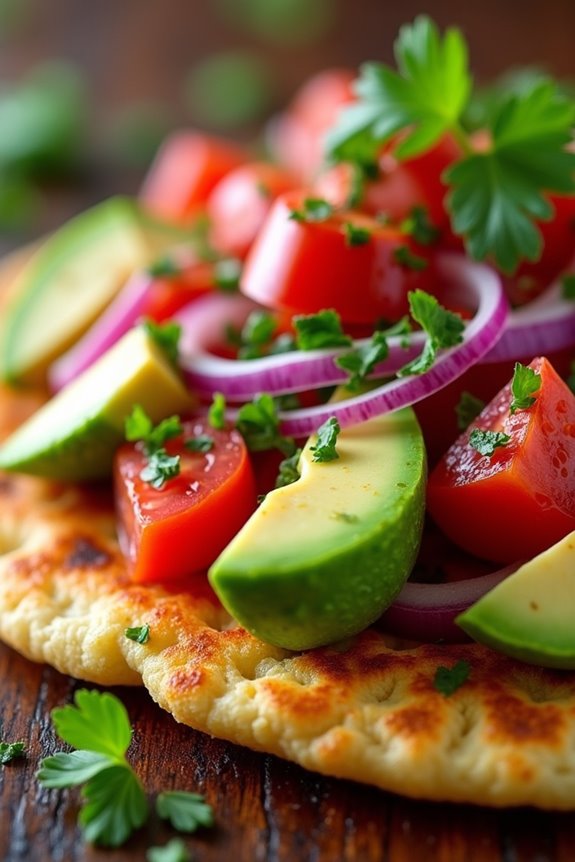
Arepas are a staple in Colombian cuisine, known for their versatility and delicious flavor. Made from ground maize dough, they can be enjoyed in various ways, whether stuffed or topped with your favorite ingredients. This recipe pairs them with a revitalizing avocado and tomato salad, creating a perfect balance of flavors and textures. The creamy avocado complements the corn flavor of the arepas, while the tomatoes add a juicy burst that elevates the dish.
This plant-powered version of arepas isn’t only vegan but also incredibly simple to prepare. The dough requires just a few pantry staples, and the salad can be whipped up in minutes. Whether you’re serving them for breakfast, lunch, or dinner, these arepas make for a satisfying meal that everyone will love.
Ingredients (Serves 4-6):
- 2 cups of pre-cooked cornmeal (masarepa)
- 2 ½ cups of warm water
- 1 teaspoon of salt
- 1 tablespoon of olive oil (optional)
- 2 ripe avocados
- 2 medium tomatoes, diced
- 1 small red onion, finely chopped
- 1 lime, juiced
- Salt and pepper to taste
- Fresh cilantro, chopped (for garnish)
Cooking Instructions:
- Prepare the Arepa Dough: In a large mixing bowl, combine the pre-cooked cornmeal and salt. Gradually add the warm water while mixing with your hands or a spoon. Knead the mixture until it forms a smooth, pliable dough. If desired, add olive oil for extra richness.
- Shape the Arepas: Divide the dough into 6 to 8 equal portions, depending on the size you prefer. Roll each portion into a ball, then flatten it gently between your palms to form discs about ½ inch thick.
- Cook the Arepas: Heat a non-stick skillet or griddle over medium heat. Place the arepas in the skillet and cook for about 5-7 minutes on each side until they develop a golden-brown crust. You can also finish them in a preheated oven at 375°F (190°C) for about 10 minutes to guarantee they’re cooked through.
- Make the Avocado and Tomato Salad: While the arepas are cooking, prepare the salad. In a bowl, combine the diced tomatoes, chopped red onion, and diced avocados. Drizzle with lime juice and season with salt and pepper. Gently mix to combine, being careful not to mash the avocados.
- Serve: Once the arepas are cooked, remove them from the heat and let them cool slightly. Serve warm, topped with the avocado and tomato salad. Garnish with fresh cilantro for added flavor.
Extra Tips: When making arepas, feel free to customize them with different fillings or toppings based on your preference. You can add cheese, beans, or even sautéed vegetables inside the arepas before cooking. Additionally, allow the arepas to rest for a few minutes after cooking; this helps them to set and makes them easier to slice if you choose to stuff them. Enjoy your delicious arepas with avocado and tomato salad!
Vegan Bandeja Paisa
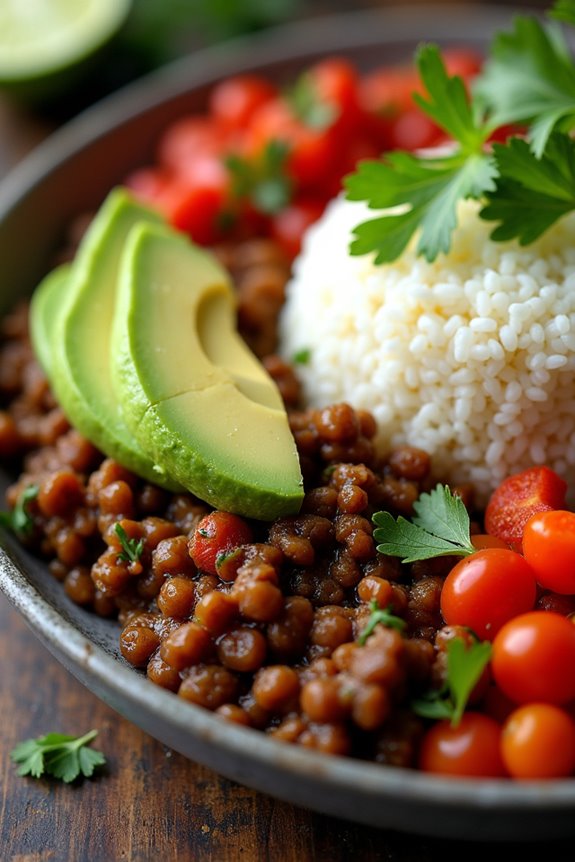
Vegan Bandeja Paisa is a delightful plant-powered twist on the traditional Colombian dish that showcases the rich flavors and vibrant ingredients of Colombian cuisine while keeping it entirely plant-based. This hearty meal is a celebration of textures and tastes, featuring a variety of components that come together to create a colorful and satisfying platter.
Originating from the Antioquia region, Bandeja Paisa is known for its generous portions, making it a perfect dish for sharing with family and friends.
In this vegan version, we substitute meat with delicious plant-based alternatives without losing the essence of the original dish. The combination of seasoned lentils, coconut rice, and a medley of sautéed vegetables guarantees that every bite is packed with flavor and nutrition.
Serve it with ripe avocado and a fresh tomato salad for a complete and balanced meal that reflects the spirit of Colombian culture while being entirely vegan.
Ingredients (Serves 4-6):
- 1 cup lentils, rinsed and drained
- 1 cup brown rice
- 1 can (13.5 oz) coconut milk
- 1 large ripe avocado, sliced
- 2 large tomatoes, diced
- 1 small red onion, finely chopped
- 1 bell pepper, chopped (red or green)
- 2 cloves garlic, minced
- 1 teaspoon ground cumin
- 1 teaspoon smoked paprika
- 1 tablespoon olive oil
- Salt and pepper to taste
- Fresh cilantro for garnish
- Lime wedges for serving
Cooking Instructions:
- Prepare the Lentils: In a medium saucepan, add the rinsed lentils and cover with water (about 3 cups). Bring to a boil, then reduce heat and simmer for about 20-25 minutes or until tender. Drain excess water and season with salt, cumin, and smoked paprika. Set aside.
- Cook the Rice: In a separate pot, combine the brown rice and coconut milk. Add 1 cup of water and a pinch of salt. Bring to a boil, then reduce heat to low, cover, and simmer for about 40-45 minutes, or until the rice is fully cooked and the liquid is absorbed. Fluff with a fork and set aside.
- Sauté the Vegetables: In a large skillet over medium heat, add olive oil. Once hot, add the chopped red onion, bell pepper, and minced garlic. Sauté for about 5-7 minutes, until the vegetables are tender and fragrant. Season with salt and pepper.
- Assemble the Platter: On a large serving plate or platter, create sections for each component: the seasoned lentils, coconut rice, sautéed vegetables, sliced avocado, and diced tomatoes. Arrange them artistically for a colorful presentation.
- Garnish and Serve: Top the dish with fresh cilantro and serve with lime wedges on the side. Each guest can squeeze lime over their portion for an extra burst of flavor.
Extra Tips: For a more authentic taste, consider adding traditional Colombian seasonings such as achiote or bay leaves while cooking the lentils or rice. You can also customize the vegetables used in the sauté by adding corn, zucchini, or carrots based on your preference.
Finally, if you want to enhance the dish further, consider serving it with a side of homemade vegan arepas or plantain chips for a delicious Colombian experience!
Ajiaco With Quinoa
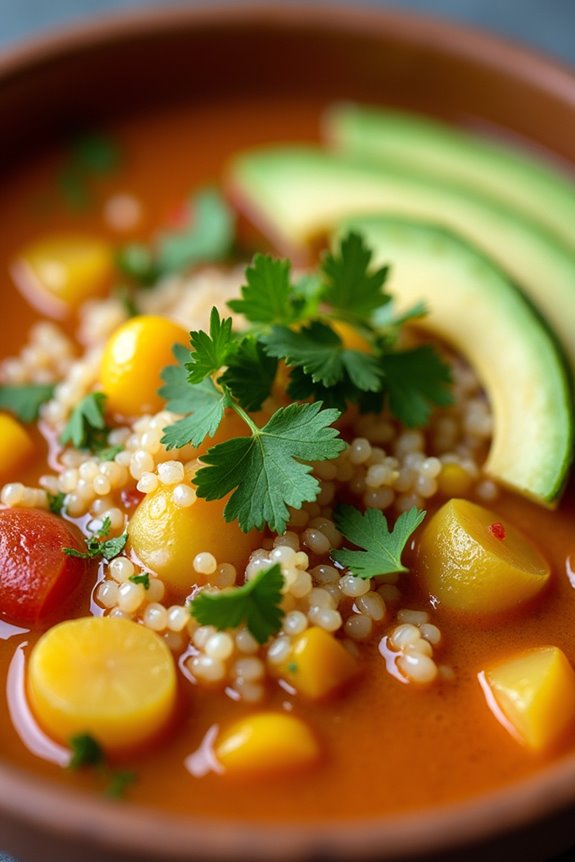
Ajiaco is a traditional Colombian soup that’s traditionally made with chicken, three types of potatoes, and corn. This plant-powered version swaps out the meat and incorporates quinoa, a complete protein that not only adds texture but also enhances the nutritional profile of the dish.
The combination of hearty potatoes, fresh herbs, and vibrant vegetables creates a comforting and satisfying meal that’s naturally vegan and bursting with flavor. This Ajiaco with Quinoa captures the essence of Colombian cuisine while being completely plant-based.
The use of ingredients like cilantro, avocado, and capers elevates the dish, creating a delightful balance of flavors and textures. Serving this soup with avocado on top and a sprinkle of fresh herbs will surely impress both vegans and non-vegans alike.
Ingredients (Serves 4-6):
- 1 cup quinoa, rinsed
- 4 cups vegetable broth
- 2 large yellow potatoes, peeled and diced
- 2 large red potatoes, peeled and diced
- 2 medium white potatoes, peeled and diced
- 1 medium onion, finely chopped
- 3 cloves garlic, minced
- 1 cup corn kernels (fresh or frozen)
- 1 teaspoon ground cumin
- 1 teaspoon dried oregano
- 1/2 teaspoon black pepper
- 1 cup fresh cilantro, chopped (plus extra for garnish)
- 1 avocado, sliced (for serving)
- 1 tablespoon olive oil
- Salt to taste
- Lime wedges (for serving)
Cooking Instructions:
- Prepare the Quinoa: In a medium saucepan, combine the rinsed quinoa with 2 cups of vegetable broth. Bring to a boil, then reduce the heat to low, cover, and let simmer for about 15 minutes or until the quinoa is fluffy and the liquid is absorbed. Set aside when done.
- Sauté the Aromatics: In a large pot, heat the olive oil over medium heat. Add the chopped onion and sauté for about 5 minutes, until it becomes translucent. Then, add the minced garlic and cook for an additional minute, stirring frequently to prevent burning.
- Cook the Potatoes: Add the diced yellow, red, and white potatoes to the pot. Stir in the corn, ground cumin, dried oregano, black pepper, and salt. Pour in the remaining 2 cups of vegetable broth and bring the mixture to a boil. Reduce the heat and let it simmer for about 20 minutes or until the potatoes are tender.
- Incorporate the Quinoa: Once the potatoes are cooked, gently stir in the cooked quinoa and chopped cilantro. Allow the soup to simmer for an additional 5 minutes to heat through and meld the flavors.
- Serve: Ladle the Ajiaco with Quinoa into bowls. Top each serving with avocado slices, a sprinkle of fresh cilantro, and a wedge of lime on the side for squeezing over the soup.
Extra Tips:
For an extra burst of flavor, consider adding a tablespoon of capers to the soup just before serving. This will provide a tangy contrast that complements the heartiness of the potatoes and quinoa.
Additionally, feel free to adjust the herbs and spices according to your personal taste; some may enjoy a bit of heat, so adding a pinch of red pepper flakes could spice things up!
Colombian Vegetable Empanadas

Colombian Vegetable Empanadas are a delightful and savory treat that perfectly captures the essence of Colombian cuisine while being completely plant-based. These empanadas are made with a crispy cornmeal dough that’s filled with a vibrant mixture of vegetables and spices, offering a burst of flavor in every bite. They’re a popular street food in Colombia and can be enjoyed as a snack, appetizer, or even a main course when served with a side salad or dipping sauce.
Making these empanadas at home is a rewarding experience that will surely impress family and friends. The versatility of the fillings allows you to customize them based on your preferences or what you have on hand. From hearty potatoes and carrots to zesty bell peppers and onions, the options are endless. Let’s explore this delicious recipe for Colombian Vegetable Empanadas that serves 4-6 people.
Ingredients:
- For the dough:
- 2 cups masa harina (corn flour)
- 1 ½ cups warm water
- ½ teaspoon salt
- 1 tablespoon vegetable oil (optional)
- For the filling:
- 1 tablespoon vegetable oil
- 1 small onion, finely chopped
- 2 cloves garlic, minced
- 1 medium carrot, diced
- 1 medium potato, diced
- 1 bell pepper (any color), diced
- 1 cup frozen peas
- 1 teaspoon cumin
- 1 teaspoon paprika
- Salt and pepper to taste
- Fresh cilantro, chopped (optional)
- For frying:
- Vegetable oil (enough for frying)
Cooking Instructions:
- Prepare the Dough: In a large mixing bowl, combine the masa harina and salt. Gradually add warm water and mix until a dough forms. If using, add the vegetable oil for added richness. Knead the dough for a few minutes until smooth. Cover with a damp cloth and let it rest for at least 30 minutes.
- Make the Filling: In a large skillet, heat the vegetable oil over medium heat. Add the chopped onion and garlic, and sauté until translucent, about 3-4 minutes. Then, add the diced carrot and potato. Cook for about 5 minutes, stirring occasionally.
- Add More Vegetables and Spices: Stir in the diced bell pepper and frozen peas. Season the mixture with cumin, paprika, salt, and pepper. Cook for another 5-7 minutes until the vegetables are tender. Remove from heat and let the filling cool slightly. If desired, mix in chopped fresh cilantro.
- Form the Empanadas: Divide the dough into equal balls (about the size of a golf ball). On a clean surface, flatten each ball into a disc using a rolling pin or your hands. Place a spoonful of the vegetable filling in the center of each disc. Fold the dough over to create a half-moon shape and press the edges to seal. You can crimp the edges with a fork for a decorative touch.
- Fry the Empanadas: In a deep skillet or pot, heat enough vegetable oil for frying over medium-high heat. Once the oil is hot, carefully add the empanadas in batches, making sure not to overcrowd the pan. Fry for about 3-4 minutes on each side, or until golden brown. Use a slotted spoon to remove them and place them on paper towels to drain excess oil.
- Serve and Enjoy: Serve the empanadas hot with your favorite dipping sauce, such as aji sauce or avocado salsa.
Extra Tips: When making Colombian Vegetable Empanadas, feel free to experiment with the filling ingredients. You can add black beans, corn, or even sautéed mushrooms for additional flavors.
If you want to make them healthier, consider baking the empanadas instead of frying them. Simply brush them with a little oil and bake at 375°F (190°C) for about 20-25 minutes, or until golden.
Always verify the oil is hot enough before frying to achieve a crispy texture, and keep an eye on them as they cook to prevent burning. Enjoy your culinary adventure!
Sancocho De Plátano
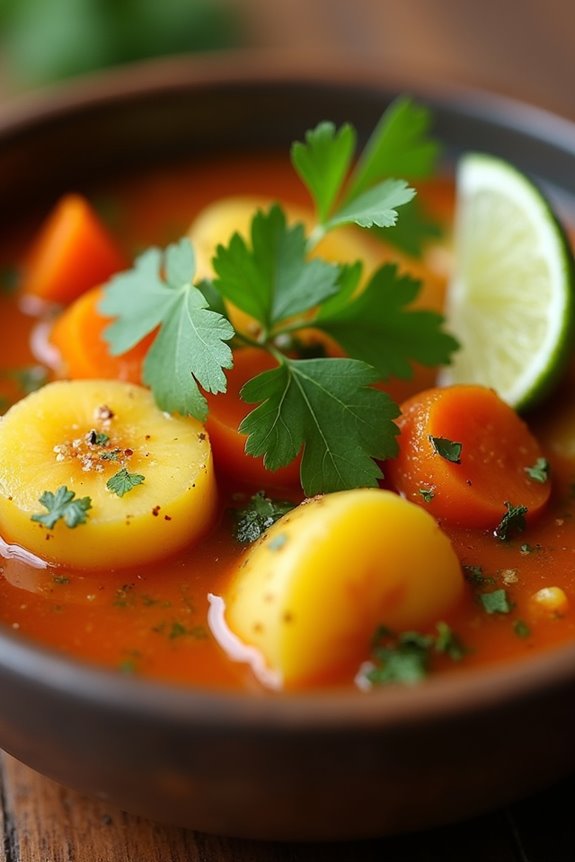
Sancocho De Plátano is a traditional Colombian dish that celebrates the rich flavors and textures of plantains. This hearty soup is a staple in many Colombian households, often served during family gatherings and festive occasions. It’s a comforting dish that combines ripe plantains with a variety of vegetables, herbs, and spices, making it not only delicious but also nourishing. The plantains serve as the star ingredient, providing a natural sweetness that perfectly balances the savory components of the soup.
This plant-powered vegan version of Sancocho De Plátano retains all the authentic flavors of the original while being completely free of animal products. By using fresh, wholesome ingredients, you can create a satisfying meal that’s both healthy and full of flavor. Whether you’re preparing it for a cozy dinner or a special celebration, this recipe is sure to impress your family and friends.
Ingredients (Serves 4-6)
- 3 ripe plantains, peeled and sliced into thick rounds
- 1 medium onion, chopped
- 2 cloves garlic, minced
- 1 medium tomato, diced
- 1 medium carrot, sliced
- 1 medium potato, peeled and cubed
- 1 bell pepper, chopped (any color)
- 4 cups vegetable broth
- 2 tablespoons olive oil
- 1 teaspoon cumin
- 1 teaspoon paprika
- 1 bay leaf
- Salt and pepper to taste
- Fresh cilantro, chopped (for garnish)
- Lime wedges (for serving)
Cooking Instructions
- Prepare the Ingredients: Begin by peeling and slicing the plantains into thick rounds. Chop the onion, bell pepper, and tomatoes, and mince the garlic. Slice the carrot and cube the potato. Having all your ingredients prepped will make the cooking process smoother.
- Sauté the Aromatics: In a large pot, heat the olive oil over medium heat. Add the chopped onion, bell pepper, and minced garlic. Sauté for about 5 minutes or until the vegetables are soft and fragrant, stirring occasionally to prevent them from sticking.
- Add the Vegetables: Once the aromatics are cooked, stir in the diced tomatoes, sliced carrots, and cubed potatoes. Cook for an additional 3-4 minutes, allowing the flavors to meld together.
- Incorporate the Spices: Sprinkle in the cumin, paprika, bay leaf, salt, and pepper. Mix well to guarantee that the spices evenly coat the vegetables. This step is essential for building the flavor base of the soup.
- Pour in the Broth: Carefully add the vegetable broth to the pot, making sure to scrape any bits stuck to the bottom. Bring the mixture to a boil, then reduce the heat to low and let it simmer for about 15 minutes, or until the potatoes and carrots are tender.
- Add the Plantains: Gently stir in the sliced plantains and continue to simmer for another 10-15 minutes. The plantains will soften and release their sweetness into the soup, creating a deliciously rich flavor.
- Taste and Adjust: After the soup has simmered, taste and adjust the seasoning if necessary. You may want to add more salt, pepper, or spices according to your preference.
- Serve and Garnish: Once ready, remove the bay leaf and ladle the soup into bowls. Garnish with freshly chopped cilantro and serve with lime wedges on the side for an extra burst of flavor.
Extra Tips
To enhance the flavor of your Sancocho De Plátano, consider adding other vegetables like zucchini or corn, which can provide additional texture and nutrients.
If you prefer a spicier version, you can include diced jalapeños or a pinch of red pepper flakes. For a creamier consistency, blend a portion of the soup and then mix it back in.
Serve it with a side of avocado or crusty bread for a complete meal that will surely satisfy your cravings!
Patacones With Garlic Sauce
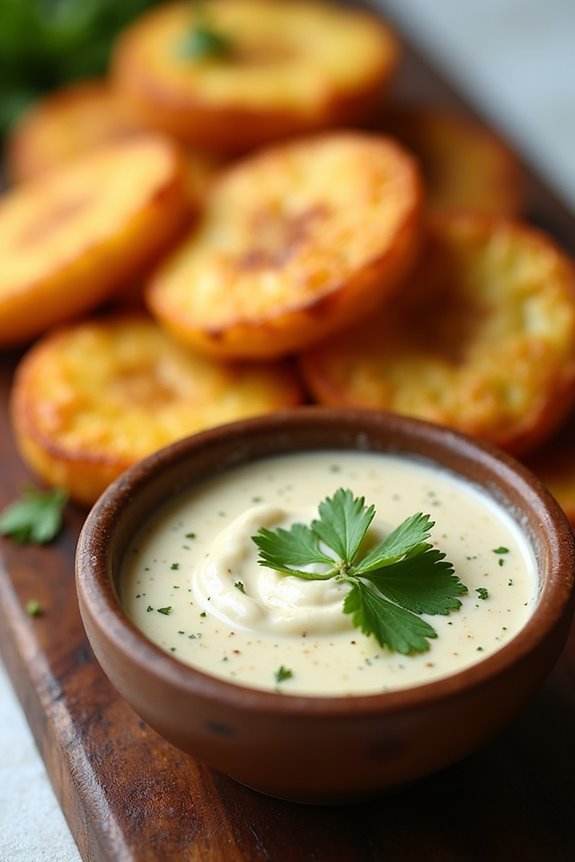
Patacones, also known as tostones, are a beloved Colombian snack made from green plantains. They’re twice-fried to achieve that perfect crispy texture and are often served with a variety of dips. In this recipe, we’ll be making delicious patacones paired with a flavorful garlic sauce that elevates this traditional dish, adding a robust taste that complements the savory plantains wonderfully.
Whether you’re hosting a gathering or just craving a tasty treat, patacones with garlic sauce are sure to please your palate. Not only are patacones a delightful appetizer or side dish, but they’re also incredibly versatile. You can serve them alongside a fresh salad, use them as a base for toppings like black beans and avocado, or simply enjoy them on their own with that zesty garlic sauce.
This recipe is easy to follow, making it perfect for both experienced cooks and beginners looking to explore Colombian cuisine. Let’s plunge into the ingredients and cooking process to create this scrumptious dish!
Ingredients (Serves 4-6)
- 2 green plantains
- Vegetable oil (for frying)
- Salt (to taste)
For the Garlic Sauce:
- 4 cloves of garlic, minced
- 1/4 cup vegan mayonnaise
- 2 tablespoons lime juice
- 1 tablespoon fresh cilantro, chopped
- Salt and pepper (to taste)
Cooking Instructions
- Prepare the Plantains: Start by peeling the green plantains. Cut off both ends of each plantain and make a shallow lengthwise cut through the skin. Carefully remove the skin and slice the plantains into 1-inch thick sections.
- First Frying: In a large frying pan, heat about 1 inch of vegetable oil over medium heat. Once the oil is hot, gently place the plantain slices into the oil. Fry them for about 3-4 minutes on each side, or until they’re golden and slightly soft. Remove them from the oil and drain on paper towels.
- Smash the Plantains: While the plantains are still warm, use a flat surface or a plantain press to gently smash each piece to about 1/2 inch thick. Be careful not to apply too much pressure, as you want them to retain some texture.
- Second Frying: Return the smashed plantains to the hot oil and fry them again for 2-3 minutes on each side, or until they’re crispy and golden brown. Drain them again on paper towels and sprinkle with salt to taste.
- Make the Garlic Sauce: In a small bowl, mix together the minced garlic, vegan mayonnaise, lime juice, and chopped cilantro. Season with salt and pepper to taste. Stir until well combined and set aside.
- Serve: Arrange the crispy patacones on a serving platter and drizzle the garlic sauce over them, or serve the sauce on the side for dipping. Enjoy your delicious patacones with garlic sauce!
Extra Tips
For the best results, make sure to use green plantains, as ripe ones won’t yield the desired crispiness. Adjust the thickness of your smashed plantains to your preference; thinner ones will be crunchier, while thicker ones will be softer.
If you want to add a bit more flavor to your garlic sauce, consider incorporating a pinch of smoked paprika or a dash of hot sauce for a spicy kick. Enjoy your culinary adventure with these delightful Colombian patacones!
Vegan Tamales
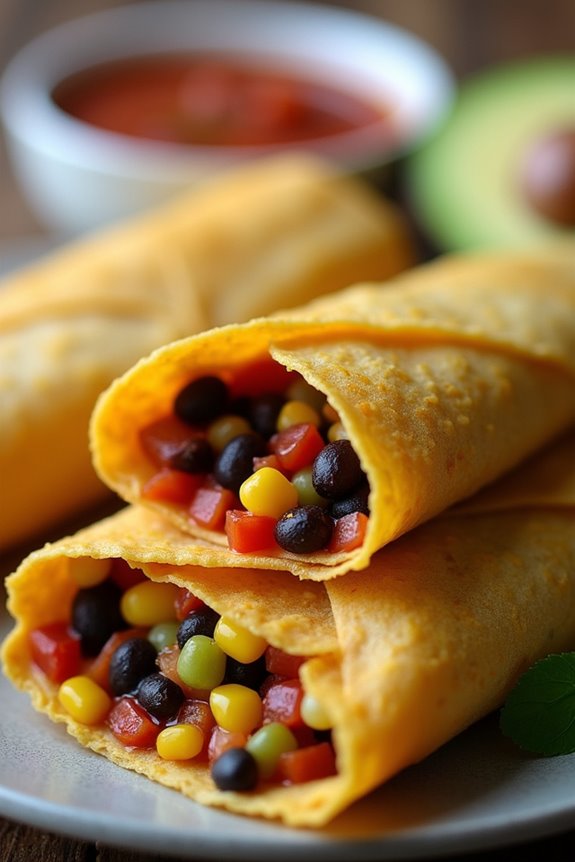
Tamales are a traditional Colombian dish that embodies comfort and celebration. They’re typically made from masa (corn dough) filled with various ingredients, wrapped in corn husks, and steamed to perfection. In this vegan version, we’re using plant-based ingredients to create a delicious filling that stays true to the essence of Colombian cuisine while being completely animal product-free. This recipe is perfect for family gatherings or as a special treat to enjoy on a cozy weekend.
Making vegan tamales is a rewarding process that, although it may require some time and effort, is well worth it for the delightful flavors and textures. The combination of seasoned vegetables, spices, and the soft masa creates a satisfying meal that can be enjoyed on its own or served with your favorite salsa or avocado. Gather your ingredients, roll up your sleeves, and let’s embark on this delicious plant-powered journey!
Ingredients (Serves 4-6)
- 2 cups masa harina
- 1 cup vegetable broth
- 1/2 cup coconut oil (melted)
- 1 teaspoon baking powder
- 1 teaspoon salt
- 1 cup black beans (cooked and mashed)
- 1 cup corn kernels (fresh or frozen)
- 1/2 cup diced bell pepper (any color)
- 1/2 cup diced onion
- 2 cloves garlic (minced)
- 1 teaspoon cumin
- 1 teaspoon smoked paprika
- Corn husks (soaked in warm water for at least 30 minutes)
Cooking Instructions
- Prepare the Corn Husk: Begin by soaking the corn husks in warm water for at least 30 minutes. This will make them pliable and easier to work with when wrapping the tamales.
- Make the Masa Dough: In a large mixing bowl, combine the masa harina, baking powder, and salt. Gradually add the melted coconut oil and vegetable broth, mixing well until a soft and pliable dough forms. It shouldn’t be sticky; adjust with more masa harina or broth if necessary.
- Prepare the Filling: In a skillet, heat a small amount of oil over medium heat. Add the diced onion and bell pepper, and sauté until they’re soft, about 5 minutes. Add the minced garlic, corn, black beans, cumin, and smoked paprika. Stir well and cook for another 5 minutes, allowing the flavors to meld together. Remove from heat and let cool slightly.
- Assemble the Tamales: Take a soaked corn husk and spread about 2-3 tablespoons of masa dough on the wide end of the husk, forming a rectangle. Add about 2 tablespoons of the vegetable filling in the center of the masa. Fold the sides of the husk over the filling, then fold up the bottom to secure it. Repeat this process until all ingredients are used.
- Steam the Tamales: In a large pot or steamer, arrange the tamales standing up with the open end facing up. Fill the pot with water, making sure the water doesn’t touch the tamales. Cover with a lid and steam for about 45 minutes to 1 hour, or until the masa pulls away easily from the husk.
- Serve: Once cooked, remove the tamales from the steamer and let them cool for a few minutes. Serve warm with your favorite salsa or avocado slices.
Extra Tips
When making vegan tamales, feel free to customize the filling based on your preferences. You can add ingredients like mushrooms, zucchini, or different beans to create a unique combination.
Additionally, if you don’t have access to corn husks, you can use parchment paper as an alternative for wrapping. Be sure to keep a close eye on the steaming process to avoid running out of water in the pot, which could lead to burning. Enjoy your delicious vegan tamales!
Coconut Rice With Black Beans
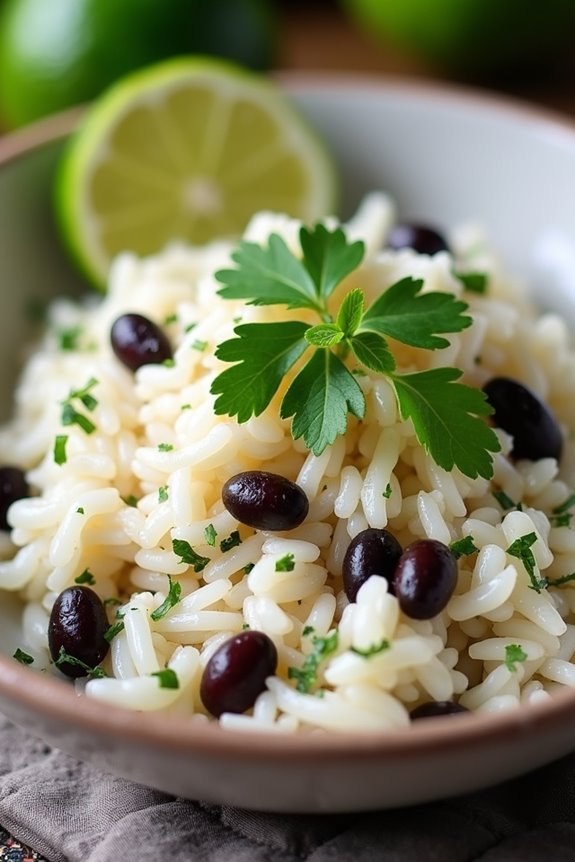
Coconut Rice With Black Beans is a delightful dish that captures the essence of Colombian flavors while being completely plant-based. This recipe combines the creamy richness of coconut milk with the hearty texture of black beans, resulting in a comforting and satisfying meal. The sweetness of the coconut perfectly complements the savory notes of the black beans, making it a great side dish or a main course, especially for those who appreciate plant-powered cuisine.
Cooking this dish isn’t only straightforward but also allows you to enjoy the vibrant flavors of Colombian cooking. The combination of fragrant jasmine rice, aromatic spices, and nutrient-dense black beans creates a dish that’s both delicious and nutritious. Serve it with avocado, fresh herbs, or a squeeze of lime for an added layer of flavor that will surely impress your family and friends.
Ingredients (Serves 4-6):
- 2 cups jasmine rice
- 1 can (14 oz) coconut milk
- 1 ½ cups vegetable broth or water
- 1 can (15 oz) black beans, rinsed and drained
- 1 small onion, finely chopped
- 3 cloves garlic, minced
- 1 tablespoon olive oil
- 1 teaspoon cumin
- 1 teaspoon paprika
- Salt and pepper to taste
- Fresh cilantro, chopped (for garnish)
- Lime wedges (for serving)
Cooking Instructions:
- Rinse the Rice: Start by rinsing the jasmine rice under cold water until the water runs clear. This step helps to remove excess starch, resulting in fluffier rice. Drain the rice well and set it aside.
- Sauté Aromatics: In a large saucepan, heat the olive oil over medium heat. Add the chopped onion and sauté until translucent, about 5 minutes. Then, add the minced garlic and cook for an additional minute until fragrant. This will create a flavorful base for your rice.
- Cook the Rice: Add the rinsed jasmine rice to the saucepan with the sautéed onions and garlic. Stir the rice for about 2-3 minutes to lightly toast it, which will enhance its nutty flavor.
- Add Liquids and Spices: Pour in the coconut milk and vegetable broth (or water), and stir in the cumin, paprika, salt, and pepper. Bring the mixture to a gentle boil, then reduce the heat to low and cover the saucepan. Allow the rice to simmer for about 15-20 minutes, or until the liquid is absorbed and the rice is tender.
- Incorporate Black Beans: Once the rice is cooked, remove the saucepan from heat. Gently fold in the rinsed black beans and let it sit, covered, for an additional 5 minutes. This allows the flavors to meld together while heating the beans.
- Fluff and Serve: After resting, use a fork to fluff the rice and beans together. Serve the Coconut Rice With Black Beans warm, garnished with fresh cilantro and lime wedges on the side.
Extra Tips:
When cooking Coconut Rice With Black Beans, feel free to adjust the spice levels according to your preference. Adding a pinch of red pepper flakes or diced jalapeños can give it an extra kick.
Additionally, consider incorporating other vegetables like bell peppers or corn for added color and nutrition. This dish pairs wonderfully with a fresh avocado salad or a side of sautéed greens for a complete meal. Enjoy the vibrant flavors of Colombia in your own home!
Lentil Soup With Cilantro
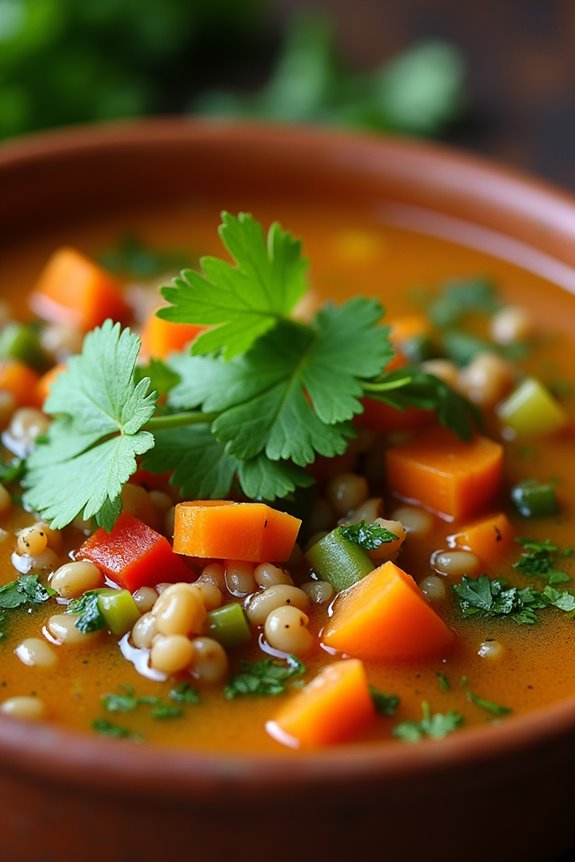
Lentil soup is a beloved dish in Colombian cuisine, known for its rich flavors and hearty texture. This plant-powered vegan version of lentil soup incorporates fresh cilantro, which adds a vibrant and aromatic touch to the dish. Perfect for a cozy dinner or a comforting lunch, this recipe isn’t only nutritious but also easy to prepare, making it a fantastic option for any home cook.
The combination of lentils, vegetables, and spices creates a warming bowl that’s both satisfying and delicious. This recipe serves 4-6 people, making it ideal for family gatherings or meal prepping for the week. With simple ingredients and straightforward instructions, you’ll be able to whip up a pot of this delightful lentil soup in no time.
Plus, it’s a great way to introduce more plant-based meals into your diet while enjoying the festive flavors of Colombian cuisine.
Ingredients
- 1 cup dried green or brown lentils, rinsed
- 1 medium onion, diced
- 2 cloves garlic, minced
- 2 medium carrots, diced
- 2 stalks celery, diced
- 1 bell pepper, diced
- 6 cups vegetable broth
- 1 teaspoon ground cumin
- 1 teaspoon smoked paprika
- Salt and pepper, to taste
- 1 cup fresh cilantro, chopped (plus extra for garnish)
- 2 tablespoons olive oil
- Juice of 1 lime
Cooking Instructions
- Sauté the Aromatics: In a large pot, heat the olive oil over medium heat. Add the diced onion, garlic, carrots, celery, and bell pepper. Sauté for about 5-7 minutes until the vegetables are softened and the onions are translucent.
- Add the Lentils and Spices: Stir in the rinsed lentils, ground cumin, smoked paprika, salt, and pepper. Mix well to coat the lentils with the spices and let them toast for about 2 minutes to enhance their flavor.
- Pour in the Broth: Carefully add the vegetable broth to the pot. Bring the mixture to a boil, then reduce the heat to low. Cover the pot and let it simmer for approximately 25-30 minutes, or until the lentils are tender.
- Incorporate the Cilantro: Once the lentils are cooked, stir in the chopped cilantro and lime juice. Adjust the seasoning with more salt and pepper if necessary. Let it simmer for another 5 minutes to allow the flavors to meld together.
- Serve: Remove the pot from heat. Ladle the soup into bowls and garnish with additional cilantro. Serve hot with crusty bread or rice if desired.
Extra Tips
For added depth of flavor, consider including a bay leaf while the soup simmers, and remember to remove it before serving. If you prefer a creamier texture, you can blend a portion of the soup with an immersion blender or in a regular blender, then mix it back in.
Feel free to customize the vegetables based on what you have on hand, such as adding zucchini or sweet potatoes for extra nutrition. Enjoy your hearty and flavorful lentil soup!
Chocoramo-Inspired Vegan Treats

If you’re a fan of the beloved Colombian snack, Chocoramo, you’re in for a treat with this vegan twist on the classic. These delightful chocolate-covered cakes filled with a sweet cream aren’t only plant-based but also incredibly easy to make. The combination of a soft, sponge-like cake with a rich chocolate coating makes these treats irresistible. Perfect for an afternoon snack, dessert, or even as a special treat for guests, they’re sure to satisfy your sweet tooth while adhering to vegan principles.
Creating these Chocoramo-inspired vegan treats is a fun and rewarding experience. With a few simple ingredients, you can whip up a batch that captures the essence of the original treat while being completely plant-powered. The recipe is designed to serve about 4-6 people, making it great for sharing or enjoying over a couple of days. Let’s explore the ingredients and get started on this chocolatey delight!
Ingredients (serving size: 4-6 people)
- 1 cup all-purpose flour
- 1 cup almond milk (or any plant-based milk)
- 1/2 cup coconut sugar (or any granulated sugar of choice)
- 1/4 cup vegetable oil
- 1/4 cup unsweetened cocoa powder
- 1 tablespoon baking powder
- 1/2 teaspoon vanilla extract
- 1/4 teaspoon salt
- 1 cup vegan marshmallow fluff (or a homemade equivalent)
- 1 cup dairy-free dark chocolate chips
- 2 tablespoons coconut oil (for melting chocolate)
Cooking Instructions
- Prepare the Cake Batter: In a large mixing bowl, combine the all-purpose flour, coconut sugar, cocoa powder, baking powder, and salt. Whisk together until well incorporated. In a separate bowl, mix the almond milk, vegetable oil, and vanilla extract. Gradually add the wet ingredients to the dry ingredients, stirring until just combined. Be careful not to overmix, as this can lead to a dense cake.
- Bake the Cakes: Preheat your oven to 350°F (175°C). Grease a rectangular baking dish or line it with parchment paper for easy removal. Pour the batter into the prepared dish and spread it evenly. Bake for 25-30 minutes or until a toothpick inserted in the center comes out clean. Once baked, allow the cake to cool completely in the pan.
- Cut and Fill: Once the cake has cooled, carefully remove it from the pan and place it on a cutting board. Cut the cake into rectangular pieces resembling the size of traditional Chocoramos. Take a piece and slice it horizontally to create two layers. Spread a generous layer of vegan marshmallow fluff on the bottom half, then place the top half back on.
- Melt the Chocolate: In a microwave-safe bowl, combine the dairy-free dark chocolate chips and coconut oil. Microwave in 30-second intervals, stirring in between, until the chocolate is fully melted and smooth. Be cautious not to overheat the chocolate, as it can seize up.
- Coat the Cakes: Dip each filled cake into the melted chocolate, ensuring it’s fully coated. Allow excess chocolate to drip off before placing the cakes on a wire rack or parchment paper to set. Repeat this process until all pieces are coated.
- Let Them Set: Once all the cakes are coated in chocolate, place them in the refrigerator for about 30 minutes to allow the chocolate to harden completely.
Extra Tips
For an added twist, consider experimenting with different flavors of vegan marshmallow fluff, such as vanilla or coconut, to enhance the filling. You can also sprinkle some crushed nuts or shredded coconut on top of the chocolate coating for an extra crunch. If you’re looking to make these treats gluten-free, substitute the all-purpose flour with a gluten-free flour blend. Enjoy your delicious Chocoramo-inspired vegan treats!
Guava and Passion Fruit Smoothie
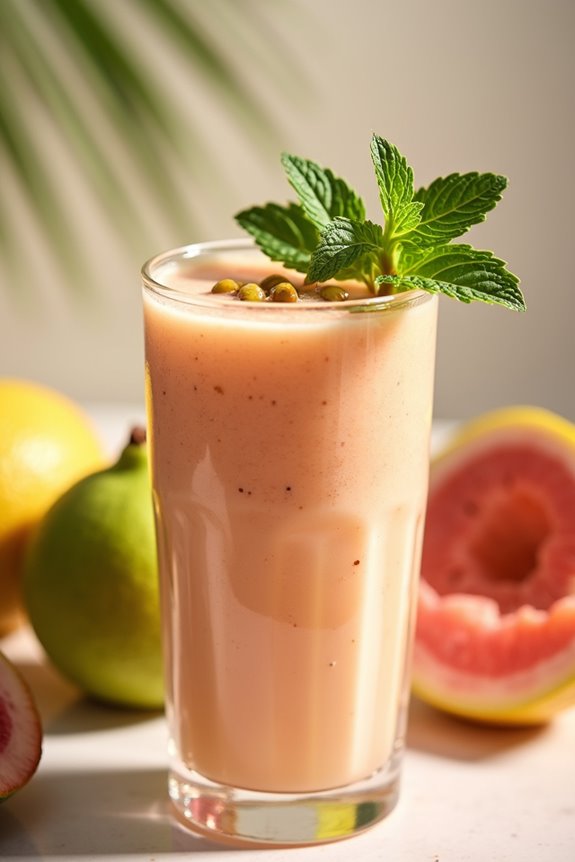
This delightful Guava and Passion Fruit Smoothie is a invigorating and nutritious treat that captures the vibrant flavors of Colombia. Combining the tropical sweetness of ripe guavas with the tangy zest of passion fruit, this smoothie isn’t only delicious but also packed with vitamins and antioxidants. It’s perfect for a warm day or as a revitalizing breakfast option, and you can easily whip it up in just a few minutes.
To elevate the flavor, you can add some fresh mint leaves or a splash of coconut water, which complements the fruitiness beautifully. This smoothie is entirely plant-powered, making it an excellent choice for vegans and anyone looking for a healthy, invigorating beverage. Serve it chilled, and it’s sure to impress family and friends alike!
Ingredients (serving size: 4-6 people):
- 2 ripe guavas, peeled and chopped
- 3 ripe passion fruits, halved and pulp scooped out
- 2 cups almond milk (or any plant-based milk)
- 1 tablespoon agave syrup or maple syrup (optional, depending on sweetness preference)
- 1 banana, sliced (for extra creaminess)
- Ice cubes (about 1 cup)
- Fresh mint leaves for garnish (optional)
Cooking Instructions:
- Prepare the Ingredients: Start by peeling and chopping the ripe guavas into small pieces. Halve the passion fruits and scoop out the pulp, ensuring you collect all the seeds and juice. Slice the banana into smaller pieces for easier blending.
- Blend the Ingredients: In a blender, combine the chopped guavas, passion fruit pulp, almond milk, agave syrup (if using), and sliced banana. Add the ice cubes to the blender to give the smoothie a invigorating chill.
- Blend Until Smooth: Secure the lid on the blender and blend the mixture on high speed until it reaches a smooth and creamy consistency. This should take about 30-60 seconds. If you find the smoothie too thick, you can add a little more almond milk to thin it out.
- Taste and Adjust Sweetness: Once blended, taste the smoothie to see if it meets your sweetness preference. If you want it sweeter, add a little more agave syrup or maple syrup and blend again briefly to combine.
- Serve and Garnish: Pour the smoothie into glasses. If desired, garnish with fresh mint leaves for an extra pop of color and flavor. Serve immediately to enjoy the freshness of the ingredients.
Extra Tips: For an added nutritional boost, consider incorporating a tablespoon of chia seeds or ground flaxseeds into the smoothie before blending. Both options enhance the smoothie’s fiber content and provide healthy omega-3 fatty acids.
Additionally, feel free to experiment with other fruits or ingredients, such as spinach or kale, for a green twist, or substitute coconut milk for a creamier texture. Enjoy your delicious Guava and Passion Fruit Smoothie!
Casabe With Hummus and Veggies
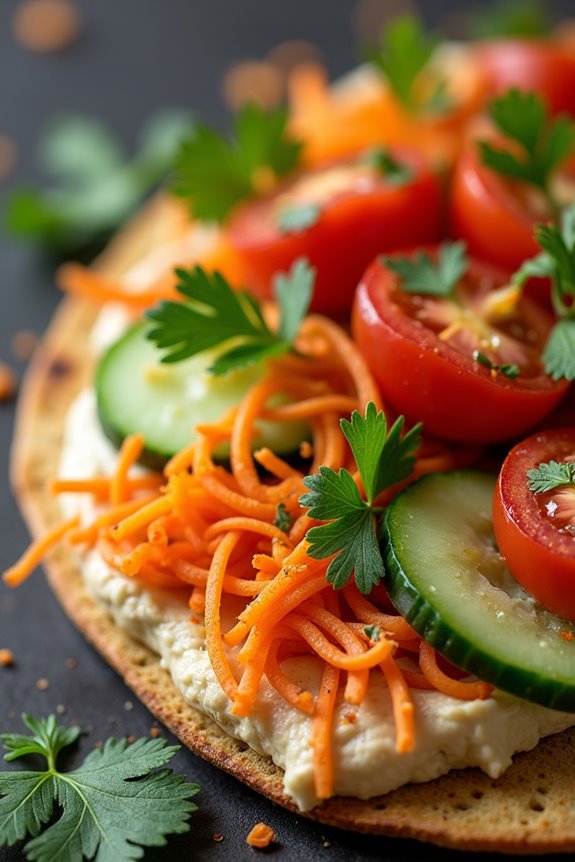
Casabe is a traditional Colombian flatbread made from cassava flour that serves as a delightful base for various toppings. This dish isn’t only gluten-free but also rich in flavor and texture. Paired with creamy hummus and a colorful array of fresh vegetables, Casabe With Hummus and Veggies presents a healthy, plant-powered option that’s perfect for sharing with friends and family.
It’s an excellent choice for a light meal or as a nutritious appetizer for gatherings. Making casabe is a simple yet rewarding process that allows you to bring a taste of Colombian cuisine into your kitchen. The combination of the crispy flatbread with the smooth, savory hummus and vibrant veggies creates a delightful harmony of flavors and colors.
This recipe serves 4-6 people, making it ideal for a small gathering or family dinner. Follow these easy steps to prepare a dish that everyone will enjoy!
Ingredients (Serves 4-6):
- 2 cups cassava flour
- 1 cup water
- 1 teaspoon salt
- 1 tablespoon olive oil (for cooking)
- 1 cup store-bought or homemade hummus
- 1 cup cherry tomatoes, halved
- 1 cucumber, sliced
- 1 bell pepper, sliced (any color)
- 1 carrot, grated
- Fresh herbs (such as cilantro or parsley) for garnish
- Optional: chili flakes or paprika for spice
Cooking Instructions:
- Prepare the Casabe Dough: In a mixing bowl, combine the cassava flour and salt. Gradually add water while stirring until a smooth dough forms. The mixture should be pliable but not too sticky. Let it rest for about 10 minutes to allow the flour to fully absorb the water.
- Shape the Casabe: Divide the dough into equal portions (about 4-6). On a clean surface, roll each portion into a flat disc, approximately ¼ inch thick. You can use a rolling pin or your hands to flatten the dough. Aim for an even thickness to guarantee uniform cooking.
- Cook the Casabe: Heat a non-stick skillet or griddle over medium heat and add a drizzle of olive oil. Once hot, place a rolled-out disc of dough on the skillet. Cook for about 3-4 minutes on each side, or until golden brown and crispy. Repeat this process with the remaining dough portions, adding more oil as needed.
- Prepare the Veggies: While the casabe is cooking, prepare the vegetables. Rinse and chop the cherry tomatoes, cucumber, bell pepper, and grate the carrot. Arrange the fresh vegetables on a platter for easy serving.
- Assemble the Dish: Once the casabe is cooked, spread a generous layer of hummus on each flatbread. Top with a colorful assortment of the prepared vegetables. You can also sprinkle some fresh herbs and chili flakes or paprika for added flavor and visual appeal.
- Serve: Cut the casabe into wedges or serve them whole with the hummus and veggies on top. Enjoy immediately while the casabe is still crispy!
Extra Tips:
For an added depth of flavor, consider incorporating roasted vegetables or grilled zucchini and eggplant as toppings. You can also experiment with different hummus flavors such as roasted red pepper or garlic for a unique twist.
If you have leftovers, store the casabe flatbreads separately from the toppings to keep them crispy. Reheat the casabe in a skillet for a few minutes before serving again. Enjoy your plant-powered Colombian meal!
