

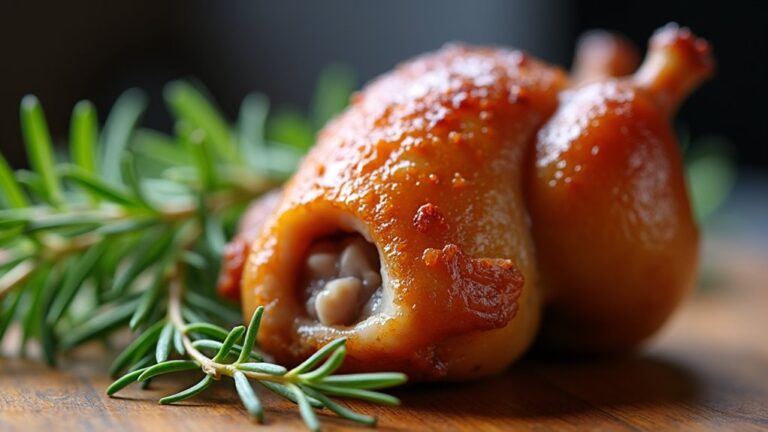
Get ready to wow your guests with the festive magic of Lechona Colombiana. I’ve rounded up ten delightful recipes that put a twist on this traditional favorite. From the classic whole roasted pig to innovative vegetarian options, there’s something for everyone. Each recipe highlights the rich flavors of Colombia’s culinary traditions. Let’s explore these exciting dishes together.
Classic Lechona Colombiana
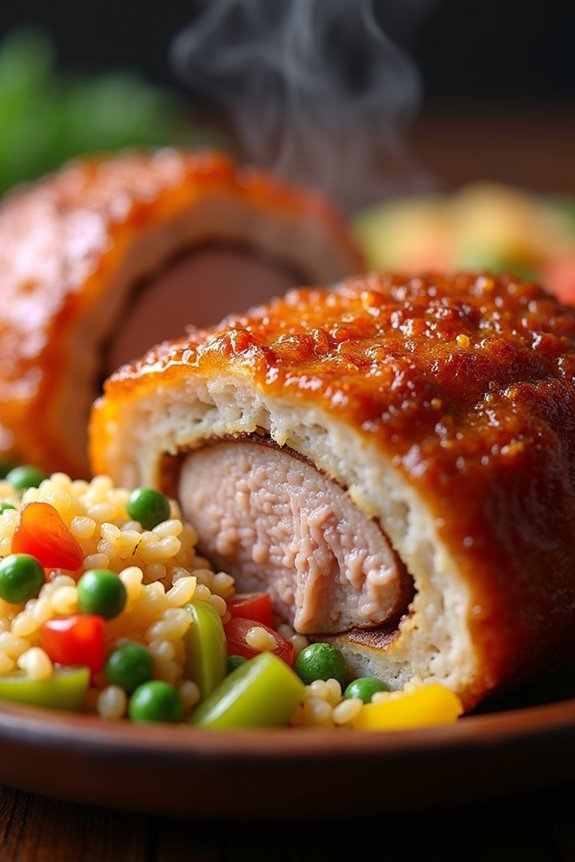
Lechona Colombiana is a traditional Colombian dish that showcases the country’s rich culinary heritage, especially during festive occasions. This mouthwatering preparation features a whole roasted pig stuffed with a flavorful mixture of rice, peas, and spices, resulting in a dish that’s both savory and aromatic.
Originating from the Tolima region, lechona is a centerpiece for celebrations, family gatherings, and holidays, enchanting everyone with its crispy skin and tender meat.
To prepare this dish, you’ll need to dedicate several hours to guarantee that the pig is cooked to perfection. The process involves marinating the pig overnight, followed by slow roasting to achieve the ideal balance of crispy exterior and succulent interior. Each bite of lechona is a burst of flavor, making it a must-try for anyone wanting to experience the authentic taste of Colombian cuisine.
Ingredients (serving size: 4-6 people)
- 1 whole pig (about 10-12 lbs)
- 4 cups of long-grain rice
- 2 cups of green peas
- 1 cup of diced onions
- 1 cup of diced tomatoes
- 1 cup of diced bell peppers
- ½ cup of diced carrots
- 5 cloves of garlic, minced
- 1 tablespoon of ground cumin
- 1 tablespoon of paprika
- 1 tablespoon of salt
- 1 tablespoon of black pepper
- 1 cup of vegetable oil
- Fresh herbs (thyme, rosemary) for seasoning
- 2 cups of chicken broth
Cooking Instructions
- Prep the Pig: Start by thoroughly cleaning the pig inside and out. Remove any hair and organs, making sure that the skin is intact. Pat it dry with paper towels. This step is essential for achieving crispy skin during roasting.
- Marinate the Pig: In a large bowl, combine the minced garlic, cumin, paprika, salt, and black pepper with vegetable oil to create a marinade. Rub this mixture generously over the entire pig, making sure it gets into all the crevices. Cover and let it marinate in the refrigerator overnight for maximum flavor.
- Prepare the Filling: While the pig is marinating, cook the rice according to package instructions, but substitute half of the water with chicken broth for added flavor. In a separate pan, sauté the onions, tomatoes, bell peppers, carrots, and green peas until tender. Mix the sautéed vegetables into the cooked rice and season with salt and pepper.
- Stuff the Pig: Once marinated, carefully stuff the pig’s cavity with the rice and vegetable mixture. Make sure to pack it tightly but leave some space for the rice to expand during cooking. Sew the cavity shut with kitchen twine to prevent the filling from spilling out.
- Roast the Pig: Preheat your oven to 300°F (150°C). Place the stuffed pig on a roasting rack in a large roasting pan. Roast for about 6-8 hours, depending on the size of the pig. Baste every hour with its own juices to keep the meat moist and enhance the flavor. You can cover it with aluminum foil for the first few hours to prevent the skin from burning.
- Crisp the Skin: In the last hour of roasting, increase the oven temperature to 400°F (200°C) to achieve a crispy skin. This step is vital for that desirable texture. Keep an eye on it to prevent burning.
- Rest and Serve: Once the pig reaches an internal temperature of 160°F (70°C), remove it from the oven. Let it rest for at least 30 minutes before carving. This resting period helps the juices redistribute, making the meat more tender.
Extra Tips
When cooking Lechona Colombiana, it’s important to guarantee even cooking by rotating the pig occasionally if you’re using a grill or a rotisserie.
Additionally, consider using a meat thermometer to check for doneness accurately. If possible, enlist the help of friends or family to make the process more enjoyable, as preparing lechona can be a labor of love that’s best shared.
Finally, serve the dish with a side of arepas and a fresh salad to complete your festive feast!
Lechona With Pineapple and Mango Salsa
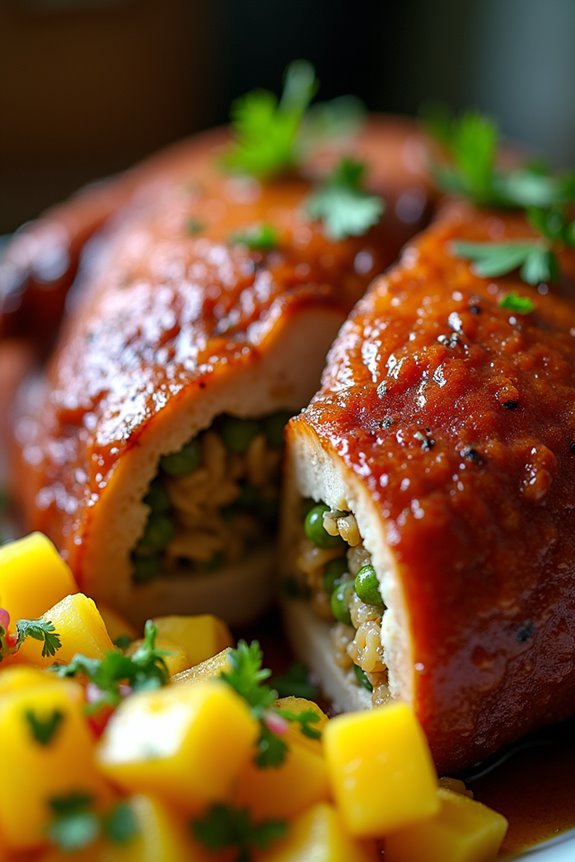
Lechona, a traditional Colombian dish, is a celebration of flavors and textures that captures the essence of festive gatherings. This dish features a whole roasted pig stuffed with rice, peas, and spices, delivering a rich and savory experience. When combined with an invigorating pineapple and mango salsa, it elevates the dish, adding a burst of tropical sweetness that perfectly balances the savory lechona. This combination is perfect for family celebrations, holiday feasts, or any special occasion where you want to impress your guests.
The process of preparing lechona can seem intimidating, but with careful planning and the right ingredients, you can create a mouthwatering centerpiece that will have everyone raving. The pineapple and mango salsa not only complements the richness of the lechona but also introduces a vibrant color and freshness to the plate. Below, you’ll find the ingredients and step-by-step instructions for making Lechona with Pineapple and Mango Salsa, serving 4-6 people.
Ingredients:
- 1 whole pig (10-15 pounds, cleaned and prepared for roasting)
- 4 cups cooked rice
- 2 cups green peas
- 2 teaspoons garlic powder
- 2 teaspoons onion powder
- 2 tablespoons paprika
- 1 tablespoon cumin
- Salt and pepper to taste
- 1 cup chicken broth
- 1 tablespoon olive oil
For the Pineapple and Mango Salsa:
- 1 ripe pineapple, diced
- 1 ripe mango, diced
- 1 small red onion, finely chopped
- 1 jalapeño, seeded and minced
- Juice of 2 limes
- Fresh cilantro, chopped (to taste)
- Salt to taste
Cooking Instructions:
- Prepare the Pig: Start by preheating your oven to 350°F (175°C). If you’re doing this at home, confirm the pig is properly cleaned and ready for stuffing. You may need to ask your butcher to prepare it for roasting.
- Make the Filling: In a large bowl, combine the cooked rice, green peas, garlic powder, onion powder, paprika, cumin, salt, and pepper. Mix well until all ingredients are evenly incorporated.
- Stuff the Pig: Carefully stuff the prepared pig’s cavity with the rice mixture, making sure it’s packed tightly. Use kitchen twine to sew the opening shut or secure it with skewers.
- Season the Pig: Rub the outside of the pig with olive oil and season generously with salt, pepper, and additional spices if desired. This will create a flavorful crust during roasting.
- Roast the Pig: Place the stuffed pig on a roasting rack in a large roasting pan. Pour chicken broth into the pan to keep the meat moist. Roast in the preheated oven for about 4-6 hours, or until the internal temperature reaches 160°F (71°C) and the skin is crispy and golden brown. Baste occasionally with the pan juices.
- Prepare the Salsa: While the pig is roasting, combine the diced pineapple, mango, red onion, jalapeño, lime juice, cilantro, and salt in a mixing bowl. Toss gently and refrigerate until ready to serve.
- Serve: Once the lechona is done cooking, carefully remove it from the oven and let it rest for about 30 minutes. Carve the pig and serve with the pineapple and mango salsa on the side, allowing guests to add the salsa as desired.
Extra Tips:
When preparing lechona, timing and patience are key. If you’re roasting a whole pig, consider starting the process early in the day, as it can take several hours to cook thoroughly. Monitor the internal temperature closely to avoid overcooking, which can lead to dry meat.
Additionally, feel free to experiment with the salsa ingredients—adding ingredients like bell peppers or avocado can create variations that complement the lechona beautifully. Enjoy the culinary journey and the joy this dish brings to your table!
Spicy Lechona With Aji Sauce
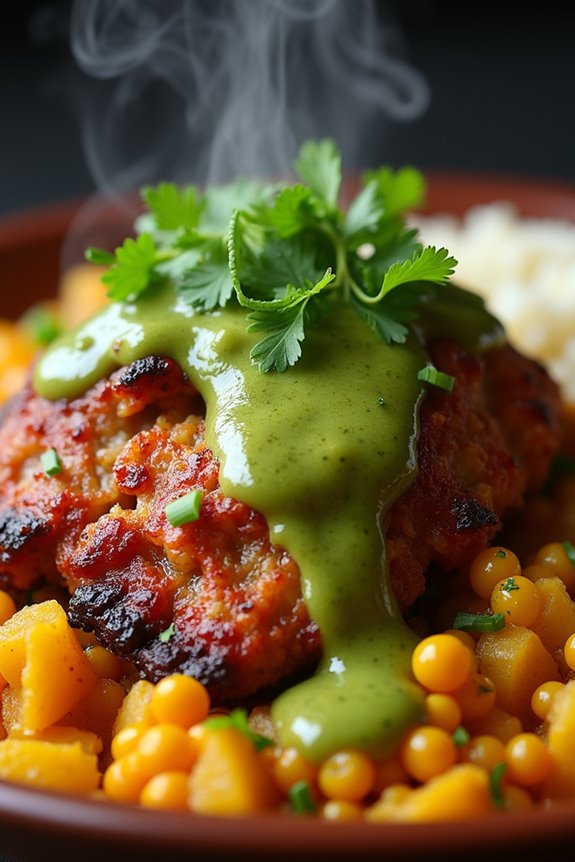
Spicy Lechona, a traditional Colombian dish, is a festive delight that showcases the rich flavors and vibrant culture of Colombia. This slow-roasted pork dish is often served during special occasions and celebrations, making it a beloved centerpiece for gatherings. The pork is cooked until tender and infused with aromatic spices, while the accompanying Aji sauce adds a delightful kick of heat and freshness, elevating the overall flavor profile of the meal.
The combination of savory meat and zesty sauce creates a mouthwatering experience that will impress your family and friends. As you commence on this culinary journey, prepare to fill your kitchen with enticing aromas and enjoy the satisfaction of creating a dish that embodies the warmth and spirit of Colombian festivities. With careful preparation and attention to detail, you can bring this festive dish to life in your own home.
Ingredients (serving size: 4-6 people)
- 4 lbs whole pork shoulder or pork loin
- 4 cloves garlic, minced
- 2 tablespoons cumin
- 2 tablespoons paprika
- 1 tablespoon salt
- 1 tablespoon black pepper
- 1 cup chicken broth
- 2 tablespoons vegetable oil
- 1 cup cooked rice
- 1 cup cooked yellow peas
- 1 cup diced potatoes
- 1/2 cup green onions, chopped
For Aji Sauce:
- 1 cup cilantro, chopped
- 1/2 cup green chili peppers, chopped (adjust for desired spice level)
- 1/2 cup red onion, chopped
- 1/4 cup vinegar
- 1/2 teaspoon salt
- 1 tablespoon lime juice
Cooking Instructions
- Prepare the Pork: Start by preheating your oven to 325°F (165°C). Rinse the pork shoulder under cold water and pat it dry with paper towels. This helps to remove any excess blood and prepares the meat for seasoning.
- Season the Meat: In a small bowl, mix together the minced garlic, cumin, paprika, salt, and black pepper. Rub this seasoning mixture all over the pork, guaranteeing that it’s evenly coated. This step is essential for imparting flavor throughout the meat as it cooks.
- Sear the Pork: In a large oven-safe skillet or roasting pan, heat the vegetable oil over medium-high heat. Once hot, add the pork and sear it on all sides until golden brown. This process locks in the juices and adds depth to the flavor.
- Add Broth and Vegetables: Carefully pour the chicken broth around the pork, avoiding washing off the seasoning. Add the cooked rice, yellow peas, and diced potatoes to the pan. These ingredients will absorb the flavors from the pork as it cooks.
- Roast the Pork: Cover the skillet or pan tightly with aluminum foil or a lid, then place it in the preheated oven. Roast for about 3-4 hours, or until the pork is tender and easily shredded with a fork. Check occasionally to confirm there’s enough liquid in the pan, adding more broth if necessary.
- Prepare Aji Sauce: While the pork is roasting, prepare the Aji sauce. In a blender or food processor, combine cilantro, green chili peppers, red onion, vinegar, salt, and lime juice. Blend until smooth. Adjust the seasoning to taste, adding more salt or lime juice if desired.
- Finish and Serve: Once the pork is cooked, remove it from the oven and let it rest for about 15-20 minutes before slicing or shredding. Serve the spicy lechona with a generous drizzle of Aji sauce on top, garnished with chopped green onions.
Extra Tips
When preparing Spicy Lechona, it’s important to allow sufficient time for the pork to marinate and absorb the flavors of the spices. If possible, season the pork the night before and let it sit in the refrigerator. This will enhance the taste considerably.
Additionally, feel free to customize the Aji sauce to suit your spice preference, as the heat can vary based on the type of chili peppers used. Finally, serving the lechona with fresh avocado and crispy plantain chips can add a delightful contrast in texture and flavor to the meal. Enjoy your festive feast!
Vegetarian Lechona With Stuffed Eggplant
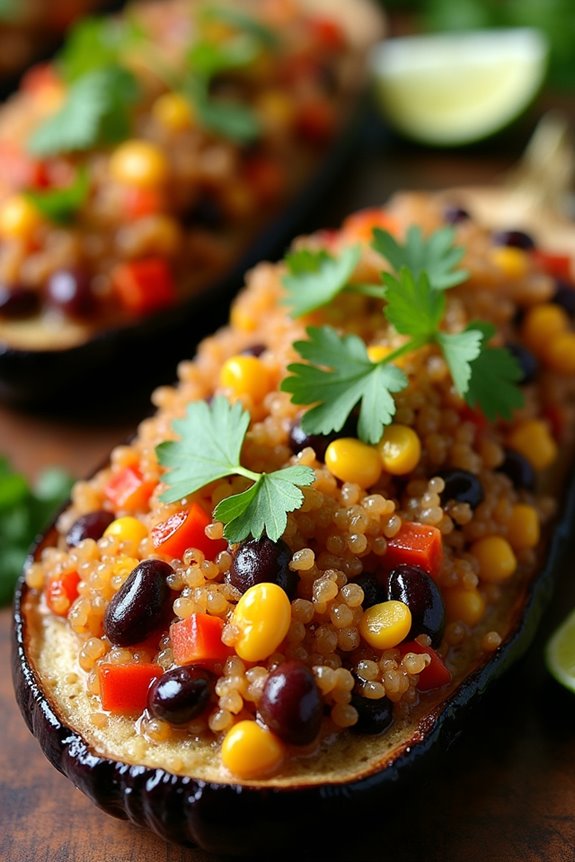
Vegetarian Lechona, a delightful twist on the traditional Colombian dish, brings a burst of flavor and creativity to the festive table. Instead of the usual pork, this version utilizes eggplant as the centerpiece, stuffed with a savory mixture of grains, vegetables, and spices. This dish not only honors the spirit of Lechona but also caters to vegetarian diets, making it a perfect option for gatherings that include diverse dietary preferences.
The stuffed eggplant serves as a vessel for delicious ingredients, creating a hearty meal that’s satisfying and visually appealing. The use of spices like cumin and paprika infuses the dish with authentic Colombian flavors, while the addition of fresh herbs elevates it to a gourmet experience. Serve it alongside a simple salad or some rice to round out the meal, and enjoy the compliments from your guests as they savor each bite of this festive vegetarian delight.
Ingredients (serving size of 4-6 people):
- 2 large eggplants
- 1 cup cooked quinoa
- 1 cup black beans, rinsed and drained
- 1 red bell pepper, diced
- 1 small onion, finely chopped
- 2 cloves garlic, minced
- 1 teaspoon ground cumin
- 1 teaspoon smoked paprika
- 1 teaspoon dried oregano
- 1 tablespoon olive oil
- Salt and pepper to taste
- 1 cup corn kernels (fresh or frozen)
- ½ cup chopped fresh cilantro
- 1 cup shredded cheese (optional, for topping)
- Lime wedges for serving
Cooking Instructions:
- Prepare the Eggplants: Preheat your oven to 375°F (190°C). Cut the eggplants in half lengthwise and scoop out some of the flesh to create a boat-like shape. Reserve the scooped-out flesh for the filling. Lightly salt the eggplant halves and place them cut-side down on a baking sheet. Roast in the oven for about 20 minutes until they’re tender. Remove and set aside.
- Cook the Filling: In a large skillet, heat the olive oil over medium heat. Add the chopped onion and diced red bell pepper, sautéing for about 5 minutes until they begin to soften. Add the minced garlic, cumin, smoked paprika, and oregano, cooking for an additional minute until the spices are fragrant.
- Combine the Ingredients: Chop the reserved eggplant flesh and add it to the skillet along with the cooked quinoa, black beans, corn, and chopped cilantro. Season the mixture with salt and pepper to taste. Stir well and cook for 5-7 minutes until everything is heated through and well combined.
- Stuff the Eggplants: Carefully turn the roasted eggplant halves over and spoon the filling generously into each one, pressing it down slightly to pack it in. If using cheese, sprinkle it over the top of each stuffed eggplant.
- Bake the Stuffed Eggplants: Place the stuffed eggplants back in the oven and bake for an additional 15-20 minutes, or until the cheese (if used) is melted and bubbly, and the top is slightly golden.
- Serve: Remove the stuffed eggplants from the oven and let them cool for a few minutes. Serve with lime wedges on the side for an added zest, along with your choice of salad or rice.
Extra Tips: When preparing this dish, feel free to customize the stuffing based on your favorite vegetables or grains. You can add mushrooms, spinach, or even tofu for additional protein.
If you’re looking to make it gluten-free, confirm that the quinoa and any other ingredients are certified gluten-free. Finally, serving this dish with a fresh salsa or avocado dip can enhance the flavors and add a rejuvenating touch to your meal. Enjoy your culinary creation!
Lechona With Quinoa and Black Beans
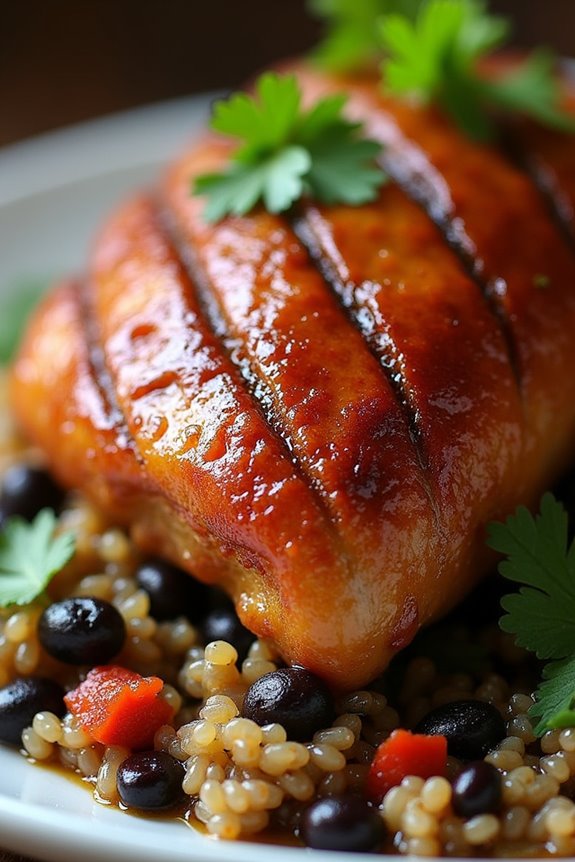
Lechona, a traditional Colombian dish, is often the centerpiece of festive gatherings, celebrated for its rich flavors and tender meat. This variation combines the classic elements of lechona with the nutritious benefits of quinoa and black beans, making it not only a delicious meal but also a wholesome one. The combination of succulent roasted pork with the nutty quinoa and earthy black beans creates a delightful balance that’s sure to impress your guests and family alike.
Preparing Lechona with Quinoa and Black Beans is a fantastic way to elevate the traditional recipe while still honoring its roots. The quinoa adds a delightful texture and is packed with protein, while the black beans contribute a hearty flavor and additional nutrition. This dish is perfect for gatherings or special celebrations, offering a unique twist on a classic favorite. Follow this recipe to create a memorable meal that brings everyone together.
Ingredients (Serves 4-6):
- 2-3 lbs pork shoulder or pork belly
- 1 cup quinoa, rinsed
- 1 cup black beans, soaked overnight and drained
- 1 medium onion, finely chopped
- 4 cloves garlic, minced
- 1 red bell pepper, diced
- 1 cup chicken or vegetable broth
- 2 teaspoons cumin
- 1 teaspoon paprika
- 1 teaspoon salt
- ½ teaspoon black pepper
- 2 tablespoons olive oil
- Fresh cilantro for garnish (optional)
Cooking Instructions:
- Prepare the Pork: Preheat your oven to 325°F (165°C). Score the skin of the pork in a crisscross pattern, being careful not to cut into the meat. Rub the entire piece of pork with olive oil, salt, black pepper, cumin, and paprika. Place it in a roasting pan and set aside to marinate while you prepare the quinoa and beans.
- Cook the Quinoa and Beans: In a medium saucepan, heat a tablespoon of olive oil over medium heat. Add the chopped onion and garlic, sautéing until they become translucent, about 3-4 minutes. Stir in the diced red bell pepper and cook for an additional 2 minutes. Add the soaked black beans, rinsed quinoa, and chicken or vegetable broth. Bring to a boil, then reduce the heat to low, cover, and simmer for about 15-20 minutes until the quinoa is fluffy and the beans are tender. Remove from heat and let it sit covered for a few minutes.
- Combine and Stuff: Once the quinoa and beans are cooked, gently fluff them with a fork and season with additional salt and pepper to taste. Carefully lift the skin of the pork and stuff the quinoa and black bean mixture underneath. This allows the flavors to meld as it cooks.
- Roast the Pork: Place the stuffed pork back in the oven and roast for approximately 2-2.5 hours, or until the skin is crispy and the internal temperature reaches 190°F (88°C). Check occasionally to verify it doesn’t dry out; if needed, baste with pan juices or add a little broth.
- Serve: Once the pork is cooked and crispy, remove it from the oven and let it rest for about 15 minutes. Slice the pork and serve with the remaining quinoa and black bean mixture on the side. Garnish with fresh cilantro if desired.
Extra Tips:
When preparing Lechona with Quinoa and Black Beans, be sure to soak the black beans overnight for ideal cooking and texture. For an extra layer of flavor, consider marinating the pork with spices the night before.
Also, keep an eye on the pork while it roasts to verify that the skin becomes crispy without burning. If you prefer a more pronounced flavor profile, feel free to add spices such as oregano or chili powder to the quinoa mixture. Enjoy this festive dish with family and friends for a truly memorable meal!
Lemon Herb Lechona
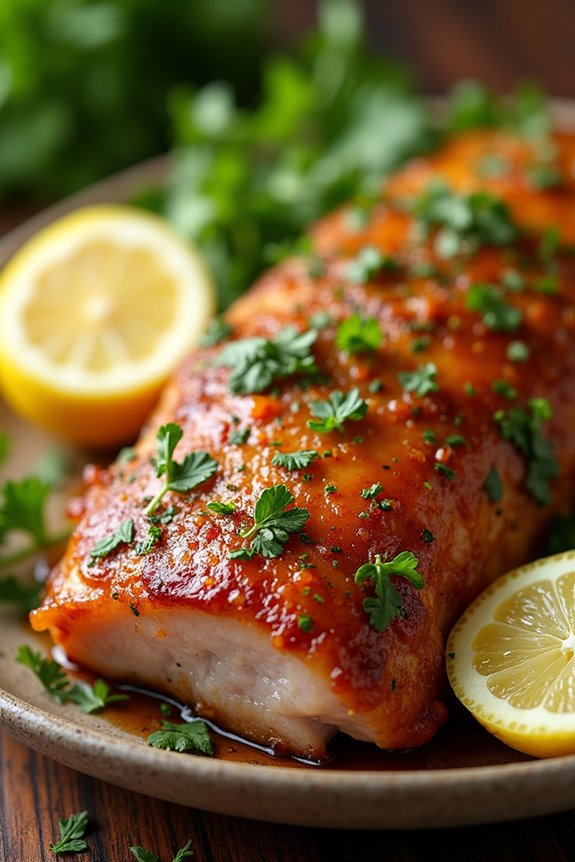
Lemon Herb Lechona is a delightful twist on the traditional Colombian dish, featuring succulent pork stuffed with a zesty blend of herbs and citrus flavors. This version brings a revitalizing brightness to the rich, tender meat, making it a perfect centerpiece for festive gatherings. The combination of lemon, garlic, and fresh herbs creates an aromatic experience that elevates the dish, guaranteeing that every bite is bursting with flavor.
This recipe is designed to serve 4-6 people, making it ideal for family celebrations or special occasions.
Cooking Lechona may seem intimidating, but with the right preparation and ingredients, you can create a memorable meal that will impress your guests. By marinating the pork overnight, you allow the flavors to penetrate deeply, resulting in a tender and juicy dish. The slow-roasting method guarantees a perfectly crispy skin, while the vibrant herb and lemon stuffing adds an inviting aroma to your kitchen.
Follow the steps below to create this extraordinary Lemon Herb Lechona.
Ingredients
- 1 whole pork leg (about 4-6 lbs)
- 4 cloves garlic, minced
- 2 lemons, zested and juiced
- 1 cup fresh parsley, chopped
- 1 cup fresh cilantro, chopped
- 1 tablespoon fresh thyme, chopped
- 1 tablespoon fresh rosemary, chopped
- 2 teaspoons salt
- 1 teaspoon black pepper
- 1 tablespoon olive oil
- 1 cup chicken broth
- 1 lemon, sliced (for garnish)
Cooking Instructions
- Prepare the Marinade: In a bowl, combine the minced garlic, lemon zest, lemon juice, chopped parsley, cilantro, thyme, rosemary, salt, pepper, and olive oil. Mix well to form a marinade paste.
- Marinate the Pork: Using a sharp knife, make deep incisions all over the pork leg, making sure they reach the bone. Rub the marinade thoroughly into the meat, making sure to get it into the incisions. Cover the pork with plastic wrap and refrigerate overnight to allow the flavors to infuse.
- Preheat the Oven: On the day of cooking, preheat your oven to 325°F (165°C). This lower temperature will help cook the pork slowly and evenly, resulting in tender meat.
- Prepare for Roasting: Remove the pork from the refrigerator and let it sit at room temperature for about 30 minutes. Place the marinated pork in a large roasting pan. Pour the chicken broth into the bottom of the pan to keep the meat moist during roasting.
- Roast the Pork: Cover the pork with aluminum foil and place it in the preheated oven. Roast for about 3-4 hours, or until the internal temperature reaches 190°F (88°C) for super tender meat. Remove the foil in the last 30 minutes to allow the skin to crisp up.
- Rest the Meat: Once cooked, remove the pork from the oven and let it rest for about 20-30 minutes before carving. This resting period helps to retain the juices.
- Serve: Carve the pork leg and arrange it on a serving platter. Garnish with lemon slices and additional fresh herbs if desired. Serve with your favorite sides.
Extra Tips
When making Lemon Herb Lechona, don’t rush the marinating process; the longer the pork marinates, the more flavorful it will become. If you can, prepare the marinade and pork a day in advance.
Additionally, if you notice the skin isn’t browning to your liking during roasting, you can switch to broil for the last few minutes, but keep a close eye to avoid burning. Enjoy your cooking experience and the delicious results!
Lechona With Cilantro-Lime Rice
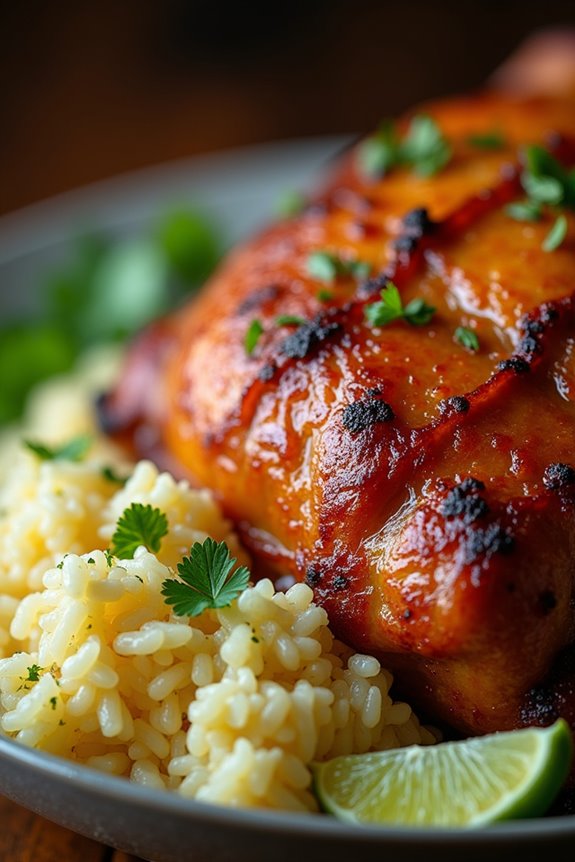
Lechona, a traditional Colombian dish, is a deliciously savory stuffed pork that’s often served during festive occasions and family gatherings. The dish is known for its crispy skin and succulent meat, which is typically stuffed with rice, peas, and various spices. When paired with cilantro-lime rice, the combination creates a vibrant and flavorful meal that’s sure to impress your guests. This recipe will guide you through the steps to prepare both the lechona and the accompanying rice, guaranteeing a delightful feast for 4-6 people.
Preparing lechona takes some time and effort, but the results are worth it. This dish not only showcases the flavors of Colombia but also brings people together around the dinner table. The cilantro-lime rice adds a revitalizing element that balances the richness of the pork, making it a perfect match. Let’s explore the ingredients and instructions to create this festive dish that will elevate your culinary repertoire.
Ingredients (Serves 4-6):
- 1 whole pig (approximately 10-12 lbs), cleaned and butterflied
- 4 cups cooked white rice
- 1 cup green peas (fresh or frozen)
- 1 cup diced carrots
- 1 onion, finely chopped
- 5 cloves garlic, minced
- 1 tablespoon cumin
- 1 tablespoon paprika
- 1 tablespoon salt
- 1 teaspoon black pepper
- 2 tablespoons vegetable oil
- 1 cup chicken broth
- 1 cup cilantro, chopped
- Juice of 2 limes
- Zest of 1 lime
- 2 tablespoons butter
Cooking Instructions:
- Prepare the Stuffing: In a large skillet, heat the vegetable oil over medium heat. Add the chopped onion and garlic, cooking until softened and fragrant, about 3-5 minutes. Stir in the diced carrots and cook for an additional 5 minutes. Add the cooked rice, green peas, cumin, paprika, salt, and pepper, mixing well. Pour in the chicken broth and cook for another 5 minutes until heated through. Remove from heat and set aside to cool.
- Season the Pig: Rinse the pig thoroughly and pat it dry with paper towels. Rub the inside and outside of the pig with salt, pepper, and additional spices if desired, guaranteeing an even coating. This step is vital for flavor infusion.
- Stuff the Pig: Once the stuffing has cooled, carefully fill the cavity of the pig with the rice mixture. Use kitchen twine to sew the opening shut, securing the stuffing inside and making sure that the pig maintains its shape during cooking.
- Roast the Lechona: Preheat your oven to 325°F (165°C). Place the stuffed pig on a large roasting rack set inside a roasting pan. Roast in the oven for about 4-5 hours, or until the internal temperature reaches 160°F (70°C). Baste the pig regularly with its own drippings to keep the meat moist and enhance flavor.
- Prepare the Cilantro-Lime Rice: While the lechona is roasting, prepare the cilantro-lime rice. In a large pot, melt the butter over medium heat. Add the cooked white rice, cilantro, lime juice, and lime zest, stirring to combine. Cook for about 5 minutes, allowing the flavors to meld. Season with salt to taste.
- Finish and Serve: Once the lechona is done roasting, carefully remove it from the oven and let it rest for about 15-20 minutes before carving. Serve the lechona with generous portions of cilantro-lime rice on the side, garnishing with extra lime wedges and cilantro, if desired.
Extra Tips:
When preparing lechona, it’s essential to give the pig enough time to roast thoroughly for ideal flavor and texture. For an extra crispy skin, consider increasing the oven temperature to 400°F (200°C) for the last 30 minutes of cooking. Additionally, using a meat thermometer will help guarantee the pork is cooked to perfection without drying it out.
Don’t hesitate to experiment with the stuffing ingredients by adding spices or other vegetables, creating a personal twist on this Colombian classic!
Sweet and Savory Lechona With Dried Fruits
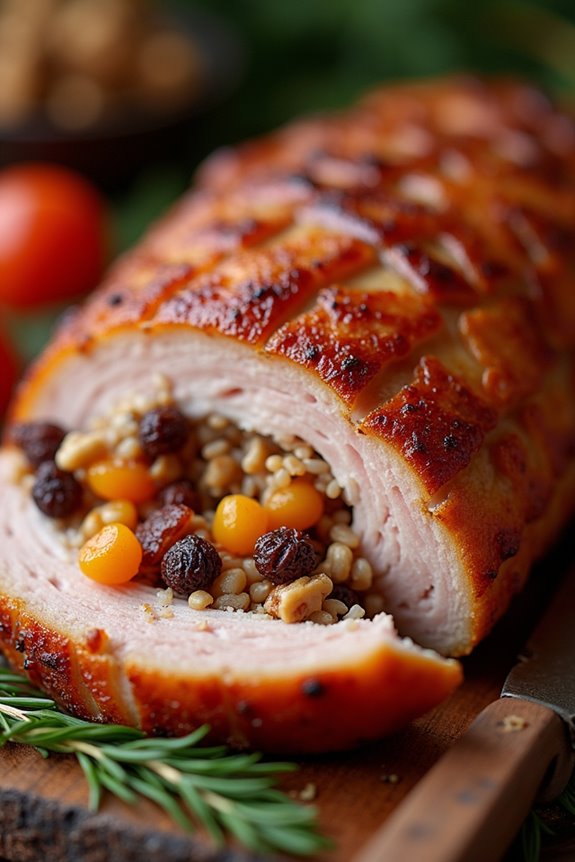
Lechona, a traditional Colombian dish, is often the centerpiece of festive occasions, known for its succulent pork and rich flavors. This Sweet and Savory Lechona with Dried Fruits takes the classic recipe to a delightful new level by incorporating a medley of dried fruits that adds a touch of sweetness and surprises the palate. The combination of the tender, roasted pork with the sweetness of the fruits creates a harmonious balance that’s sure to impress your guests during any holiday gathering or special celebration.
In this recipe, we’ll guide you through the process of preparing this delectable dish, making certain that you achieve that perfectly crispy skin and juicy meat. The dried fruits not only enhance the flavor but also contribute to the dish’s visual appeal. As you prepare this dish, let the aromas fill your kitchen, bringing warmth and joy reminiscent of family gatherings and festive celebrations in Colombia.
Ingredients (Serves 4-6)
- 4-5 lbs whole pork leg (bone-in, skin on)
- 2 cups cooked rice
- 1 cup chopped dried apricots
- 1 cup chopped dried figs
- 1 cup raisins
- 1/2 cup chopped walnuts
- 2 tablespoons brown sugar
- 2 teaspoons ground cumin
- 2 teaspoons paprika
- 1 teaspoon garlic powder
- 1 teaspoon onion powder
- Salt and pepper to taste
- 1/4 cup olive oil
- Fresh herbs for garnish (optional)
Cooking Instructions
- Prepare the Pork: Begin by rinsing the pork leg under cold water to remove any impurities. Pat it dry with paper towels. Using a sharp knife, score the skin in a crosshatch pattern without cutting into the meat. This will help the skin crisp up during roasting.
- Make the Filling: In a large mixing bowl, combine the cooked rice, dried apricots, figs, raisins, walnuts, brown sugar, ground cumin, paprika, garlic powder, onion powder, and season with salt and pepper. Mix well until all ingredients are evenly distributed.
- Stuff the Pork: Gently separate the skin from the meat using your fingers or a blunt knife, creating a pocket. Stuff the rice and dried fruit mixture into the pocket, pressing it down firmly. Use kitchen twine to tie the legs of the pork together to secure the filling.
- Season the Exterior: Rub the outside of the pork with olive oil and season generously with salt, pepper, and additional spices like cumin and paprika. Make sure to get the seasoning into the scored skin for maximum flavor.
- Roast the Pork: Preheat your oven to 350°F (175°C). Place the stuffed pork leg on a roasting rack in a large roasting pan. Roast for approximately 3 to 4 hours, or until the internal temperature reaches 165°F (74°C) and the skin is golden brown and crispy. Baste the pork with its juices every hour to enhance moisture and flavor.
- Rest and Serve: Once cooked, remove the pork from the oven and let it rest for at least 20 minutes before slicing. This allows the juices to redistribute within the meat, making certain each slice is juicy. Serve the lechona garnished with fresh herbs, if desired.
Extra Tips
When preparing Sweet and Savory Lechona with Dried Fruits, it’s crucial to plan ahead, as the pork benefits from a long roasting time.
Make sure to monitor the internal temperature to avoid overcooking, which can lead to dry meat. For added flavor, consider marinating the pork overnight with the spices and olive oil.
If you want to enhance the sweetness, feel free to experiment with different dried fruits like cranberries or prunes.
Finally, make certain you have a good roasting pan that can accommodate the size of the pork leg for even cooking. Enjoy this festive dish with traditional Colombian sides such as arepas or a fresh salad!
Lechona With Garlic and Rosemary
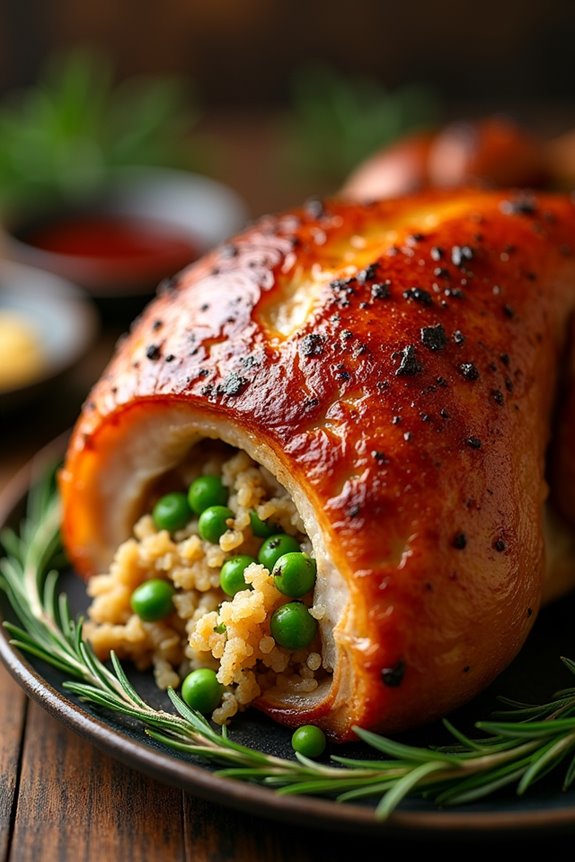
Lechona is a traditional Colombian dish that’s often prepared for special occasions and festive gatherings. This mouthwatering dish features a whole roasted pig stuffed with a savory mixture of rice, peas, and spices, creating a feast that’s both visually impressive and delightfully flavorful. The addition of garlic and rosemary elevates the dish, infusing the meat with rich, aromatic flavors that make every bite a celebration of Colombian culinary heritage.
Cooking lechona isn’t only about the delicious taste; it’s also about the experience of gathering family and friends around the table. The preparation might seem intimidating, but with the right ingredients and a little patience, you can create a succulent lechona that will impress your guests. This recipe serves 4-6 people and is perfect for holiday celebrations or any festive occasion.
Ingredients
- 1 whole pig (about 10-12 pounds), cleaned and dressed
- 1 cup of long-grain rice
- 1 cup of green peas
- 2 cups of chicken broth
- ½ cup of garlic, minced
- ¼ cup of fresh rosemary, chopped
- 1 tablespoon of olive oil
- 2 teaspoons of salt
- 1 teaspoon of black pepper
- 1 teaspoon of cumin
- 1 lemon, zested
- 1 lemon, juiced
- 4-6 cloves of garlic, whole
- Fresh rosemary sprigs for garnish
Cooking Instructions
- Prepare the Pig: Start by thoroughly cleaning the pig, removing any hair and internal organs. Pat the skin dry with paper towels. This guarantees a crispy skin once roasted. Place the pig on a large roasting rack.
- Prepare the Stuffing: In a large pot, heat the olive oil over medium heat. Add the minced garlic and cook until fragrant. Then, add the rice and stir for about 2 minutes. Pour in the chicken broth, green peas, salt, pepper, cumin, lemon zest, and lemon juice. Bring to a boil, then reduce the heat to low and cover, simmering until the rice is cooked (about 15-20 minutes).
- Stuff the Pig: Once the rice mixture is cooked, carefully stuff it into the cavity of the pig. Make sure to pack it tightly but not too tightly, allowing for expansion during cooking. Use kitchen twine to sew up the cavity securely.
- Season the Skin: Rub the exterior of the pig with whole garlic cloves, salt, and chopped fresh rosemary. This will help flavor the skin and enhance the aroma while roasting.
- Roast the Pig: Preheat your oven to 325°F (160°C). Place the stuffed pig on a large roasting pan and cover it with aluminum foil. Roast for about 4-5 hours, removing the foil during the final hour to allow the skin to crisp up. Baste the pig occasionally with its own juices to keep it moist.
- Check for Doneness: The pig is done when the internal temperature reaches at least 160°F (70°C). The skin should be golden brown and crispy. Let the pig rest for about 30 minutes before carving.
- Serve: Carefully carve the lechona, serving the tender meat alongside the flavorful stuffing. Garnish with fresh rosemary sprigs for a festive touch.
Extra Tips
When preparing lechona, it’s crucial to confirm you have enough time for cooking and resting the meat, as this affects the final texture and flavor. You may want to prepare the rice stuffing a day in advance to allow the flavors to meld.
Additionally, consider marinating the pig overnight with the garlic, rosemary, and spices for an even richer taste. Finally, if you want an extra crispy skin, increase the oven temperature for the last 15-20 minutes of cooking, but keep a close eye to prevent burning. Enjoy your festive feast!
Mini Lechonas for Individual Servings
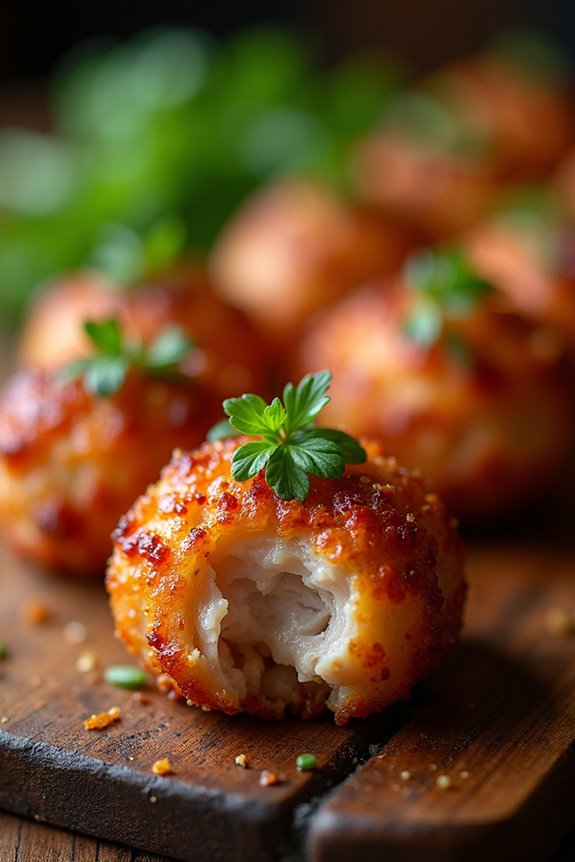
Mini Lechonas are a delightful twist on the traditional Colombian dish, perfect for festive gatherings or intimate family dinners. These smaller versions of the classic whole roasted piglet aren’t only easier to manage but also provide a personalized dining experience for each guest.
By preparing mini lechonas, you can capture the rich, savory flavors that make this dish so beloved while offering a unique presentation that’s certain to impress. Creating mini lechonas allows you to tailor each serving to individual preferences, whether it’s adjusting seasonings or adding special toppings.
The process involves marinating the meat to enhance its flavor and slow-roasting it to achieve that crispy skin and tender meat that everyone loves. This recipe is designed to serve 4-6 people, making it perfect for both small gatherings and festive celebrations.
Ingredients (Serves 4-6)
- 2 small piglets (around 2-3 pounds each)
- 4 cloves garlic, minced
- 2 tablespoons olive oil
- 1 tablespoon cumin
- 1 tablespoon paprika
- 1 tablespoon salt
- 1 tablespoon black pepper
- Juice of 2 limes
- 1 cup chicken broth
- Fresh herbs (such as thyme or rosemary) for garnish
Cooking Instructions
- Prepare the Piglets: Rinse the mini piglets under cold water and pat them dry with paper towels. This step is essential to guarantee that the skin crisps up nicely during roasting.
- Make the Marinade: In a bowl, combine the minced garlic, olive oil, cumin, paprika, salt, black pepper, and lime juice. Mix well to create a paste. This marinade will infuse the piglets with flavor and help tenderize the meat.
- Marinate the Piglets: Rub the marinade generously over the entire surface of each piglet, making sure to get it into the cavities as well. For best results, cover the piglets and let them marinate in the refrigerator for at least 4 hours, or overnight if time allows. This allows the flavors to penetrate deeply into the meat.
- Prepare for Roasting: Preheat your oven to 350°F (175°C). Place the piglets on a roasting rack in a large roasting pan. Pour the chicken broth into the pan to keep the meat moist during cooking.
- Roast the Piglets: Roast the piglets in the preheated oven for about 2.5 to 3 hours, or until the skin is golden brown and crispy. Baste the piglets with the broth every 30 minutes to maintain moisture and enhance flavor.
- Check for Doneness: Use a meat thermometer to ascertain that the internal temperature of the piglets reaches at least 160°F (71°C). This guarantees that the meat is cooked through and safe to eat.
- Rest and Serve: Once done, remove the piglets from the oven and allow them to rest for about 15-20 minutes. This resting period helps the juices redistribute, making the meat more tender. Garnish with fresh herbs before serving.
Extra Tips
When cooking mini lechonas, consider using a meat injector to introduce additional marinade directly into the meat, assuring maximum flavor throughout.
Additionally, for an extra crispy skin, you can broil the piglets for the last few minutes of cooking, but keep a close eye on them to prevent burning. Pair with traditional Colombian sides like arepas or plantains to create a well-rounded festive meal. Enjoy the celebration with this exquisite dish!
