

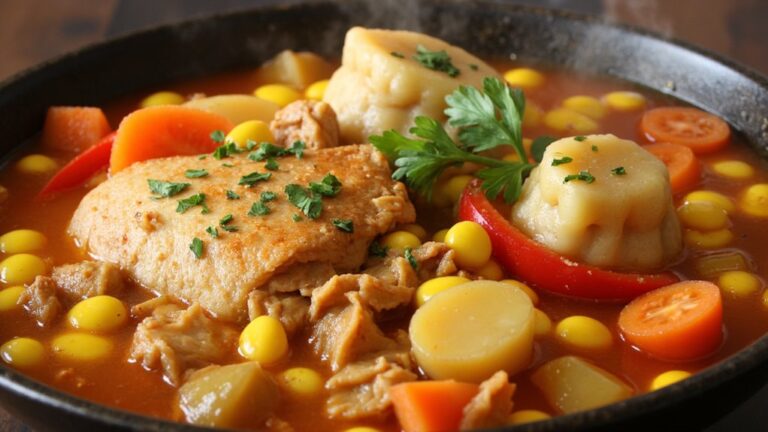
There’s nothing quite like the comfort of a warm bowl of stew, especially when it comes to South American recipes. Each dish is a beautiful blend of culture and tradition. From the bold flavors of Brazilian Feijoada to the creamy delight of Peruvian Aji De Gallina, these recipes are perfect for gathering around the table. There’s so much more to explore, with unique ingredients and techniques that make each stew a beloved classic across the continent. Let’s celebrate these rich and hearty dishes together!
Brazilian Feijoada
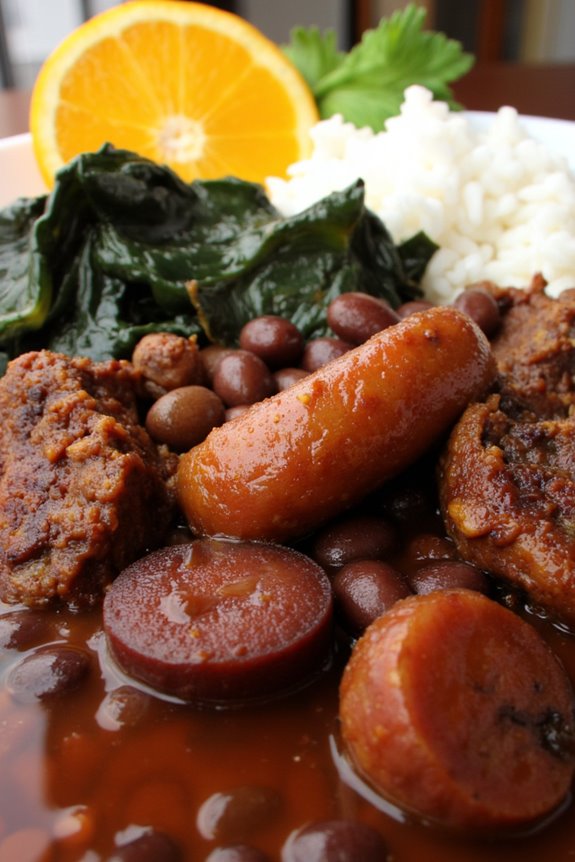
Brazilian Feijoada is considered the national dish of Brazil and is a hearty black bean stew that reflects the country’s rich cultural heritage. Traditionally made with a variety of meats, including pork, beef, and sausage, this dish is slow-cooked to perfection, allowing the flavors to meld together beautifully.
It’s typically served with rice, collard greens, and orange slices, making it a well-rounded meal that offers a delightful combination of textures and tastes. Whether enjoyed during a festive gathering or as a comforting family dinner, Feijoada is sure to impress.
To prepare a delicious Feijoada, it’s important to gather high-quality ingredients and take your time to allow the stew to develop its full flavor. While the cooking process can be lengthy, the end result is worth the wait. This dish not only nourishes the body but also brings people together, making it a true celebration of Brazilian culture.
Ingredients (Serves 4-6):
- 1 pound black beans, soaked overnight
- 1 pound pork shoulder, cut into chunks
- 1/2 pound smoked sausage, sliced
- 1/2 pound chorizo sausage, sliced
- 1/2 pound beef brisket, cut into chunks
- 1 onion, chopped
- 4 cloves garlic, minced
- 2 bay leaves
- 1 teaspoon smoked paprika
- 1 teaspoon black pepper
- 1 teaspoon salt (adjust to taste)
- 4 cups chicken or beef broth
- 2 tablespoons olive oil
- Cooked white rice (for serving)
- Collard greens (for serving)
- Orange slices (for serving)
Cooking Instructions:
- Prepare the Beans: Start by draining the soaked black beans and rinsing them under cold water. This helps remove excess starch and guarantees that the beans cook evenly.
- Brown the Meat: In a large pot or Dutch oven, heat the olive oil over medium heat. Add the pork shoulder, brisket, smoked sausage, and chorizo. Brown the meat on all sides for about 5-7 minutes. This step adds depth of flavor to the stew.
- Sauté the Aromatics: Once the meat is browned, add the chopped onion and minced garlic to the pot. Sauté for about 3-4 minutes until the onion becomes translucent and fragrant.
- Combine Ingredients: Add the drained black beans, bay leaves, smoked paprika, black pepper, salt, and broth to the pot. Stir well to combine all ingredients, guaranteeing the beans and meat are submerged in the liquid.
- Simmer the Stew: Bring the mixture to a boil, then reduce the heat to low. Cover and let it simmer for about 2-3 hours, stirring occasionally. The long cooking time allows the flavors to meld and the beans to become tender.
- Adjust Seasoning and Serve: After simmering, taste the stew and adjust the seasoning with more salt or pepper if needed. Remove the bay leaves before serving.
- Plate the Dish: Serve the Feijoada hot over a bed of cooked white rice. Garnish with sautéed collard greens and accompany with orange slices for a fresh contrast to the rich stew.
Extra Tips:
For an authentic touch, consider using a mix of different meats, including ham hocks or ribs, to enhance the flavor profile of your Feijoada.
Additionally, if you prefer a thicker stew, you can mash some of the beans against the side of the pot and stir them back in. Leftovers taste even better the next day, as the flavors continue to develop, making this dish a perfect candidate for meal prep!
Peruvian Aji De Gallina
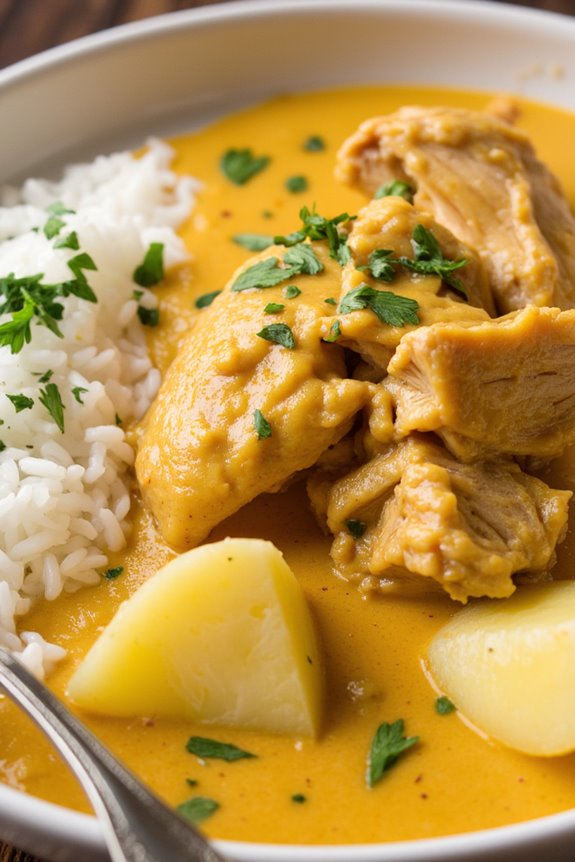
Aji De Gallina is a traditional Peruvian dish that showcases the rich culinary heritage of the country. This creamy, spicy chicken stew is made with tender chicken, a flavorful sauce made from aji amarillo peppers, and accompanied by rice and boiled potatoes. The unique combination of ingredients creates a dish that’s both comforting and exotic, making it a favorite for family gatherings and special occasions.
The heart of Aji De Gallina lies in its sauce, which is thickened with bread and nuts, giving it a distinctive texture that complements the tender chicken perfectly. The dish isn’t only delicious but also vibrant in color, thanks to the aji amarillo, which adds a delightful kick. Whether you’re looking to impress your guests or simply enjoy a taste of Peru at home, Aji De Gallina is sure to satisfy your cravings.
Ingredients (Serves 4-6)
- 2 cups shredded cooked chicken
- 4 cups chicken broth
- 1 medium onion, chopped
- 2 cloves garlic, minced
- 3-4 aji amarillo peppers, seeds removed and chopped (or substitute with yellow bell peppers if unavailable)
- 2 slices of white bread, crusts removed
- 1/2 cup walnuts, chopped
- 1 cup evaporated milk
- 1/4 cup grated Parmesan cheese
- 3 tablespoons vegetable oil
- 2 boiled potatoes, for serving
- Cooked white rice, for serving
- Salt and pepper, to taste
- Chopped parsley, for garnish (optional)
Cooking Instructions
- Prepare the Chicken: If you haven’t done so already, cook your chicken. You can boil it in chicken broth until tender or roast it in the oven. Once cooked, set it aside to cool, and then shred it into bite-sized pieces.
- Make the Aji Sauce: In a large skillet, heat the vegetable oil over medium heat. Add the chopped onion and sauté until it becomes translucent, about 5 minutes. Then, add the minced garlic and chopped aji amarillo peppers, cooking for another 2-3 minutes until fragrant.
- Blend the Ingredients: In a blender, combine the sautéed onion, garlic, and aji mixture with the bread, walnuts, and chicken broth. Blend until smooth. The sauce should have a creamy consistency; if it’s too thick, add more broth or water to reach your desired texture.
- Combine Chicken with Sauce: Return the blended sauce to the skillet over medium heat. Stir in the shredded chicken and evaporated milk. Allow the mixture to simmer for about 10-15 minutes, stirring occasionally, until heated through and slightly thickened. Add salt and pepper to taste.
- Finish with Cheese: Once the sauce has thickened, stir in the grated Parmesan cheese until melted and well incorporated. Remove from heat.
- Serve: To serve, place a portion of cooked white rice on each plate, spoon the Aji De Gallina over the rice, and arrange boiled potatoes alongside. Garnish with chopped parsley if desired.
Extra Tips
For an authentic taste, try to find aji amarillo peppers, as they’re integral to the flavor profile of Aji De Gallina. If they’re unavailable, yellow bell peppers can be a suitable substitute, though the taste will differ slightly.
You can also adjust the spice level by using more or fewer peppers based on your preference. To add depth, consider serving with black olives or a sprinkle of hard-boiled egg slices on top. Enjoy this comforting dish with your family, and feel free to experiment with additional spices or ingredients that inspire you!
Argentine Locro
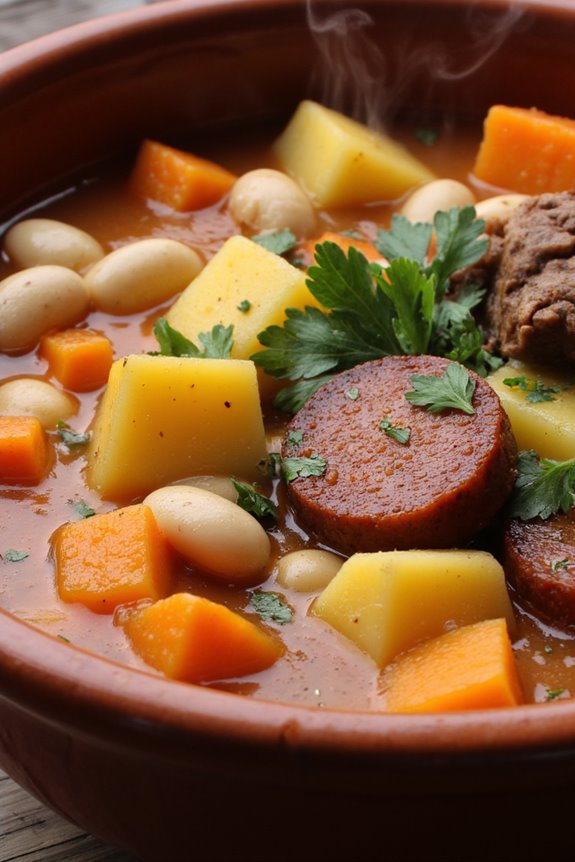
Argentine Locro is a hearty and traditional stew that’s especially popular during national holidays, particularly on May 25th, Argentina’s Revolución de Mayo. This dish embodies the country’s rich culinary heritage, blending Indigenous and Spanish influences.
Locro is typically made with a variety of meats, beans, and vegetables, all simmered together to create a flavorful and comforting meal that warms the soul. The combination of ingredients varies by region and personal preference, but the essence of the dish remains the same: a nourishing stew that brings people together.
This recipe for Argentine Locro serves 4-6 people and is perfect for family gatherings or a cozy evening at home. The stew isn’t only delicious but also filling, making it an ideal dish for feeding a crowd. With the right combination of ingredients and a little time, you can create a wonderful homage to Argentina’s culinary traditions right in your own kitchen.
Ingredients
- 1 cup dried white beans
- 1 cup dried corn (or hominy)
- 1 lb beef shank, cut into chunks
- 1 lb pork belly, cut into chunks
- 1 chorizo sausage, sliced
- 1 medium onion, chopped
- 2 cloves garlic, minced
- 2 medium potatoes, diced
- 1 medium carrot, chopped
- 1 cup pumpkin or squash, diced
- 1 teaspoon paprika
- 1 teaspoon cumin
- Salt and pepper to taste
- Fresh parsley, chopped (for garnish)
- Water or beef broth (enough to cover the ingredients)
Cooking Instructions
- Soak the Beans and Corn: Begin by soaking the dried white beans and corn in water overnight. This helps to soften them and reduces cooking time. Drain and rinse them before adding to the stew.
- Brown the Meats: In a large pot or Dutch oven, heat a small amount of oil over medium heat. Add the beef shank and pork belly, browning them on all sides. This step enhances the flavors of the meat and adds depth to the stew.
- Sauté the Aromatics: Remove the browned meats and set them aside. In the same pot, add the chopped onion and minced garlic. Sauté until the onion is translucent and fragrant, about 5 minutes. This will form the flavorful base of your stew.
- Combine Ingredients: Return the browned meats to the pot. Add the soaked beans, corn, diced potatoes, chopped carrot, and pumpkin. Sprinkle in the paprika, cumin, salt, and pepper. Stir well to combine all the ingredients evenly.
- Add Liquid and Simmer: Pour enough water or beef broth into the pot to cover all the ingredients. Bring the mixture to a boil, then reduce the heat to low. Cover the pot and let it simmer for about 2 to 3 hours, or until the beans and meats are tender. Stir occasionally and add more liquid if necessary.
- Add Chorizo: About 30 minutes before the stew is done, add the sliced chorizo sausage to the pot. This will infuse the stew with its smoky flavor and complement the other ingredients.
- Serve and Garnish: Once everything is cooked and tender, taste and adjust the seasoning if needed. Ladle the Locro into bowls, and garnish with fresh chopped parsley. Serve with crusty bread for a complete meal.
Extra Tips
For an even richer flavor, consider adding a smoked ham hock or bacon to the stew. This will impart a delightful smokiness to the broth.
If you prefer a thicker stew, you can mash some of the beans and potatoes against the side of the pot before serving. Additionally, Locro can be made a day in advance, as the flavors continue to develop and improve overnight. Just reheat gently before serving, and enjoy this warming dish with family and friends!
Chilean Pastel De Choclo

Chilean Pastel De Choclo, or corn pie, is a beloved traditional dish that showcases the vibrant flavors of South American cuisine. Originating from Chile, this hearty stew is a delightful combination of ground meat, onions, olives, and hard-boiled eggs, all topped with a creamy, sweet corn mixture that’s baked to perfection. Perfect for a family gathering or a cozy dinner, this dish is both comforting and satisfying, making it a staple in Chilean homes.
The dish’s unique layering and blending of flavors create a memorable culinary experience. The use of fresh, seasonal ingredients adds to its appeal, while the sweet corn topping offers a delightful contrast to the savory filling. Whether you’re familiar with South American cuisine or trying it for the first time, Chilean Pastel De Choclo is sure to impress and delight your taste buds.
Ingredients (Serves 4-6)
- 1 lb ground beef
- 1 onion, finely chopped
- 2 cloves garlic, minced
- 1 tsp paprika
- 1 tsp cumin
- Salt and pepper, to taste
- 1 cup black olives, pitted and sliced
- 2 hard-boiled eggs, chopped
- 2 cups corn kernels (fresh or frozen)
- 1 cup milk
- 2 tbsp butter
- 1 tbsp sugar
- 1 cup cornmeal (masa)
- Fresh basil or parsley, for garnish (optional)
Cooking Instructions
1. Prepare the Filling: In a large skillet, heat a tablespoon of oil over medium heat. Add the chopped onion and minced garlic, sautéing until they become translucent (about 3-4 minutes).
Then, add the ground beef, breaking it up with a spoon, and cook until browned. Stir in the paprika, cumin, salt, and pepper, allowing the spices to meld into the meat for an additional 2-3 minutes.
2. Add the Olives and Eggs: Once the meat is cooked, mix in the sliced black olives and chopped hard-boiled eggs. Stir everything together, confirming the olives and eggs are evenly distributed throughout the mixture. Remove from heat and set aside.
3. Make the Corn Topping: In a separate pot, combine the corn kernels, milk, sugar, and butter. Heat over medium heat until the butter melts and the mixture is warm.
Using an immersion blender or a regular blender, blend the mixture until it becomes smooth and creamy. If you prefer a chunkier texture, you can leave some whole kernels intact. Stir in the cornmeal until fully incorporated.
4. Assemble the Dish: Preheat your oven to 350°F (175°C). In a baking dish, spread the meat mixture evenly across the bottom. Pour the corn topping over the meat layer, smoothing it out with a spatula to confirm it covers the filling completely.
5. Bake: Place the assembled pastel in the preheated oven and bake for about 30-35 minutes, or until the corn topping is golden and slightly crispy. Remove from the oven and let it sit for a few minutes before serving.
6. Garnish and Serve: If desired, garnish the pastel with fresh basil or parsley before cutting into portions. Serve warm and enjoy the rich flavors of this classic Chilean dish.
Extra Tips
When preparing Chilean Pastel De Choclo, you can customize the filling to suit your taste by adding vegetables such as bell peppers or carrots for added nutrition.
For a more robust flavor, consider using a mixture of ground meats, like beef and pork. Additionally, verify your corn topping is thick enough to hold together but still creamy; adjusting the amount of cornmeal can help achieve the desired consistency.
Finally, this dish can be assembled ahead of time and baked when ready to serve, making it a convenient option for entertaining.
Colombian Sancocho
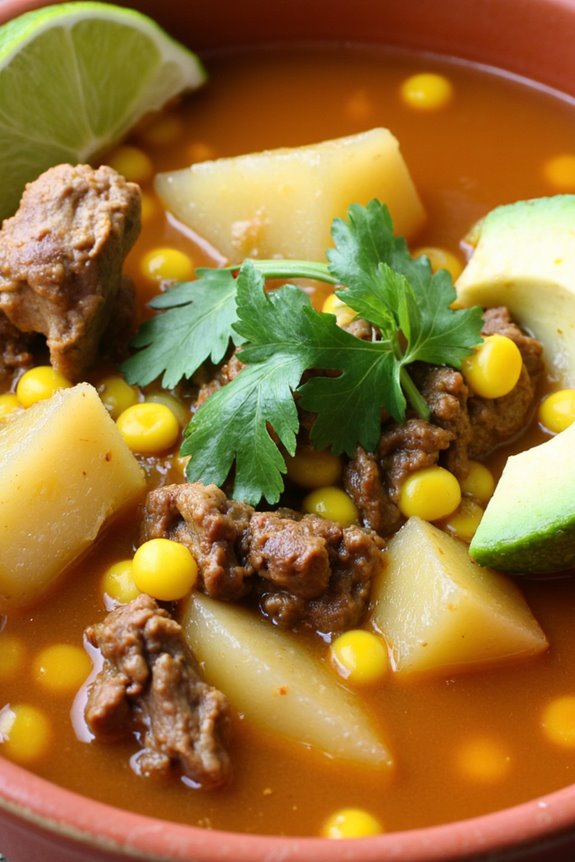
Colombian Sancocho is a traditional stew that embodies the rich culinary heritage of Colombia, offering a hearty combination of flavors and textures. This dish is typically made with a variety of meats, root vegetables, and spices, creating a comforting meal that brings families together.
Sancocho is often enjoyed on special occasions, but it can just as easily be a weeknight dinner that warms the soul. The dish varies by region, with each area adding its unique twist to the recipe, making it a delightful exploration of Colombia’s diverse gastronomy.
To prepare Colombian Sancocho, you’ll need several key ingredients and a bit of time to let the flavors meld together. The stew is usually served with a side of rice and avocado, enhancing the overall experience. With its aromatic broth and tender ingredients, Colombian Sancocho is sure to become a favorite in your household, inviting everyone to gather around the table for a delicious meal.
Ingredients (Serves 4-6):
- 1 lb chicken (bone-in, skinless)
- 1 lb beef (chuck or brisket, cut into chunks)
- 1 lb pork (shoulder or ribs, cut into chunks)
- 2 medium yuca (cassava), peeled and cut into large pieces
- 2 medium potatoes, peeled and cut into chunks
- 2 ears of corn, cut into thirds
- 1 large onion, chopped
- 4 cloves garlic, minced
- 2 medium tomatoes, chopped
- 1 bell pepper, chopped
- 1 bunch cilantro, chopped
- 8 cups beef or chicken broth
- 2 teaspoons cumin
- 1 teaspoon paprika
- Salt and pepper to taste
- Lime wedges (for serving)
- Avocado slices (for serving)
- White rice (for serving)
Cooking Instructions:
- Prepare the Ingredients: Start by gathering all your ingredients. Chop the vegetables, cut the meats into chunks, and set everything aside. This will help streamline the cooking process and guarantee that you have everything ready at hand.
- Sauté the Aromatics: In a large pot or Dutch oven, heat a tablespoon of oil over medium heat. Add the chopped onion, bell pepper, and minced garlic. Sauté for about 5 minutes or until they become fragrant and the onion is translucent. This step builds a flavorful base for your stew.
- Brown the Meats: Add the chicken, beef, and pork to the pot. Cook for about 10 minutes, turning occasionally until the meats are browned on all sides. Browning the meat adds depth of flavor to the sancocho and enhances the overall richness of the broth.
- Add the Broth and Seasonings: Pour in the beef or chicken broth, making sure the meat is fully submerged. Stir in the cumin, paprika, salt, and pepper. Bring the mixture to a boil, then reduce the heat to low and cover the pot. Let it simmer for about 30 minutes to allow the flavors to develop.
- Incorporate the Vegetables: After 30 minutes, add the yuca, potatoes, and corn to the pot. Stir gently to combine, then cover and continue to simmer for an additional 30-40 minutes, or until the vegetables are tender and the meats are cooked through. Confirm to check occasionally and add more broth if necessary to maintain the desired consistency.
- Finish with Cilantro: Once everything is cooked, stir in the chopped cilantro. Taste and adjust seasoning if needed. Let the stew sit for a few minutes to allow the flavors to meld together.
- Serve: Ladle the sancocho into bowls and serve hot with lime wedges, avocado slices, and a side of white rice. Encourage everyone to squeeze fresh lime juice over their sancocho for an extra burst of flavor.
Extra Tips:
When making Colombian Sancocho, feel free to customize the ingredients based on personal preference or availability. You can substitute different meats, such as fish or goat, and adjust the vegetables to your liking.
Additionally, for a richer flavor, consider marinating the meats in spices and citrus juice a few hours before cooking. Always taste the broth as it simmers and adjust the seasoning accordingly, as the flavors will evolve throughout the cooking process.
Enjoy the communal aspect of Sancocho by serving it in a large pot and letting everyone serve themselves!
Ecuadorian Fanesca
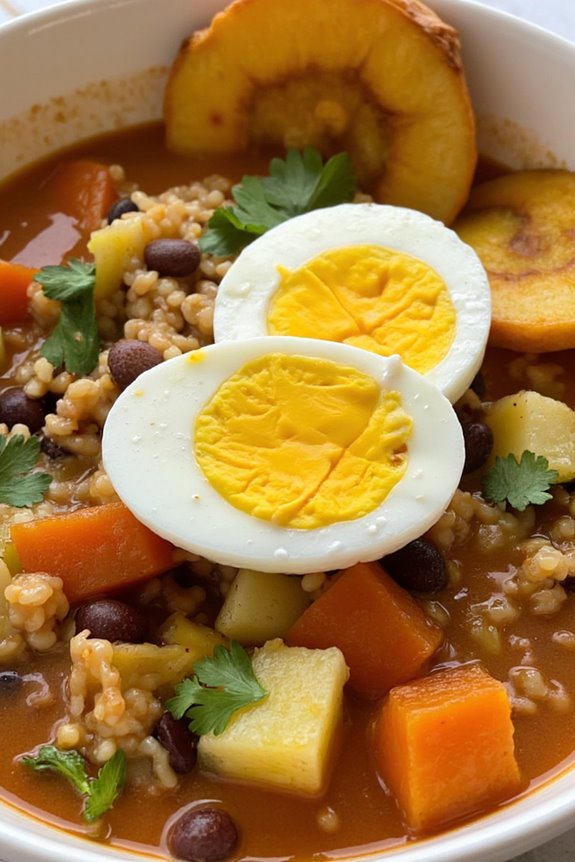
Ecuadorian Fanesca is a traditional stew that holds a special place in the hearts of many Ecuadorians, particularly during Holy Week. This rich and hearty dish is a celebration of the country’s diverse ingredients and flavors, combining a variety of beans, grains, and vegetables with a luscious creamy sauce.
Often served with fried plantains and hard-boiled eggs, Fanesca symbolizes the unity and abundance of Ecuadorian culture, making it a favorite for family gatherings and festive occasions.
The base of Fanesca is a blend of Andean grains like quinoa and chochos (lupin beans), which are packed with protein and nutrients. The stew is typically flavored with herbs and spices, such as cilantro and garlic, and is often enriched with a touch of milk or cream.
Each family may have its own variation of Fanesca, incorporating different ingredients or adjusting the flavors to suit their preferences. Regardless of the specific recipe, Fanesca is always a comforting and nourishing dish that embodies the essence of Ecuadorian culinary tradition.
Ingredients (Serves 4-6):
- 1 cup of dried lentils
- 1 cup of dried white beans
- 1 cup of dried green peas
- 1 cup of quinoa
- 1 medium onion, chopped
- 4 cloves of garlic, minced
- 1 tablespoon of achiote oil (or regular cooking oil)
- 4 cups of vegetable broth
- 2 cups of milk (or coconut milk for a vegan option)
- 1 cup of diced pumpkin
- 1 cup of diced potatoes
- 1 cup of diced zucchini
- 1 cup of fresh cilantro, chopped
- 1 teaspoon of cumin
- Salt and pepper to taste
- Hard-boiled eggs (for garnish)
- Fried plantains (for serving)
Cooking Instructions:
1. Prepare the Beans and Grains: Start by rinsing the lentils, white beans, and green peas under cold water. Soak the white beans overnight in plenty of water to help them cook faster.
Drain the beans and transfer them to a large pot with fresh water. Add the lentils and green peas, then bring the pot to a boil. Reduce the heat and let it simmer for about 30 minutes or until the beans are tender.
2. Cook the Quinoa: While the beans are cooking, rinse the quinoa under cold water. In a separate pot, add 2 cups of water to the quinoa and bring it to a boil.
Once boiling, reduce the heat and cover the pot, allowing it to simmer for about 15 minutes, or until all the water is absorbed. Once cooked, fluff the quinoa with a fork and set it aside.
3. Sauté the Aromatics: In a large skillet, heat the achiote oil over medium heat. Add the chopped onion and minced garlic, sautéing until the onion is translucent and fragrant, about 5-7 minutes.
This will add a depth of flavor to the stew.
4. Add Vegetables and Spices: Once the onions and garlic are ready, add the diced pumpkin, potatoes, and zucchini to the skillet. Stir well and cook for another 5-10 minutes, allowing the vegetables to soften slightly.
Season with cumin, salt, and pepper to taste.
5. Combine Ingredients: After the beans are tender, drain any excess liquid if necessary, and add them to the skillet with the sautéed vegetables. Pour in the vegetable broth and milk, stirring to combine everything evenly.
Bring the mixture to a gentle simmer.
6. Incorporate Quinoa and Cilantro: Add the cooked quinoa and chopped cilantro to the stew, stirring to incorporate all ingredients. Let the Fanesca simmer for about 10-15 minutes, allowing the flavors to meld together.
Taste and adjust seasoning if needed.
7. Serve the Stew: Once ready, ladle the Fanesca into bowls. Garnish each serving with slices of hard-boiled eggs and serve alongside fried plantains for a complete meal.
Extra Tips:
When making Fanesca, feel free to customize the recipe according to your taste preferences. You can experiment with additional vegetables like spinach or bell peppers, and adjust the level of creaminess by varying the amount of milk.
For a heartier stew, consider adding diced meat, such as chicken or pork, during the cooking process. Remember, Fanesca tastes even better the next day, as the flavors continue to meld, so don’t hesitate to make a larger batch to enjoy later!
Uruguayan Asado Stew
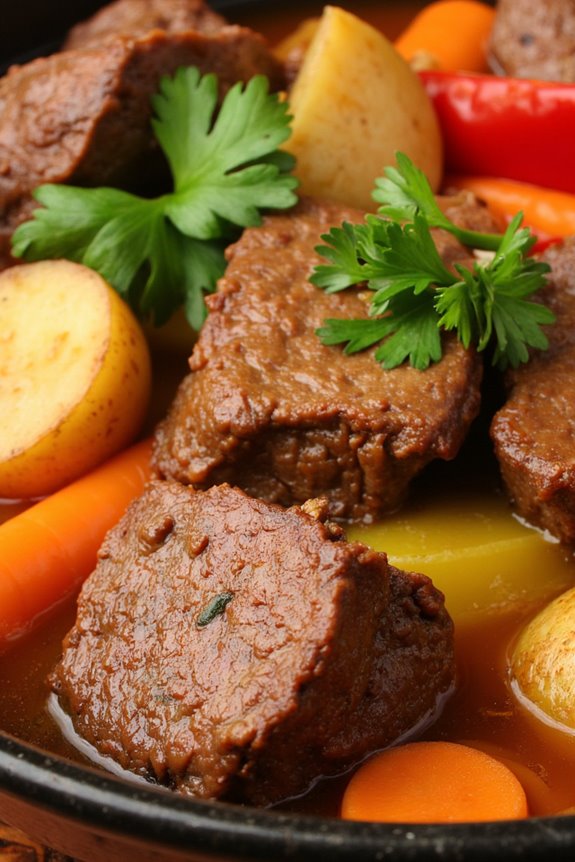
Uruguayan Asado Stew, a beloved dish from the southern region of South America, showcases the rich flavors and traditions of Uruguayan cuisine. This hearty stew is typically made with a variety of meats, including beef, pork, and sometimes lamb, combined with an array of vegetables, herbs, and spices.
Asado refers to the method of cooking meat over an open flame or grill, and in this stew, we capture that essence by slow-cooking the ingredients to create a comforting, savory meal that warms the soul. Asado is more than just a dish; it represents a cultural gathering, often shared among family and friends.
The preparation method is straightforward, allowing the meats to tenderize while absorbing the flavors of the accompanying vegetables. This stew pairs wonderfully with crusty bread or a side of rice, making it a perfect choice for a cozy dinner or a celebratory feast.
Ingredients (Serves 4-6):
- 2 lbs beef chuck, cut into 1-inch cubes
- 1 lb pork shoulder, cut into 1-inch cubes
- 1 large onion, chopped
- 2 cloves garlic, minced
- 2 medium carrots, sliced
- 1 red bell pepper, diced
- 1 green bell pepper, diced
- 2 medium potatoes, peeled and cubed
- 1 can (14 oz) diced tomatoes
- 4 cups beef broth
- 1 tablespoon olive oil
- 2 teaspoons smoked paprika
- 1 teaspoon cumin
- 1 teaspoon oregano
- Salt and pepper to taste
- Fresh parsley, chopped (for garnish)
Cooking Instructions:
- Sear the Meats: In a large pot or Dutch oven, heat the olive oil over medium-high heat. Add the beef and pork cubes in batches, searing them on all sides until browned. This step enhances the flavor of the meat and adds depth to the stew.
- Sauté the Aromatics: Once the meats are browned, remove them from the pot and set aside. In the same pot, add the chopped onion and minced garlic. Sauté for about 3-4 minutes until the onion becomes translucent and fragrant.
- Add the Vegetables: Incorporate the sliced carrots, diced bell peppers, and cubed potatoes into the pot. Stir well and cook for an additional 5 minutes, allowing the vegetables to soften slightly and absorb the flavors from the sautéed onion and garlic.
- Combine Ingredients: Return the seared meats to the pot and add the canned tomatoes (with juice), beef broth, smoked paprika, cumin, oregano, salt, and pepper. Stir everything together, ensuring the meats and vegetables are well combined with the liquid.
- Simmer the Stew: Bring the mixture to a boil, then reduce the heat to low. Cover the pot and let it simmer for about 1.5 to 2 hours, or until the meats are tender and the flavors meld together. Stir occasionally and check the seasoning, adjusting if necessary.
- Serve: Once the stew is ready, remove it from the heat and let it rest for a few minutes. Garnish with freshly chopped parsley before serving. This stew pairs wonderfully with crusty bread or a side of rice.
Extra Tips: For an even richer flavor, consider marinating the meats in a blend of spices and herbs overnight. You can also experiment with different vegetables based on your preference or what you have on hand, such as zucchini or green beans.
If you prefer a thicker stew, you can mix a tablespoon of cornstarch with water and stir it in during the last 10 minutes of cooking. Enjoy the warm, inviting flavors of this Uruguayan classic!
Venezuelan Pabellón Criollo
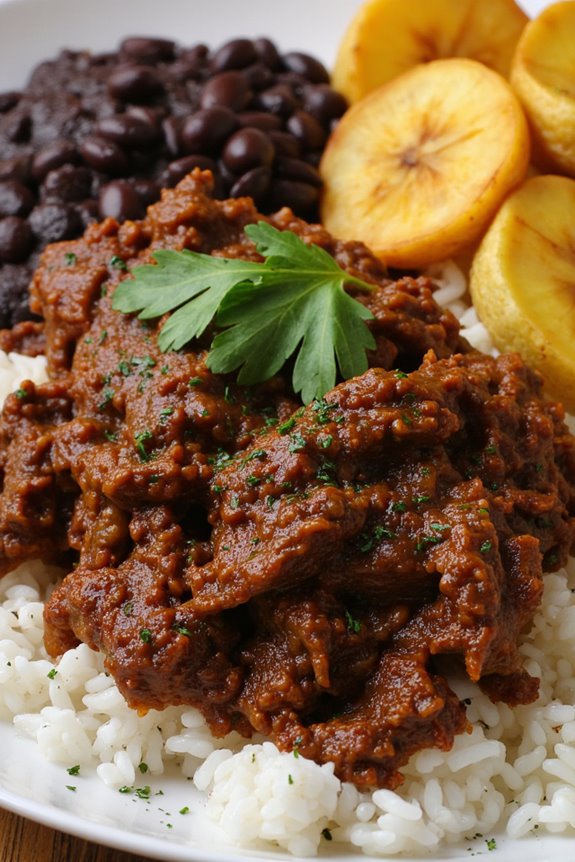
Venezuelan Pabellón Criollo is a traditional dish that showcases the vibrant flavors and culinary heritage of Venezuela. This hearty stew is a perfect representation of the country’s diverse culture, combining elements of African, Spanish, and indigenous influences. The dish typically features a savory mix of shredded beef, black beans, rice, and fried plantains, creating a delightful harmony of tastes and textures that’s sure to satisfy any palate.
Pabellón Criollo is often enjoyed during special occasions and family gatherings, making it a beloved staple in Venezuelan households. To prepare this dish, you’ll need to start by cooking the beef until it’s tender, allowing the flavors to meld beautifully. The black beans are simmered to perfection, while the rice is cooked until fluffy. Finally, the fried plantains add a sweet contrast to the savory elements of the dish. Each component is essential to the overall experience of enjoying Venezuelan Pabellón Criollo, making this dish a wonderful choice for a comforting meal with family or friends.
Ingredients (Serves 4-6):
- 2 lbs flank steak
- 1 onion, diced
- 4 cloves garlic, minced
- 1 bell pepper, diced
- 2 tomatoes, diced
- 1 tsp cumin
- 1 tsp paprika
- 4 cups beef broth
- 2 cups black beans (canned or cooked from dry)
- 1 cup long-grain white rice
- 2 ripe plantains
- Vegetable oil (for frying)
- Salt and pepper to taste
- Fresh cilantro (for garnish)
Cooking Instructions:
- Prepare the Beef: In a large pot, heat a splash of oil over medium heat. Season the flank steak with salt and pepper, then sear it on all sides until browned. Remove the steak and set it aside. In the same pot, add the diced onion, garlic, and bell pepper, sautéing until soft and fragrant.
- Create the Stew Base: Add the diced tomatoes, cumin, and paprika to the pot. Stir to combine, and let it cook for a few minutes to allow the spices to bloom. Return the seared flank steak to the pot, pouring in the beef broth. Bring to a boil, then reduce the heat to low, cover, and simmer for about 2-3 hours or until the beef is tender enough to shred.
- Cook the Black Beans: If using dry black beans, soak them overnight and then cook them in a separate pot until tender. If using canned beans, simply rinse and drain them. Add the cooked black beans to the stew during the last 30 minutes of cooking to incorporate their flavors with the beef.
- Prepare the Rice: While the stew is simmering, rinse the rice under cold water until the water runs clear. In a saucepan, combine the rice with 2 cups of water and a pinch of salt. Bring it to a boil, then reduce the heat to low, cover, and let it cook for about 15-20 minutes, or until the rice is fluffy and all the water has been absorbed.
- Fry the Plantains: Peel the plantains and cut them into diagonal slices. In a frying pan, heat vegetable oil over medium heat. Fry the plantain slices until golden brown on both sides, about 2-3 minutes per side. Remove them and place them on paper towels to drain any excess oil.
- Serve the Dish: To serve, plate a generous portion of rice, topped with shredded beef and black beans. Arrange the fried plantains on the side, and garnish with fresh cilantro. Enjoy your Venezuelan Pabellón Criollo warm with family or friends.
Extra Tips:
When cooking Pabellón Criollo, feel free to adjust the seasoning to your personal taste, adding more spices or herbs as desired. You can also experiment with the cooking time for the beef, as some may prefer it slightly more or less tender.
Additionally, consider serving the dish with avocado slices or a fresh salad for added freshness and flavor. Enjoy the experience of cooking this traditional Venezuelan stew and share it with loved ones for a truly authentic meal!
Bolivian Silpancho

Bolivian Silpancho is a delightful and hearty dish that brings together a medley of flavors and textures, making it a favorite among families in Bolivia. This traditional meal consists of a thin, breaded beef patty served over rice and potatoes, topped with a revitalizing salad and a fried egg. The combination of ingredients creates a satisfying and colorful plate that’s sure to please everyone at the table. Silpancho isn’t just a meal; it’s a celebration of Bolivian culture and culinary heritage.
The origins of Silpancho can be traced back to the city of Cochabamba, where it was traditionally prepared to celebrate special occasions. Each family may have its own variation, but the core components remain the same: a tender beef patty, fluffy rice, and crispy potatoes. This dish is perfect for gatherings and can be easily adapted to suit your taste, making it a flexible option for weeknight dinners or festive feasts.
Ingredients (serving size of 4-6 people):
- 1.5 lbs (680g) of beef (such as flank or sirloin), thinly sliced
- 1 cup of breadcrumbs
- 2 large eggs
- 2 cups of cooked white rice
- 3 medium-sized potatoes, peeled and cut into wedges
- 1 medium-sized onion, finely chopped
- 2 tomatoes, diced
- 1 cup of fresh lettuce, shredded
- 1/4 cup of fresh cilantro, chopped
- 1 tablespoon of vegetable oil
- Salt, to taste
- Pepper, to taste
- Paprika, to taste (optional)
- 4-6 eggs for frying (one egg per serving)
Cooking Instructions:
- Prepare the Beef Patties: Start by placing the thinly sliced beef between two sheets of plastic wrap and gently pound it with a meat mallet or rolling pin until it’s about 1/4 inch thick. This will help tenderize the meat. Season the beef with salt, pepper, and paprika to taste.
- Coat the Beef: In a shallow dish, beat the two large eggs. In another dish, place the breadcrumbs. Dip each beef patty first into the egg, allowing any excess to drip off, then coat it in the breadcrumbs, pressing lightly to guarantee an even coating. Set aside.
- Fry the Beef Patties: In a large skillet, heat a few tablespoons of vegetable oil over medium-high heat. Once the oil is hot, add the breaded beef patties in batches, cooking for about 3-4 minutes on each side until they’re golden brown and cooked through. Remove the patties from the skillet and drain them on a paper towel.
- Cook the Potatoes: In the same skillet, add the potato wedges and fry them until golden and crispy, about 8-10 minutes. Remove and drain on a paper towel, seasoning with salt while still hot.
- Prepare the Salad: In a mixing bowl, combine the diced tomatoes, chopped onion, shredded lettuce, and cilantro. Toss with salt and a drizzle of oil to taste. This fresh salad will add a nice crunch to the dish.
- Fry the Eggs: In another pan, fry the eggs sunny-side up or to your liking. This will be the final touch to your Silpancho.
- Assemble the Dish: On each plate, serve a portion of cooked rice, topped with a crispy beef patty. Arrange a few potato wedges on the side, and top the beef with a fried egg. Finally, add a generous helping of the fresh salad on the side.
Extra Tips: For a more authentic flavor, consider marinating the beef in a mixture of garlic, lime juice, and spices for a couple of hours before cooking. This will enhance the tenderness and add depth to the dish. Additionally, feel free to experiment with toppings such as avocados or olives for a personal twist. Silpancho can also be served with a spicy salsa or aji for those who enjoy a bit of heat!
Paraguayan Bori Bori
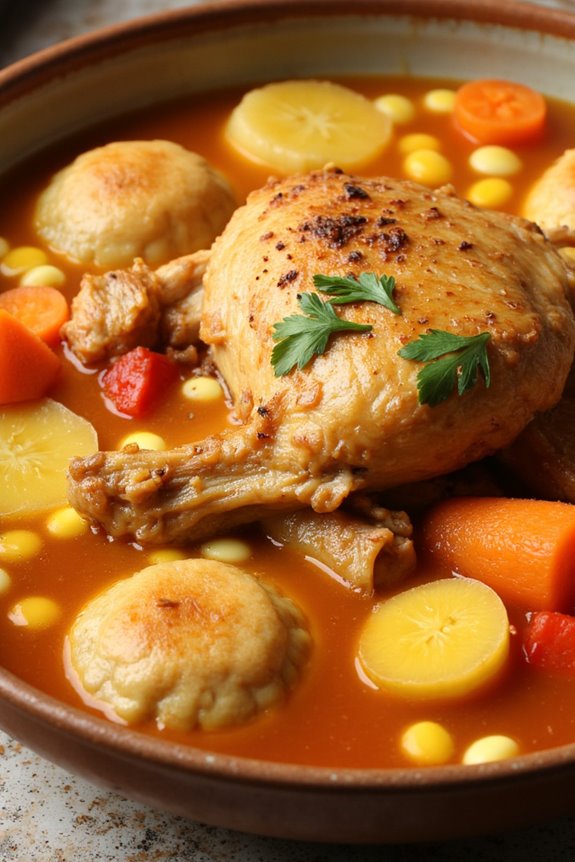
Paraguayan Bori Bori is a hearty and comforting stew that hails from the rich culinary traditions of Paraguay. This dish is known for its delightful combination of flavors, featuring a savory broth, tender chicken, and delicious dumplings made from corn flour. The addition of vegetables adds both nutrition and color, making Bori Bori a perfect one-pot meal for families and gatherings.
With its roots in indigenous and Spanish influences, this stew captures the essence of Paraguayan cuisine, offering a warm and satisfying experience that can be enjoyed any time of the year.
Making Bori Bori isn’t just about following a recipe; it’s about embracing the process and enhancing the flavors with each step. The dumplings, known as “bori bori,” are a key feature of the dish, providing a unique texture that complements the rich broth.
As you prepare this stew, you’ll find that it fills your kitchen with inviting aromas that will have everyone enthusiastic about mealtime. Gather your ingredients, follow the steps, and enjoy a taste of Paraguay right at your table.
Ingredients (Servings: 4-6)
- 1 lb (450g) chicken (thighs or breasts), cut into pieces
- 1 medium onion, chopped
- 2 cloves garlic, minced
- 1 medium carrot, diced
- 1 medium potato, diced
- 1 red bell pepper, chopped
- 1 cup fresh corn kernels (or frozen)
- 6 cups chicken broth
- 1 cup corn flour (masa de maíz)
- 1 egg
- 2 tablespoons fresh parsley, chopped (plus more for garnish)
- Salt and pepper to taste
- 2 tablespoons vegetable oil
- Optional: 1 teaspoon paprika for extra flavor
Cooking Instructions
- Sauté the Aromatics: In a large pot, heat the vegetable oil over medium heat. Add the chopped onion and garlic, sautéing for about 3-4 minutes until they’re soft and fragrant. This step builds the foundation of flavor for your stew.
- Brown the Chicken: Add the chicken pieces to the pot, seasoning with salt and pepper. Cook for 5-7 minutes, stirring occasionally, until the chicken is browned on all sides. Browning the chicken adds depth to the flavor and guarantees a rich broth.
- Add Vegetables and Broth: Stir in the diced carrot, potato, red bell pepper, and fresh corn. Pour in the chicken broth and bring the mixture to a boil. Once boiling, reduce the heat to low and let it simmer for about 20 minutes, allowing the vegetables to soften and the flavors to meld.
- Prepare the Dumplings (Bori Bori): In a mixing bowl, combine the corn flour, egg, chopped parsley, and a pinch of salt. Mix until a dough forms. If the dough is too dry, add a little water, and if too wet, add more corn flour until you achieve a manageable consistency.
- Form and Cook Dumplings: With wet hands, shape the dough into small balls or dumplings, about the size of a walnut. Carefully drop the dumplings into the simmering stew. Let them cook for an additional 15-20 minutes, or until they float to the surface and are cooked through.
- Final Touches: Taste the stew and adjust the seasoning with more salt and pepper as needed. Once the dumplings are cooked, remove the pot from heat and let it sit for a few minutes before serving.
- Serve: Ladle the Bori Bori into bowls, garnishing with extra chopped parsley. Enjoy the stew hot, with crusty bread or rice on the side if desired.
Extra Tips
When preparing Bori Bori, feel free to customize the vegetable selection based on seasonal availability or personal preferences. Adding ingredients like green beans or peas can enhance the flavor and nutrition.
Additionally, if you prefer a thicker stew, you can mash some of the potatoes after they’ve cooked to create a creamier consistency. Always taste the broth before serving to verify it’s properly seasoned, and don’t hesitate to add a splash of lime juice for an extra zing.
