


Looking for quick and delicious dinner ideas that pack a punch of flavor? These 11 simple Colombian recipes are just what you need. Each dish offers vibrant tastes and comforting aromas without any complicated steps. From cheesy arepas to hearty bandeja paisa, there’s something to please everyone at the table. Let’s explore these delightful meals that will effortlessly transform your dinner routine.
Arepas With Cheese

Arepas with cheese are a delicious and traditional Colombian dish that perfectly combines the simplicity of cornmeal with the richness of melted cheese. These round, flat cakes aren’t only easy to prepare but also incredibly versatile, as they can be enjoyed at any meal of the day.
Whether served as a breakfast mainstay, a snack, or a side dish, arepas are a staple in Colombian cuisine that everyone can enjoy. The beauty of arepas lies in their adaptability; while cheese is a classic filling, you can easily customize them with a variety of fillings such as avocado, meats, or even beans.
The delightful crunch on the outside with a soft, warm center makes them irresistible. Let’s explore how to make this delightful dish.
Ingredients (serving size: 4-6 people)
- 2 cups of pre-cooked cornmeal (arepa flour)
- 2 cups of warm water
- 1 teaspoon of salt
- 1 cup of shredded cheese (mozzarella or queso blanco work well)
- 2 tablespoons of butter or oil (for cooking)
- Optional: additional cheese for stuffing
Cooking Instructions
1. Prepare the Dough: In a large mixing bowl, combine the pre-cooked cornmeal and salt. Gradually add the warm water while mixing with your hands or a spoon until a soft dough forms.
Make sure there are no lumps in the dough, and it should be moist but not sticky.
2. Incorporate the Cheese: Once your dough is well-mixed, gently fold in the shredded cheese until evenly distributed. This will give the arepas a delightful cheesy flavor throughout.
3. Shape the Arepas: Divide the dough into equal portions, about the size of a golf ball. Roll each portion into a ball and then flatten it gently between your palms to form a disc about ½ inch thick.
The edges should be smooth and the center slightly thicker.
4. Cook the Arepas: Heat a skillet or griddle over medium heat and add butter or oil. Once hot, place the arepas in the skillet, making sure not to overcrowd them.
Cook for about 5-7 minutes on each side, or until they develop a golden-brown crust. You may need to adjust the heat to prevent burning.
5. Finishing Touches: If you want cheesier arepas, you can cut a pocket into each arepa after they’re cooked and stuff more cheese inside.
Return them to the skillet for an additional minute to melt the cheese.
6. Serve: Remove the arepas from the skillet and let them cool slightly before serving. They can be enjoyed warm on their own or with toppings like avocado, sour cream, or salsa.
Extra Tips
When making arepas, be sure to use warm water for the dough, as this helps the cornmeal absorb moisture better, resulting in a softer texture.
You can also experiment with different types of cheese to find your favorite combination. For added flavor, consider incorporating spices or herbs into the dough.
Finally, if you have leftovers, arepas can be reheated on a skillet or in a toaster to regain their crispness. Enjoy this authentic Colombian dish with your family and friends!
Colombian Chicken Soup (Ajiaco)
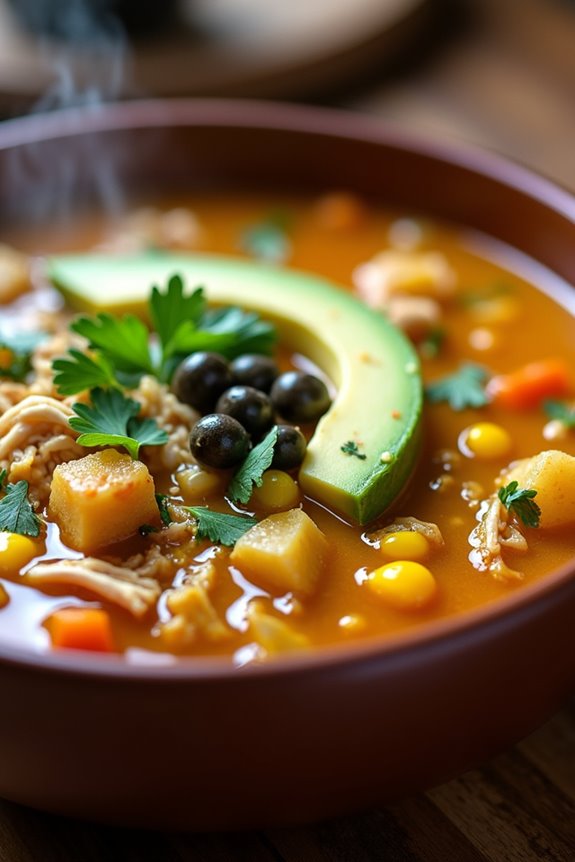
Ajiaco is a traditional Colombian chicken soup that isn’t only hearty but also bursting with flavor. Originating from the capital city of Bogotá, this dish is made with a unique combination of ingredients, including three types of potatoes and a variety of herbs, giving it a creamy texture and a distinctive taste.
The soup reflects the diverse culinary heritage of Colombia and is often enjoyed during special occasions or simply as a comforting meal on a chilly day.
The key to a delicious Ajiaco lies in the balance of its ingredients and the slow cooking process, which allows the flavors to meld beautifully. This dish is typically served with avocado, capers, and a dollop of cream on the side, allowing each diner to customize their bowl to their liking.
Whether you’re looking to impress guests or simply enjoy a taste of Colombia at home, Ajiaco is sure to be a hit.
Ingredients (Serves 4-6)
- 1 whole chicken (about 3-4 pounds)
- 12 cups of water
- 3 medium-sized potatoes (russet or Idaho), peeled and diced
- 3 medium-sized potatoes (yellow), peeled and diced
- 3 medium-sized potatoes (red), peeled and diced
- 1 medium onion, chopped
- 2 cloves of garlic, minced
- 2 cups of fresh corn kernels (or 2 cups of frozen corn)
- 1 cup of chopped cilantro
- 1 tablespoon of dried guascas (Colombian herb)
- Salt and pepper to taste
- 1 cup of heavy cream (for serving)
- 1 avocado, sliced (for serving)
- Capers (for serving)
Cooking Instructions
- Prepare the Chicken: In a large pot, combine the whole chicken with 12 cups of water. Bring it to a boil over medium-high heat, skimming off any foam that rises to the surface. This will help create a clear broth.
- Add Onions and Garlic: Once the chicken is boiling and the foam has been removed, add the chopped onion and minced garlic to the pot. These aromatics will infuse the broth with flavor. Reduce the heat to medium and let it simmer for about 30-40 minutes until the chicken is cooked through.
- Shred the Chicken: Once the chicken is fully cooked, carefully remove it from the pot and set it aside to cool slightly. When cool enough to handle, shred the meat, discarding the skin and bones. Return the shredded chicken to the pot.
- Incorporate Potatoes and Corn: Add the diced potatoes and corn kernels to the pot. Stir in the chopped cilantro and dried guascas. These ingredients will contribute to the thickness and heartiness of the soup. Season with salt and pepper to taste.
- Simmer the Soup: Continue to simmer the soup for another 25-30 minutes, or until the potatoes are tender and the soup has thickened slightly. Stir occasionally to prevent sticking.
- Serve: Once done, ladle the Ajiaco into bowls. Serve hot with toppings of heavy cream, sliced avocado, and capers on the side, allowing each guest to customize their soup.
Extra Tips
To enhance the flavor of your Ajiaco, consider using homemade chicken stock instead of water for a richer broth.
Additionally, if you can’t find guascas, you can substitute with oregano for a similar herbaceous note, though it won’t provide the exact same flavor profile.
Always taste and adjust the seasoning before serving to guarantee a well-balanced dish. Enjoy this Colombian classic with crusty bread or rice for a complete meal!
Beef Empanadas
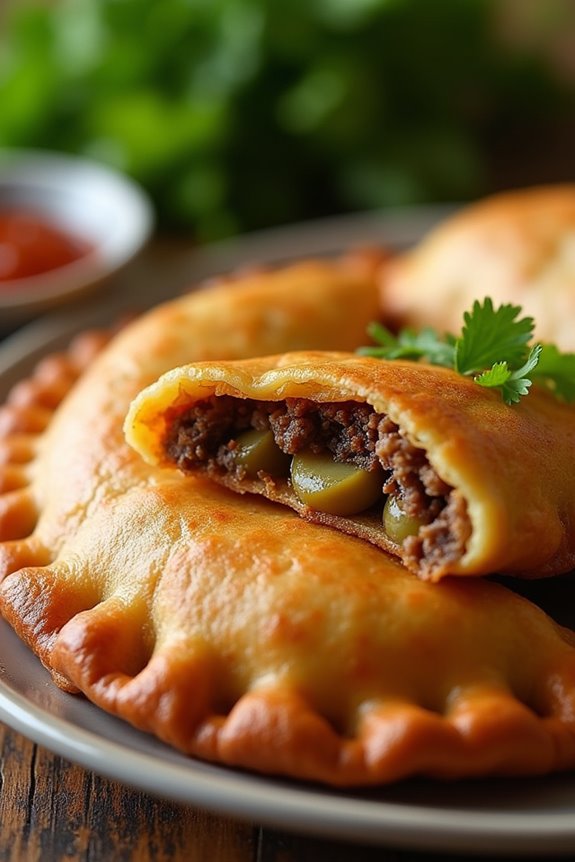
Beef empanadas are a beloved dish in Colombian cuisine, combining flaky pastry with a savory filling that offers a taste of tradition in every bite. These handheld delights are often enjoyed as snacks or appetizers, making them perfect for gatherings or casual dinners. The crispy exterior, coupled with a flavorful beef filling, creates a satisfying experience that’s certain to impress family and friends alike.
Making beef empanadas from scratch may seem intimidating, but with the right ingredients and a bit of patience, anyone can master this delicious dish. The key to perfecting your empanadas lies in the dough, which should be tender yet sturdy enough to hold the filling without tearing. Once you’ve made the dough and prepared the filling, the assembly is a fun process that allows for creativity in shaping your empanadas.
Ingredients (Serves 4-6):
- For the dough:
- 3 cups all-purpose flour
- 1/2 cup unsalted butter, cold and cubed
- 1/2 teaspoon salt
- 1/2 cup cold water (more if needed)
- For the filling:
- 1 pound ground beef
- 1 small onion, finely chopped
- 2 cloves garlic, minced
- 1/2 cup cooked potatoes, diced
- 1/4 cup green olives, chopped
- 1/4 cup fresh cilantro, chopped
- 1 teaspoon ground cumin
- Salt and pepper to taste
- 1 egg, beaten (for egg wash)
- For frying:
- Vegetable oil (for deep frying)
Cooking Instructions:
- Prepare the Dough: In a large bowl, combine the flour and salt. Add the cold, cubed butter and mix with your hands or a pastry cutter until the mixture resembles coarse crumbs. Gradually add cold water, mixing until the dough comes together. If the dough is too dry, add a bit more water. Cover the dough in plastic wrap and refrigerate for at least 30 minutes.
- Make the Filling: In a skillet over medium heat, add a splash of oil and sauté the chopped onion and garlic until they’re soft and fragrant, about 3-4 minutes. Add the ground beef and cook until browned, breaking it apart with a spatula. Stir in the diced potatoes, chopped olives, cilantro, cumin, salt, and pepper. Cook for an additional 5 minutes to meld the flavors. Remove from heat and let the filling cool.
- Roll Out the Dough: On a lightly floured surface, take the chilled dough and roll it out to about 1/8 inch thick. Use a circular cutter or a glass to cut out circles of dough, about 4-5 inches in diameter.
- Assemble the Empanadas: Place a generous spoonful of the beef filling onto one half of each dough circle. Fold the other half over the filling to create a half-moon shape. Press the edges together firmly, then use a fork to crimp the edges for a decorative seal and to guarantee they stay closed during frying.
- Fry the Empanadas: In a large pot or deep fryer, heat vegetable oil to 350°F (175°C). Carefully add a few empanadas at a time, frying them for about 3-4 minutes on each side or until they’re golden brown and crispy. Use a slotted spoon to transfer them to a paper towel-lined plate to drain excess oil.
- Serve and Enjoy: Serve the empanadas warm, with a side of ají sauce or your favorite salsa for dipping. Enjoy the delicious flavors of this Colombian classic!
Extra Tips:
When making beef empanadas, feel free to customize the filling according to your taste preferences—add bell peppers, spices, or even cheese for extra flavor.
To make the dough even more flavorful, consider adding a bit of baking powder to create a lighter texture. If you prefer baked empanadas, simply brush them with the beaten egg and bake in a preheated oven at 375°F (190°C) for about 20-25 minutes or until golden.
Enjoy experimenting with different fillings and methods to make this dish your own!
Bandeja Paisa
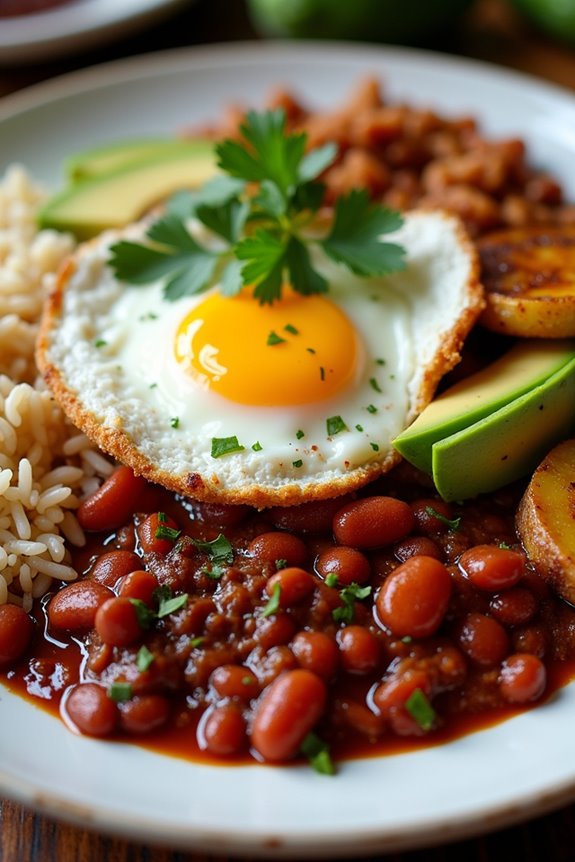
Bandeja Paisa is a traditional Colombian dish that hails from the Antioquia region. It’s a hearty and flavorful meal, known for its generous portions and variety of ingredients. The name “Bandeja” refers to the tray on which the dish is served, showcasing a colorful array of components that typically include rice, beans, meats, and plantains. This dish not only reflects the culinary heritage of Colombia but also embodies the country’s vibrant culture and hospitality.
The beauty of Bandeja Paisa lies in its diversity of flavors and textures, making it a festive meal perfect for gatherings. Commonly, it features a base of red beans and rice, accompanied by ground beef, chicharrón (crispy pork belly), fried egg, avocado, and sweet plantains. Each ingredient plays an essential role in creating a balanced and satisfying experience for the palate. Preparing Bandeja Paisa might seem overwhelming due to its many components, but with a bit of planning, you can create this Colombian classic in your own kitchen.
Ingredients for Bandeja Paisa (Serves 4-6):
- 2 cups of red beans (soaked overnight)
- 4 cups of water
- 1 cup of long-grain white rice
- 1 lb of ground beef
- 1 lb of chicharrón (crispy pork belly)
- 4 large eggs
- 2 ripe plantains (sliced)
- 1 avocado (sliced)
- 1 medium onion (chopped)
- 2 cloves of garlic (minced)
- 2 tablespoons of vegetable oil
- 1 tablespoon of ground cumin
- 1 teaspoon of salt (to taste)
- 1 teaspoon of black pepper (to taste)
- Fresh cilantro (for garnish)
Cooking Instructions:
- Prepare the Beans: In a large pot, combine the soaked red beans with 4 cups of water. Bring to a boil, then reduce the heat and let them simmer for about 1 to 1.5 hours or until tender. You can add salt towards the end of cooking to enhance their flavor.
- Cook the Rice: In a separate pot, rinse the white rice under cold water until it runs clear. Add 2 cups of water, a pinch of salt, and bring it to a boil. Once boiling, reduce the heat to low, cover the pot, and let it cook for about 15-20 minutes until the water is absorbed and the rice is fluffy.
- Prepare the Ground Beef: In a skillet, heat 1 tablespoon of vegetable oil over medium heat. Add the chopped onion and minced garlic, sautéing until the onion becomes translucent. Add the ground beef, cumin, salt, and black pepper. Cook until the beef is browned and cooked through, breaking it apart with a spatula as it cooks.
- Fry the Chicharrón: In another pan, heat the remaining tablespoon of vegetable oil over medium heat. Add the chicharrón pieces and fry them until they’re crispy and golden brown. Remove from the pan and drain on paper towels.
- Fry the Plantains: In the same pan, add the sliced plantains and fry them until they’re golden brown on both sides. Remove and drain on paper towels.
- Cook the Eggs: In a clean skillet, crack the eggs and fry them sunny-side up or to your desired doneness. Season with salt and pepper.
- Assemble the Bandeja Paisa: On a large serving platter or tray, arrange a serving of rice, beans, ground beef, chicharrón, fried egg, sliced avocado, and fried plantains. Garnish with fresh cilantro for a touch of color.
Extra Tips: When preparing Bandeja Paisa, timings are essential to guarantee everything is hot and ready to serve at once. You can prepare the beans and rice ahead of time to save on cooking time. Additionally, feel free to adjust the ingredients based on your preferences; some variations include adding arepas or a side salad. The key to a great Bandeja Paisa is the balance of flavors, so take your time with each component and enjoy the cooking process!
Shrimp and Rice (Arroz Con Camarones)
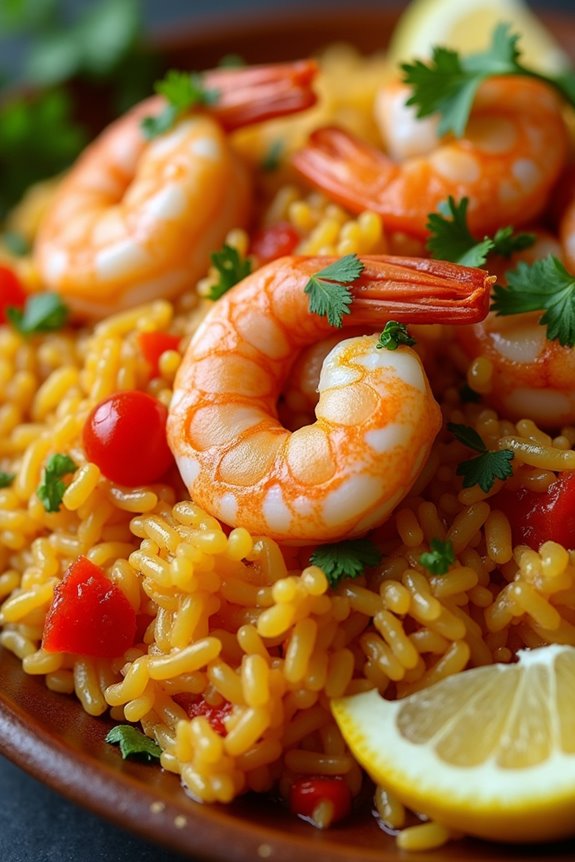
Shrimp and Rice, or Arroz Con Camarones, is a beloved dish in Colombian cuisine that showcases the vibrant flavors of the Caribbean. This dish is known for its rich, savory taste and the beautiful combination of succulent shrimp, aromatic spices, and colorful vegetables.
Often enjoyed during family gatherings or special occasions, Arroz Con Camarones isn’t only delicious but also visually appealing, making it a favorite among both locals and visitors alike.
The preparation of Arroz Con Camarones is quite straightforward, making it an excellent choice for home cooks looking to impress family and friends with a taste of Colombia. The key to a successful dish lies in the quality of the shrimp and the balance of spices used.
With the right ingredients and a bit of patience, you can create a perfect meal that captures the essence of Colombian culture right in your kitchen.
Ingredients (Serves 4-6)
- 1 pound of large shrimp, peeled and deveined
- 2 cups of long-grain rice
- 4 cups of fish or chicken broth
- 1 medium onion, finely chopped
- 1 bell pepper, diced (red or green)
- 2 cloves of garlic, minced
- 1 medium tomato, diced
- 1 tablespoon of tomato paste
- 1 teaspoon of paprika
- 1 teaspoon of cumin
- 1 teaspoon of turmeric
- 2 tablespoons of olive oil
- Salt and pepper to taste
- Fresh cilantro, chopped (for garnish)
- Lemon wedges (for serving)
Cooking Instructions
- Prepare the Shrimp: In a large bowl, season the peeled and deveined shrimp with salt, pepper, and a sprinkle of paprika. Allow them to marinate for about 15 minutes while you prepare the other ingredients. This will enhance the flavor of the shrimp.
- Sauté the Aromatics: In a large skillet or pot, heat the olive oil over medium heat. Add the chopped onion and diced bell pepper, sautéing for about 5 minutes until the vegetables are soft and the onion is translucent. This step builds a flavorful base for your dish.
- Add Garlic and Tomato: Stir in the minced garlic and diced tomato, cooking for an additional 2-3 minutes until the garlic is fragrant and the tomato has softened. This will add depth to the overall flavor profile of the dish.
- Incorporate Rice and Spices: Add the long-grain rice to the skillet, stirring well to coat the rice with the oil and vegetable mixture. Sprinkle in the cumin, turmeric, and additional paprika, mixing thoroughly. Toasting the rice for about 2-3 minutes will help develop its flavor.
- Add Broth and Simmer: Pour in the fish or chicken broth and add the tomato paste. Stir everything together, making sure the rice is evenly distributed. Bring the mixture to a boil, then reduce the heat to low, cover the skillet, and let it simmer for about 15-20 minutes, or until the rice is cooked through and has absorbed most of the liquid.
- Cook the Shrimp: Once the rice is nearly done, gently fold in the marinated shrimp. Continue cooking covered for another 5-7 minutes until the shrimp are pink and opaque. Be careful not to overcook the shrimp, as they can become tough.
- Garnish and Serve: Once the shrimp are cooked, remove the skillet from heat. Fluff the rice with a fork, and garnish with freshly chopped cilantro. Serve hot with lemon wedges on the side for an extra burst of flavor.
Extra Tips
For the best flavor, consider using fresh shrimp rather than frozen. If using frozen shrimp, make sure they’re completely thawed and well-drained before marinating.
You can also customize the dish by adding other vegetables like peas or corn for added texture and nutrition. Additionally, feel free to adjust the spice levels according to your taste preference.
Pair Arroz Con Camarones with an invigorating side salad or avocado slices for a well-rounded meal. Enjoy your culinary journey to Colombia!
Pork Chops With Hogao Sauce
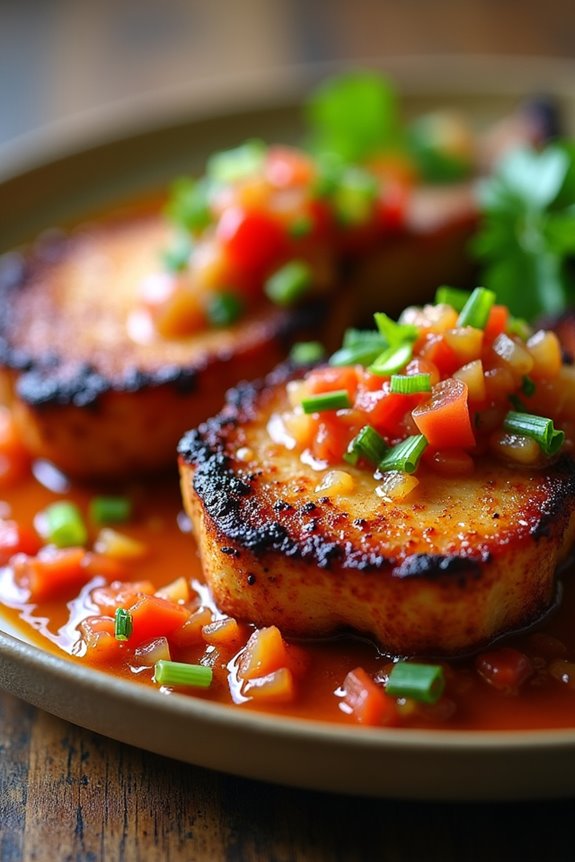
Pork Chops with Hogao Sauce is a traditional Colombian dish that perfectly showcases the vibrant flavors of the country’s cuisine. The dish features succulent pork chops that are seasoned and seared to perfection, topped with a rich and aromatic hogao sauce that brings a delightful mix of onions, tomatoes, and herbs. This dish isn’t only a feast for the eyes but also offers a delicious combination of textures and tastes that are bound to impress your family or guests.
Hogao sauce is a staple in Colombian cooking, often used as a condiment for a variety of dishes. Its savory profile enhances the flavor of the pork chops, making them tender and juicy. This recipe is perfect for serving 4-6 people and is ideal for a family dinner or a special occasion. Pair it with rice and fried plantains for a complete and satisfying meal that embodies the essence of Colombian dining.
Ingredients (serving size: 4-6 people)
- 4-6 bone-in pork chops (about 1 inch thick)
- Salt and pepper, to taste
- 2 tablespoons olive oil
- 1 large onion, finely chopped
- 2 medium tomatoes, finely chopped
- 1 cup chopped scallions (green onions)
- 1 tablespoon fresh cilantro, chopped
- 2 cloves garlic, minced
- 1 teaspoon ground cumin
- 1 tablespoon vinegar (white or apple cider)
- 1/4 teaspoon chili powder (optional)
Cooking Instructions
- Prepare the Pork Chops: Season the pork chops generously with salt and pepper on both sides. Allow them to sit at room temperature for about 15-20 minutes. This helps the chops to absorb the seasoning and guarantees even cooking.
- Sear the Pork Chops: In a large skillet, heat the olive oil over medium-high heat. Once the oil is hot, add the pork chops to the skillet. Sear them for about 4-5 minutes on each side until they’re nicely browned and cooked through. If your chops are thick, you may need to lower the heat and cook them a few extra minutes. Once cooked, remove the chops from the skillet and set aside.
- Prepare the Hogao Sauce: In the same skillet, add the chopped onion and sauté for about 3-4 minutes until translucent. Add the minced garlic and continue to sauté for an additional minute until fragrant.
- Add Tomatoes and Seasonings: Stir in the chopped tomatoes, scallions, cumin, vinegar, and chili powder (if using). Cook for about 5-7 minutes, stirring occasionally, until the tomatoes break down and the sauce thickens. Add the chopped cilantro towards the end of cooking for a fresh flavor.
- Combine and Serve: Return the pork chops to the skillet, spooning the hogao sauce over them. Let them simmer together for another 2-3 minutes to allow the flavors to meld. Serve hot, garnished with additional cilantro if desired.
Extra Tips
When cooking Pork Chops with Hogao Sauce, it’s crucial to choose good quality pork chops for the best flavor and tenderness. If you find that the hogao sauce is too thick, you can add a splash of water or broth to reach your desired consistency.
Additionally, feel free to adjust the heat level by adding fresh chili peppers to the sauce, or serve with a side of avocado for a revitalizing contrast. Enjoy your culinary journey through Colombian flavors!
Vegetable Stir-Fry With Quinoa
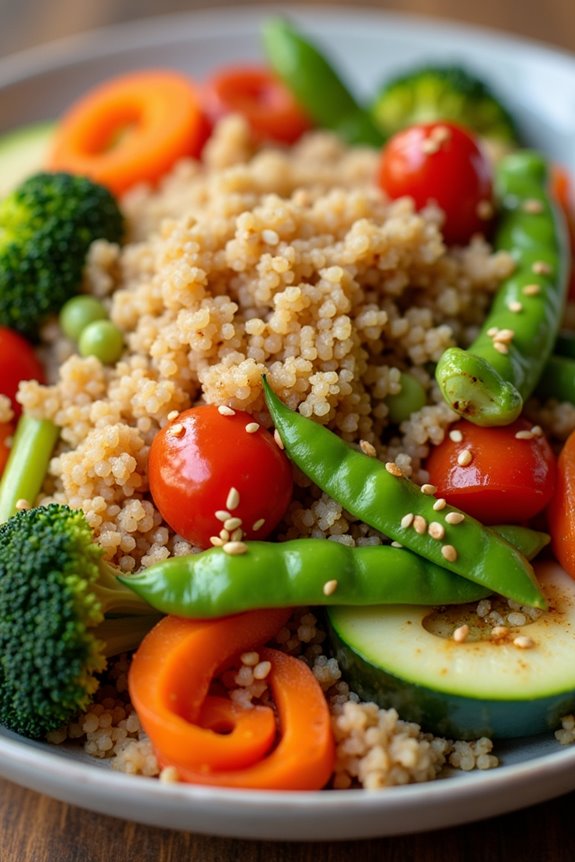
Vegetable Stir-Fry with Quinoa is a vibrant and nutritious dish that brings together the flavors and textures of fresh vegetables, complemented by the nutty taste of quinoa. This dish isn’t only visually appealing but also packed with essential nutrients, making it a perfect option for a wholesome dinner.
The quinoa serves as a great source of protein and fiber, while the stir-fried vegetables add a delightful crunch and a burst of color. This recipe is versatile, allowing you to customize it based on the vegetables you have on hand or your personal preferences.
Whether you prefer bell peppers, broccoli, or snap peas, feel free to mix and match your favorite vegetables. The addition of a savory sauce elevates the dish, making it a satisfying meal that can be enjoyed by the whole family.
Ingredients (serving size of 4-6 people):
- 1 cup quinoa
- 2 cups vegetable broth or water
- 2 tablespoons olive oil
- 1 medium onion, sliced
- 2 cloves garlic, minced
- 1 bell pepper, sliced (any color)
- 1 cup broccoli florets
- 1 cup snap peas
- 1 medium carrot, julienned
- 1 zucchini, sliced
- 3 tablespoons soy sauce (or tamari for gluten-free)
- 1 tablespoon sesame oil
- 1 teaspoon ginger, grated
- Salt and pepper to taste
- Optional: sesame seeds for garnish
Cooking Instructions:
1. Rinse the Quinoa: Begin by rinsing the quinoa under cold water in a fine-mesh strainer. This step is crucial to remove the natural coating, called saponin, which can give the quinoa a bitter taste. After rinsing, drain it well.
2. Cook the Quinoa: In a medium saucepan, combine the rinsed quinoa and vegetable broth (or water). Bring it to a boil over medium-high heat, then reduce the heat to low, cover, and let it simmer for about 15 minutes or until the quinoa is fluffy and the liquid has been absorbed.
Once done, remove from heat and let it sit covered for an additional 5 minutes, then fluff with a fork.
3. Heat the Oil: In a large skillet or wok, heat the olive oil over medium-high heat. Allow the oil to heat up for about a minute until it shimmers, which will help in stir-frying the vegetables quickly.
4. Sauté the Aromatics: Add the sliced onion and minced garlic to the skillet. Stir-fry for about 2-3 minutes until the onions become translucent and the garlic is fragrant.
5. Add Vegetables: Incorporate the bell pepper, broccoli, snap peas, carrot, and zucchini into the skillet. Stir-fry the vegetables for about 5-7 minutes, or until they’re tender-crisp.
Make sure to keep tossing them to guarantee even cooking and to prevent burning.
6. Prepare the Sauce: In a small bowl, mix the soy sauce, sesame oil, and grated ginger. Pour this mixture over the stir-fried vegetables, tossing everything together to coat well.
Season with salt and pepper to taste, allowing the flavors to meld for another 1-2 minutes.
7. Combine with Quinoa: Add the cooked quinoa to the skillet with the stir-fried vegetables, gently mixing everything until well combined. Allow it to heat through for another minute before removing from heat.
8. Serve: Transfer the Vegetable Stir-Fry with Quinoa to a serving platter or individual bowls. If desired, sprinkle sesame seeds on top for added crunch and flavor.
Extra Tips:
For a more robust flavor, consider adding a splash of lime juice or a sprinkle of fresh herbs like cilantro or parsley before serving.
You can also incorporate protein sources like tofu or chickpeas to make the dish heartier. Additionally, feel free to experiment with different sauces or spices, like chili flakes or crushed peanuts, to personalize the dish to your liking.
Enjoy your colorful, healthy meal!
Colombian-Style Grilled Corn (Arepa De Choclo)
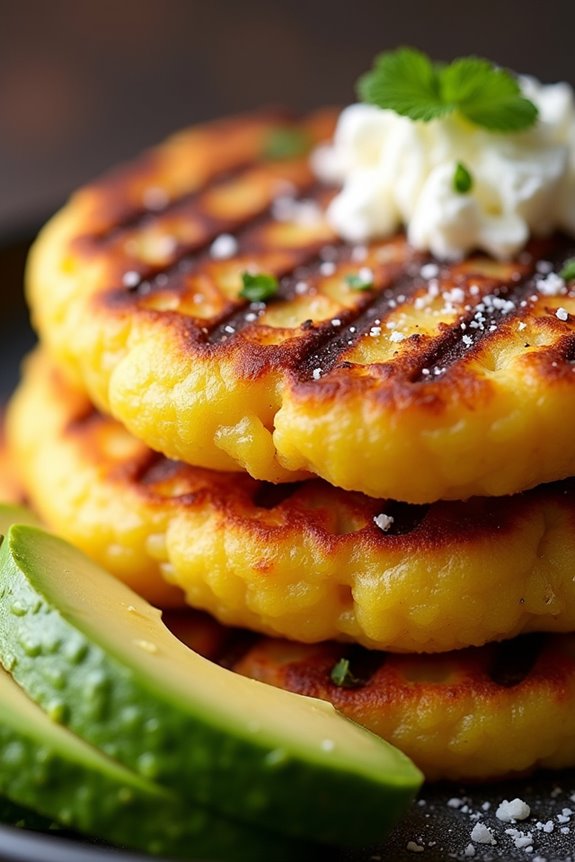
Arepa de Choclo is a delightful Colombian street food that showcases the country’s love for corn. These sweet and savory grilled corn cakes are made with fresh corn and can be enjoyed as a snack or a side dish. Often served with cheese or a dollop of butter, Arepa de Choclo is a versatile dish that captures the essence of Colombian flavors. The combination of the tender corn and the smoky, charred exterior creates a unique texture that’s irresistible.
Making Arepa de Choclo is a simple yet rewarding process. The key is to use fresh corn for the best flavor and texture. Whether you grill them on an outdoor barbecue or on a stovetop grill pan, these corn cakes are perfect for any occasion, whether it’s a family gathering or a casual snack. Serve them with a sprinkle of cheese or a side of avocado for an authentic Colombian experience.
Ingredients (Serves 4-6):
- 4 cups fresh corn kernels (approximately 6-8 ears of corn)
- 1 cup cornmeal (preferably precooked)
- 1/2 cup milk
- 1/4 cup sugar
- 1 teaspoon baking powder
- 1/2 teaspoon salt
- 1/2 cup crumbled queso fresco (or any cheese of your choice)
- Butter (for grilling)
- Optional: avocado or additional cheese for serving
Cooking Instructions:
- Prepare the Corn: Start by husking the corn and removing the kernels from the cobs. You can use a sharp knife to cut the kernels off, ensuring you get as much of the corn as possible. Place the fresh corn kernels in a blender or food processor and pulse them a few times until slightly chunky; avoid turning them into a puree.
- Mix the Batter: In a large mixing bowl, combine the blended corn with the cornmeal, milk, sugar, baking powder, and salt. Mix the ingredients together until you have a thick batter. The consistency should be similar to pancake batter, so add a bit more milk if it’s too thick.
- Incorporate the Cheese: Gently fold in the crumbled queso fresco into the batter, ensuring that the cheese is evenly distributed. This will add a rich flavor to the Arepas when grilled.
- Preheat the Grill: Preheat your grill or grill pan over medium heat. Lightly grease the grill with butter to prevent sticking.
- Shape the Arepas: With your hands, take a portion of the batter (about 1/3 cup) and shape it into a patty about 1/2 inch thick. Repeat this process until all the batter is shaped into arepas.
- Grill the Arepas: Place the shaped corn cakes onto the preheated grill. Cook for about 4-5 minutes on each side or until they develop a golden-brown crust and grill marks. Keep an eye on them to prevent burning.
- Serve: Once grilled, remove the Arepas from the grill and serve hot. You can spread a bit of butter on top and enjoy them alongside avocado or additional cheese.
Extra Tips:
When making Arepa de Choclo, using fresh corn is essential for the best flavor and texture. If fresh corn isn’t available, you can use frozen corn, but make sure to thaw it completely and drain any excess moisture.
Additionally, feel free to experiment with different types of cheese or add herbs to the batter for a unique twist. These arepas can be frozen after grilling; just reheat them on a skillet for a quick snack later on!
Sancocho (Colombian Stew)
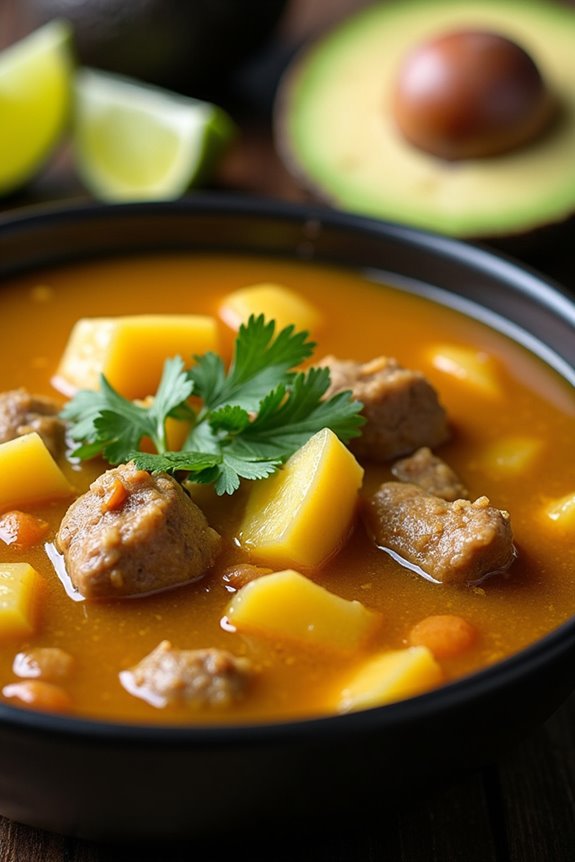
Sancocho is a traditional Colombian stew that has become a beloved staple in many households across the country. This hearty dish is often made with a variety of meats, such as chicken, beef, or fish, and is accompanied by an assortment of vegetables. The rich flavors and comforting texture make it perfect for family gatherings and celebrations.
Each region in Colombia has its own variation of Sancocho, so feel free to adapt the recipe based on local ingredients or personal preferences.
The beauty of Sancocho lies in its versatility. It can be served as a main course or as a side dish, and it pairs wonderfully with rice, avocado, and a sprinkle of lime juice. Cooking Sancocho is a labor of love, as the slow simmering of the meats and vegetables allows the flavors to meld beautifully.
Whether you’re cooking for a cozy dinner or a festive occasion, this Colombian stew is sure to impress your guests and warm their hearts.
Ingredients (Serves 4-6):
- 1 lb chicken pieces (bone-in, skin-on for more flavor)
- 1 lb beef (chuck or brisket, cut into chunks)
- 6 cups water
- 2 medium potatoes (peeled and chopped)
- 2 medium yuca (cassava, peeled and cut into chunks)
- 1 plantain (peeled and sliced)
- 1 large onion (chopped)
- 2 garlic cloves (minced)
- 1 bell pepper (chopped)
- 2 medium tomatoes (chopped)
- 2 tablespoons fresh cilantro (chopped)
- 1 tablespoon vegetable oil
- Salt and pepper to taste
- Lime wedges for serving
- Avocado for serving (optional)
- Cooked white rice for serving (optional)
Cooking Instructions:
- Prepare the meats: In a large pot, heat the vegetable oil over medium heat. Season the chicken pieces and beef with salt and pepper. Once the oil is hot, add the chicken and beef to the pot, browning them on all sides for about 5-7 minutes. This step helps to develop a rich flavor base for the stew.
- Add aromatics: After the meats are browned, remove them from the pot and set them aside. In the same pot, add the chopped onion, garlic, and bell pepper. Sauté for about 3-4 minutes until the vegetables have softened and become fragrant. The aromatic vegetables will enhance the overall taste of the Sancocho.
- Build the stew: Return the browned meats to the pot and pour in the 6 cups of water. Add the chopped tomatoes, and bring the mixture to a boil. Once boiling, reduce the heat to low, cover the pot, and let it simmer for about 40 minutes. This allows the flavors to meld and the meats to become tender.
- Incorporate the vegetables: After 40 minutes, add the chopped potatoes, yuca, and plantain to the pot. Stir gently to combine, and continue to simmer for an additional 30 minutes, or until the vegetables are tender. Make sure to check the stew occasionally, adding more water if necessary to maintain a nice broth consistency.
- Finish with cilantro: Once the vegetables are cooked through, stir in the chopped cilantro, and adjust the seasoning with more salt and pepper if needed. Let the stew simmer for another 5-10 minutes to allow the flavors to blend together.
- Serve: Ladle the Sancocho into bowls and serve hot, accompanied by lime wedges, avocado slices, and white rice on the side. This adds freshness and complements the rich stew perfectly.
Extra Tips: When making Sancocho, you can customize the ingredients based on availability or personal preference. Feel free to incorporate other vegetables like corn or carrots, or even switch up the proteins by adding fish or pork.
Always taste the broth as it simmers and adjust the seasoning as needed. The longer you let it simmer, the more flavorful the stew will become, so don’t rush the process! Enjoy your Sancocho with friends and family for a truly authentic Colombian experience.
Egg and Tomato Scramble (Huevos Pericos)
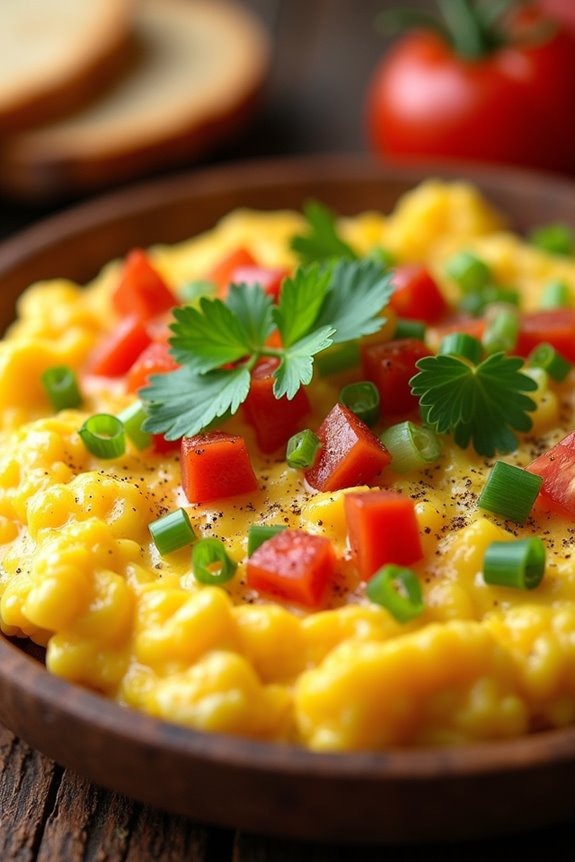
Huevos Pericos, a beloved Colombian breakfast dish, is a delightful scramble that combines eggs with fresh tomatoes, scallions, and sometimes a touch of cheese. This hearty meal isn’t only simple to prepare but also packs a punch of flavor, making it a fantastic way to start your day or serve as a light dinner.
The vibrant colors and textures of the ingredients create a visually appealing dish that’s sure to please family and friends alike. This recipe for Huevos Pericos is designed to serve 4-6 people, making it perfect for a family breakfast or a brunch gathering.
The combination of eggs and tomatoes is a classic in Colombian cuisine, often enjoyed with a side of crusty bread or arepas for a complete meal. With a few fresh ingredients and some quick cooking, you can bring a taste of Colombia right to your table.
Ingredients:
- 8 large eggs
- 2 medium tomatoes, diced
- 1/2 cup scallions (green onions), finely chopped
- 1/4 cup fresh cilantro, chopped (optional)
- 1/2 teaspoon salt (to taste)
- 1/4 teaspoon black pepper (to taste)
- 2 tablespoons butter or oil (for cooking)
- Crusty bread or arepas (for serving)
Cooking Instructions:
1. Prepare the Ingredients: Start by washing the tomatoes and scallions. Dice the tomatoes into small cubes and finely chop the scallions. If you’re using cilantro, chop it as well. Having everything prepared will make the cooking process smoother.
2. Whisk the Eggs: In a large mixing bowl, crack the eggs and whisk them until the yolks and whites are fully combined. Season the eggs with salt and black pepper, adjusting the seasoning to your taste.
3. Sauté the Vegetables: In a large skillet, heat the butter or oil over medium heat. Once hot, add the chopped scallions and sauté for about 2 minutes until they become tender and fragrant.
Then, add the diced tomatoes to the skillet and cook for another 3-4 minutes until they soften and release their juices.
4. Cook the Eggs: Pour the whisked eggs into the skillet with the sautéed vegetables. Allow the mixture to sit for a few seconds before gently stirring with a spatula.
Continue to cook, stirring occasionally, until the eggs are just set but still slightly creamy, about 3-5 minutes.
5. Add Cilantro: If using, sprinkle the chopped cilantro over the scramble and give it a gentle fold to incorporate. Remove the skillet from the heat once the eggs are fully cooked to your liking.
6. Serve: Transfer the Huevos Pericos to a serving dish and enjoy it immediately. Serve with crusty bread or arepas on the side for a complete meal.
Extra Tips:
For an extra burst of flavor, consider adding a pinch of cumin or a dash of hot sauce to the eggs while whisking.
You can also customize the dish by incorporating other vegetables such as bell peppers or spinach. For a creamier texture, sprinkle some cheese into the scramble just before serving. Enjoy the Huevos Pericos hot, as the flavors are best when freshly made!
Sweet Plantains (Plátanos Maduros)
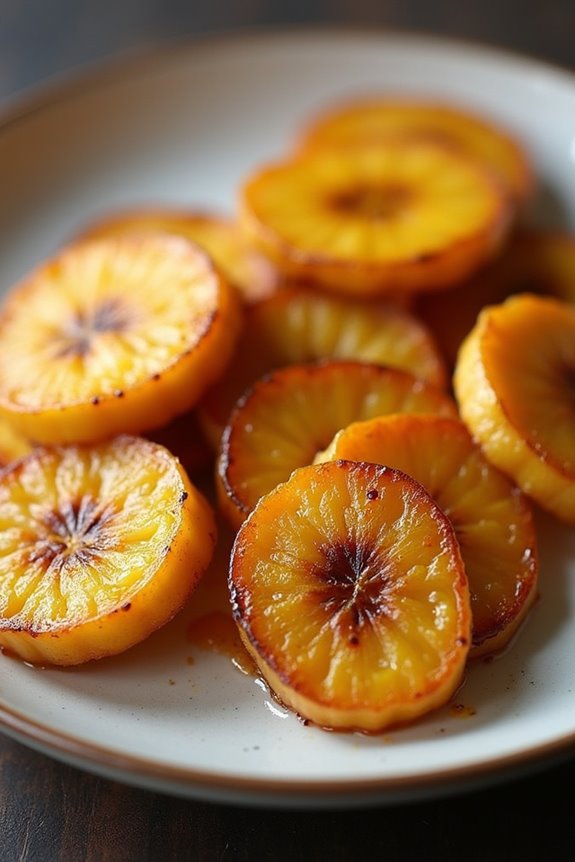
Sweet plantains, or plátanos maduros, are a beloved staple in Colombian cuisine, known for their rich flavor and delightful texture. These luscious fruits, when cooked, transform into a sweet, caramelized treat that can be enjoyed as a side dish or a dessert. Their natural sugars come alive when fried, creating a golden exterior that contrasts beautifully with the soft, tender interior.
Whether served alongside savory dishes or on their own, sweet plantains are a delicious addition to any Colombian meal.
Making sweet plantains is a straightforward process that requires just a few ingredients and minimal preparation. The key to achieving the best sweetness and texture lies in selecting ripe plantains, which are typically yellow with black spots. The ripeness of the plantains enhances their sweetness, making them the star of the dish.
Follow this recipe to prepare sweet plantains that will delight your family and friends.
Ingredients for Sweet Plantains (Plátanos Maduros) – Serves 4-6:
- 4 ripe plantains (yellow with black spots)
- 1/4 cup vegetable oil (for frying)
- A pinch of salt (optional)
Cooking Instructions:
- Prepare the Plantains: Start by peeling the plantains. To do this, cut off both ends of each plantain, then make a lengthwise slit along the skin. Carefully lift the skin away from the fruit. Once peeled, slice the plantains into diagonal pieces about 1-inch thick. This shape allows for a larger surface area, which helps achieve a crispy texture when frying.
- Heat the Oil: In a large frying pan or skillet, pour in the vegetable oil and heat it over medium heat. To test if the oil is ready, drop a small piece of plantain into the oil. If it sizzles, the oil is hot enough for frying.
- Fry the Plantains: Carefully add the sliced plantains to the hot oil in a single layer, making sure not to overcrowd the pan. Fry the plantains for about 2-3 minutes on one side until they turn golden brown. Using tongs or a slotted spoon, flip them over and fry for an additional 2-3 minutes on the other side until they’re evenly cooked and crispy.
- Drain and Season: Once the plantains are cooked, transfer them to a plate lined with paper towels to absorb any excess oil. If desired, sprinkle a pinch of salt over them while they’re still hot for added flavor.
- Serve: Sweet plantains can be served immediately while hot. They pair well with savory dishes like rice and beans or can be enjoyed on their own as a snack or dessert.
Extra Tips: When selecting plantains, aim for those that are mostly yellow with a few black spots, as this indicates ideal ripeness for sweetness. If your plantains aren’t quite ripe, you can allow them to sit at room temperature for a couple of days until they soften.
For an alternative cooking method, you can also bake or grill the plantains for a healthier version; just brush them lightly with oil before cooking. Enjoy experimenting with different serving options, such as drizzling honey or adding a sprinkle of cinnamon for an extra layer of flavor.
