

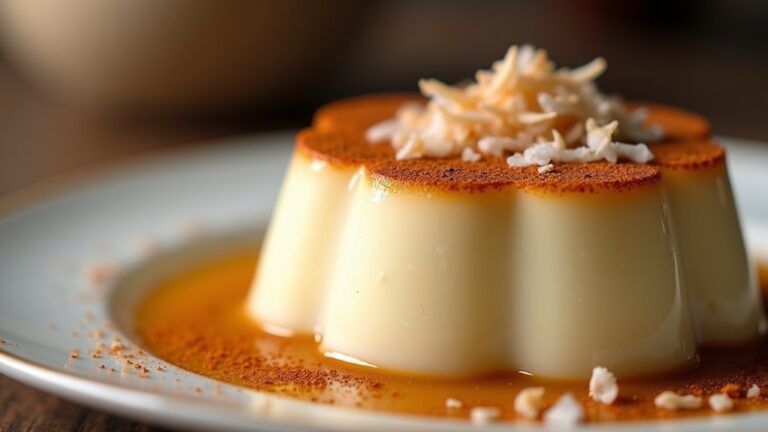
When I think of comfort food, Colombian cuisine immediately comes to mind. Each dish is like a warm hug, brimming with rich flavors and heartwarming ingredients. From the creamy Ajiaco Santafereño to the robust Sancocho, these recipes bring people together. I can almost smell the aromatic spices filling the kitchen. Let’s explore some traditional recipes that promise warmth and satisfaction.
Ajiaco Santafereño
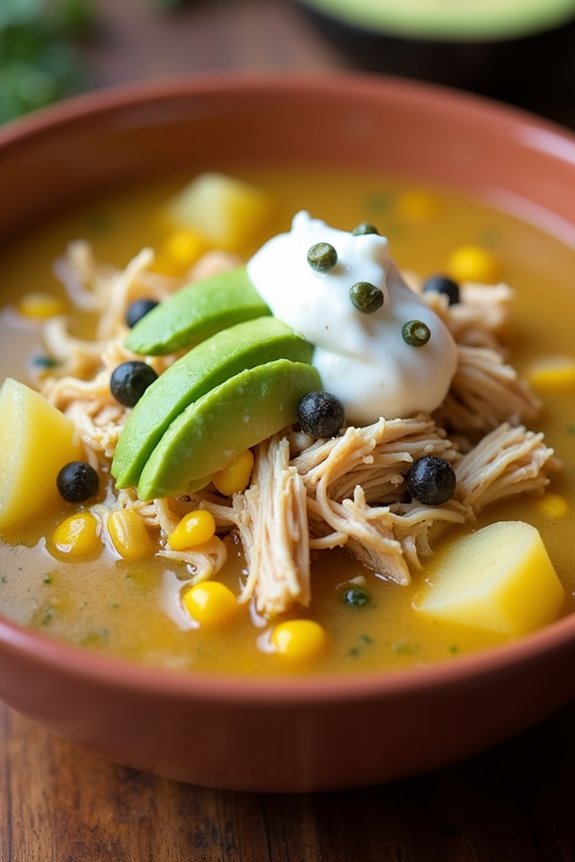
Ajiaco Santafereño is a traditional Colombian soup that hails from the capital city, Bogotá. This hearty dish is a delightful medley of flavors that come together beautifully, featuring chicken, three types of potatoes, and a variety of herbs. The creamy texture of the potatoes combined with the savory broth and tender chicken creates a comforting meal that’s perfect for any occasion.
Ajiaco is often served with avocado, capers, and a dollop of sour cream, adding fresh flavors that elevate the dish. This iconic Colombian recipe isn’t only delicious but also embodies the rich culinary heritage of the region. Ajiaco is widely enjoyed in Colombian homes and restaurants alike, often served on special occasions and family gatherings.
The distinct taste of the Andean herbs, particularly guascas, gives this soup its characteristic flavor profile. Whether you’re looking to impress guests or simply enjoy a taste of Colombia at home, Ajiaco Santafereño is sure to please everyone at the table.
Ingredients (Serves 4-6)
- 2 pounds of chicken thighs and drumsticks
- 8 cups of water
- 2 cups of potatoes (Russet or Idaho), peeled and diced
- 2 cups of potatoes (yellow potatoes), peeled and diced
- 2 cups of potatoes (red potatoes), peeled and diced
- 1 medium onion, chopped
- 2 garlic cloves, minced
- 1 cup of corn on the cob (or 1 cup of frozen corn)
- 1 cup of fresh cilantro, chopped
- 1 tablespoon of guascas (Andean herb)
- Salt and pepper to taste
- 1 avocado, sliced (for serving)
- ½ cup of sour cream (for serving)
- Capers (for serving)
Cooking Instructions
- Prepare the Chicken: In a large pot, add the chicken thighs and drumsticks, then pour in the water. Bring to a boil over medium-high heat. Once boiling, reduce the heat to low and let it simmer for about 30 minutes. This allows the chicken to cook thoroughly and infuse the broth with flavor.
- Add Aromatics: After the chicken has simmered, add the chopped onion and minced garlic to the pot. Stir well, and let it cook for another 10 minutes. The onions will soften and the garlic will release its aroma, enhancing the broth’s flavor.
- Incorporate the Potatoes: Next, add the diced Russet, yellow, and red potatoes to the pot. Stir to combine and let everything simmer for 20-25 minutes, or until the potatoes are tender. The different types of potatoes will contribute unique textures to the soup.
- Add Corn and Herbs: Once the potatoes are cooked, add the corn and chopped cilantro to the pot. Sprinkle in the guascas, and season with salt and pepper to taste. Let the ajiaco cook for an additional 5-10 minutes, allowing the flavors to meld together.
- Serve the Soup: Remove the chicken pieces from the pot and shred the meat, discarding the bones. Return the shredded chicken to the pot and mix well. Serve the ajiaco hot, garnished with slices of avocado, a dollop of sour cream, and a sprinkle of capers for a fresh touch.
Extra Tips
When making Ajiaco Santafereño, it’s important to use a mix of potatoes for the best texture and flavor. The different starch contents will provide a creamier consistency to the soup.
If you can’t find guascas, you can substitute with dried oregano, although the flavor won’t be quite the same. For a richer broth, consider simmering the soup longer, and always taste as you go to adjust the seasoning to your preference. Enjoy this Colombian classic with a side of crusty bread for a complete meal!
Bandeja Paisa
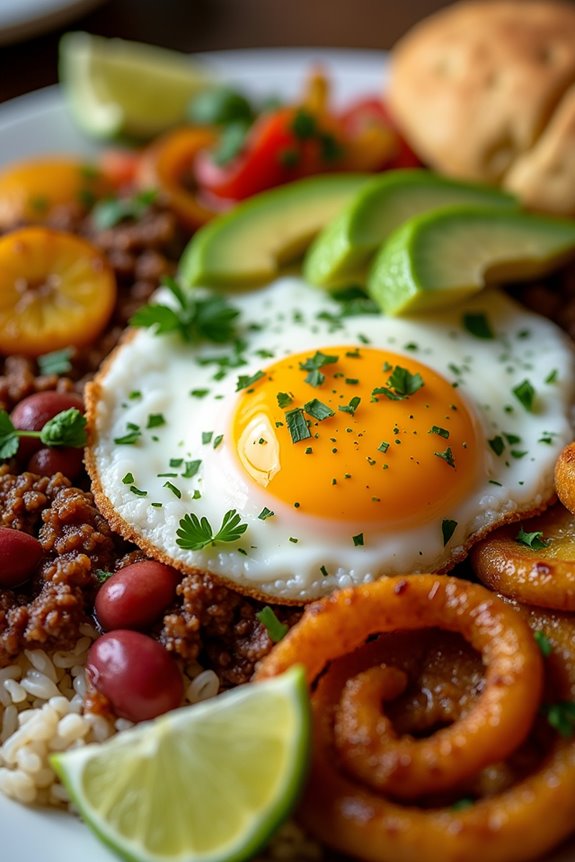
Bandeja Paisa is a traditional Colombian dish that showcases the rich flavors and diverse ingredients of the Antioquia region. Originating from the mountainous area of Colombia, this hearty meal is a true feast, combining various protein sources and sides that reflect the agricultural bounty of the region.
Historically, it was a meal designed to fuel the hard-working paisas, or people from that region, and today it remains a beloved staple in Colombian cuisine, celebrated for its heartiness and variety.
The dish typically includes a variety of elements such as grilled steak, chicharrón (fried pork belly), beans, rice, avocado, plantains, and a fried egg. Each component plays a crucial role in creating the perfect balance of flavors and textures, making Bandeja Paisa not just a meal, but an experience.
Preparing this dish might seem intimidating at first due to the number of components, but with the right approach, you can create a delicious and memorable meal that will impress your family and friends.
Ingredients (Serves 4-6):
- 1 lb ground beef
- 1 lb pork belly (for chicharrón)
- 2 cups red beans (cooked)
- 2 cups white rice (cooked)
- 2 ripe plantains
- 4 eggs
- 2 avocados
- 1 cup arepa (corn cake)
- 1 onion (chopped)
- 1 bell pepper (chopped)
- 2 cloves garlic (minced)
- 2 teaspoons cumin
- Salt and pepper to taste
- Fresh cilantro (for garnish)
- Lime wedges (for serving)
Cooking Instructions:
- Prepare the Beans: If you’re using dried red beans, soak them overnight and then cook them in a pot with water, garlic, onion, and cumin until tender. If using canned beans, rinse and heat them in a pot while adding the same seasonings for flavor.
- Cook the Pork Belly: In a frying pan, cook the pork belly over medium heat until crispy, turning occasionally. Once cooked, remove from the pan and let it drain on paper towels to absorb excess fat. Cut into bite-sized pieces for serving.
- Cook the Ground Beef: In the same pan, drain excess fat if needed, then add the ground beef, chopped onion, bell pepper, and garlic. Season with cumin, salt, and pepper, and cook until the beef is browned and fully cooked, about 7-10 minutes.
- Fry the Plantains: Peel the plantains and slice them diagonally into thick pieces. In a separate pan, heat oil over medium heat and fry the plantain slices until they’re golden brown on both sides. Remove and drain on paper towels.
- Prepare the Arepas: If you’re making arepas from scratch, mix cornmeal with water and a pinch of salt to form a dough, then shape into patties and cook on a hot griddle until golden brown on both sides. You can also use store-bought arepas for convenience.
- Fry the Eggs: In a small skillet, fry the eggs sunny-side up, or to your preference. Season with salt and pepper.
- Assembly: On a large platter, arrange a serving of rice, beans, ground beef, chicharrón, fried plantains, arepas, avocado slices, and top with a fried egg. Garnish with fresh cilantro and serve lime wedges on the side.
Extra Tips:
When preparing Bandeja Paisa, it’s important to confirm each component is cooked to perfection for the best flavor experience.
Feel free to adjust the ingredients according to personal preferences and availability. For a more authentic touch, add aji (Colombian hot sauce) to the table, as it complements the dish beautifully.
Remember that Bandeja Paisa is all about abundance, so don’t hesitate to pile everything high on the plate!
Sancocho
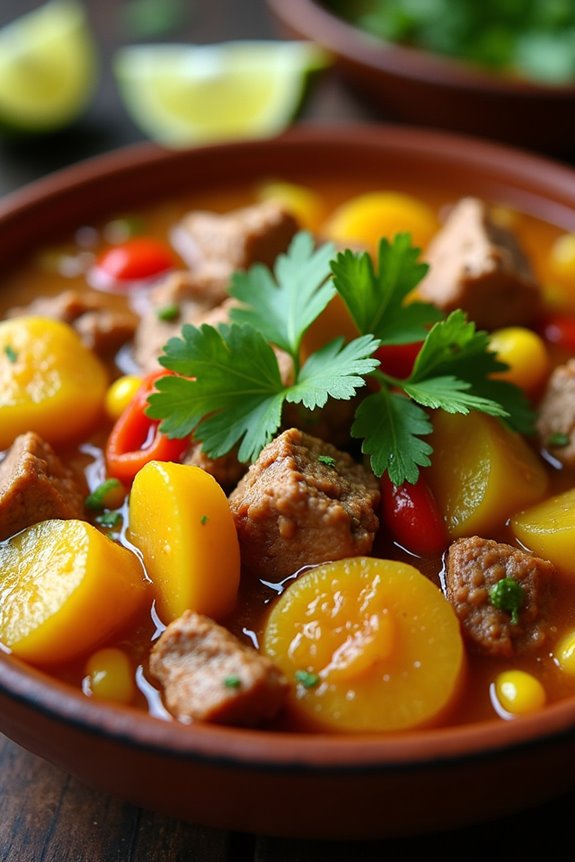
Sancocho is a traditional Colombian stew that embodies the heart and soul of Colombian cuisine. Rich in flavor and often served during family gatherings or festive occasions, this hearty dish combines a variety of meats with vegetables and spices, creating a comforting and nourishing experience. Its origins can be traced back to the Spanish colonization, and it has since evolved into numerous regional variations across Colombia, each with its unique twist.
The combination of ingredients and the slow-cooking process allows the flavors to meld beautifully, resulting in a stew that warms both the body and spirit. Preparing Sancocho isn’t just about cooking; it’s about sharing and enjoying a meal with loved ones. This recipe will guide you to create a classic version of Sancocho that features chicken, beef, and pork along with a generous mix of root vegetables and spices.
Whether you’re new to Colombian cooking or looking to expand your culinary repertoire, this dish is sure to impress with its robust flavors and delightful aroma.
Ingredients (Serves 4-6)
- 1 lb chicken (cut into pieces)
- 1 lb beef (cut into chunks)
- 1 lb pork (cut into chunks)
- 4 cups beef or chicken broth
- 2 large yucca roots (peeled and cut into chunks)
- 2 large potatoes (peeled and diced)
- 2 ears of corn (cut into pieces)
- 1 large plantain (peeled and sliced)
- 1 medium onion (chopped)
- 2 cloves garlic (minced)
- 1 bell pepper (chopped)
- 1 tsp cumin
- 1 tsp paprika
- Salt and pepper to taste
- Fresh cilantro (for garnish)
- Lime wedges (for serving)
Cooking Instructions
- Prepare the Ingredients: Start by gathering and prepping all ingredients. Cut the meats into appropriate sizes, peel and chop the yucca, potatoes, plantain, and corn. This will guarantee that everything is ready to go when you start cooking.
- Sauté the Aromatics: In a large pot, heat a tablespoon of oil over medium heat. Add the chopped onion, garlic, and bell pepper. Sauté until the onions are translucent and fragrant, about 5 minutes. This step builds the base flavor for your Sancocho.
- Brown the Meats: Add the chicken, beef, and pork to the pot. Season with salt, pepper, cumin, and paprika. Cook the meats until they’re browned on all sides, approximately 10 minutes. Browning the meats adds depth to the dish and enhances its overall flavor.
- Add the Broth: Pour in the beef or chicken broth, making sure to cover the meat. Bring the mixture to a boil, then reduce the heat to low. Cover the pot and let it simmer for about 30 minutes. This allows the flavors to meld together and the meats to tenderize.
- Incorporate the Vegetables: Once the meats are tender, add the yucca, potatoes, corn, and plantain to the pot. Stir gently to combine and continue to simmer for an additional 20-30 minutes until the vegetables are cooked through. The vegetables will absorb the delicious broth, making them flavorful and tender.
- Final Seasoning and Serving: Taste the Sancocho and adjust the seasoning with more salt and pepper if necessary. Once everything is cooked, ladle the stew into bowls, garnish with fresh cilantro, and serve with lime wedges on the side for an extra burst of flavor.
Extra Tips
For a more authentic flavor, consider adding a couple of bay leaves during the simmering process. Additionally, if you want to enhance the richness of the broth, you can add a splash of coconut milk towards the end of cooking.
Sancocho is versatile, so feel free to experiment with different types of meats or vegetables based on your preference. Enjoy the stew with a side of avocado or rice for a complete meal!
Arepas
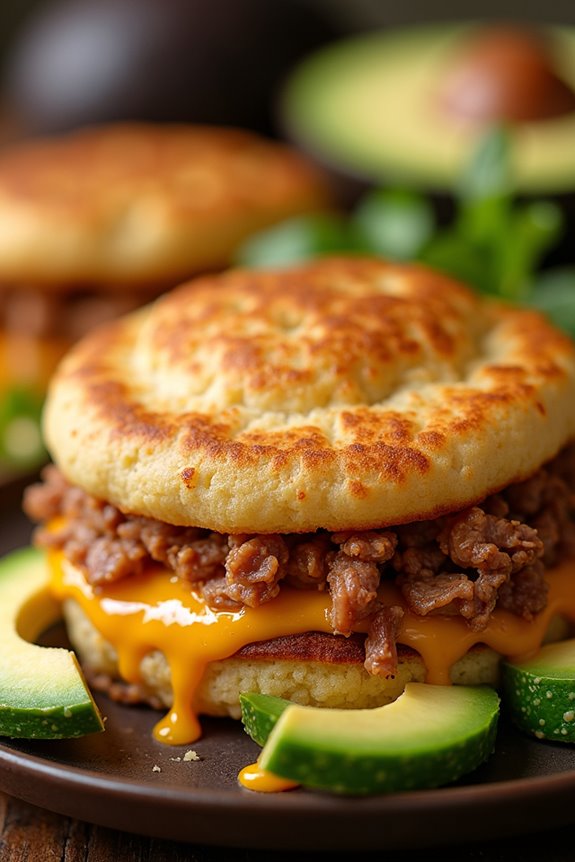
Arepas are a traditional Colombian dish made from ground maize dough, often enjoyed for breakfast, lunch, or dinner. They’re versatile and can be filled or topped with a variety of ingredients, including cheese, meats, or avocados.
With their crispy exterior and soft interior, arepas have become a beloved staple in Colombian cuisine and can be found in many homes and street food stalls throughout the country. Making arepas is a simple process that allows for creativity in fillings and toppings, making them a perfect meal for any occasion.
The beauty of arepas lies in their adaptability; they can be customized to suit any palate. Whether you prefer a classic arepa stuffed with cheese or a more adventurous version filled with pulled pork or vegetables, the possibilities are endless.
Additionally, they’re naturally gluten-free, making them an excellent choice for those with dietary restrictions. This recipe will guide you through the steps to create delicious arepas that will impress your family and friends.
Ingredients (serving size: 4-6 people)
- 2 cups of pre-cooked cornmeal (arepa flour)
- 2 ½ cups of warm water
- 1 teaspoon of salt
- 1 tablespoon of vegetable oil (plus more for cooking)
- Optional fillings: cheese, pulled meat, avocado, or any preferred ingredients
Cooking Instructions
- Mix the Dough: In a large mixing bowl, combine the pre-cooked cornmeal, salt, and warm water. Stir the mixture until it starts to come together. Allow the dough to rest for about 5-10 minutes. This resting period helps the dough absorb the water fully, making it easier to shape.
- Knead the Dough: After resting, knead the dough in the bowl for a few minutes until it’s smooth and pliable. If the dough is too dry, add a little more water, one tablespoon at a time. If it’s too wet, sprinkle in a bit more cornmeal. The final texture should be soft but not sticky.
- Shape the Arepas: Divide the dough into equal portions, about the size of a golf ball. Flatten each portion between your palms to form a disc about ½ inch thick. Confirm the edges are smooth and uniform for even cooking.
- Cook the Arepas: Heat a skillet or griddle over medium heat and add a little vegetable oil. Place the arepas in the skillet, leaving space between them. Cook for about 5-7 minutes on each side or until they’re golden brown and slightly crispy on the outside.
- Finish Cooking: For a softer interior, you can finish cooking the arepas in a preheated oven at 375°F (190°C) for about 10 minutes. This step is optional but recommended if you’ve added fillings that need to be warmed through.
- Serve: Remove the arepas from the skillet or oven and let them cool slightly. Cut them open and stuff with your choice of fillings or enjoy them plain. Serve warm.
Extra Tips
When making arepas, it’s crucial to get the right consistency for the dough; too dry or too wet can affect the final product. Always allow the dough to rest, as this helps with texture.
Additionally, don’t hesitate to experiment with different fillings and toppings, as arepas are incredibly versatile. For an extra touch, try adding spices or herbs to the dough for added flavor. Enjoy your homemade arepas with a side of ají (a Colombian salsa) for an authentic experience!
Empanadas
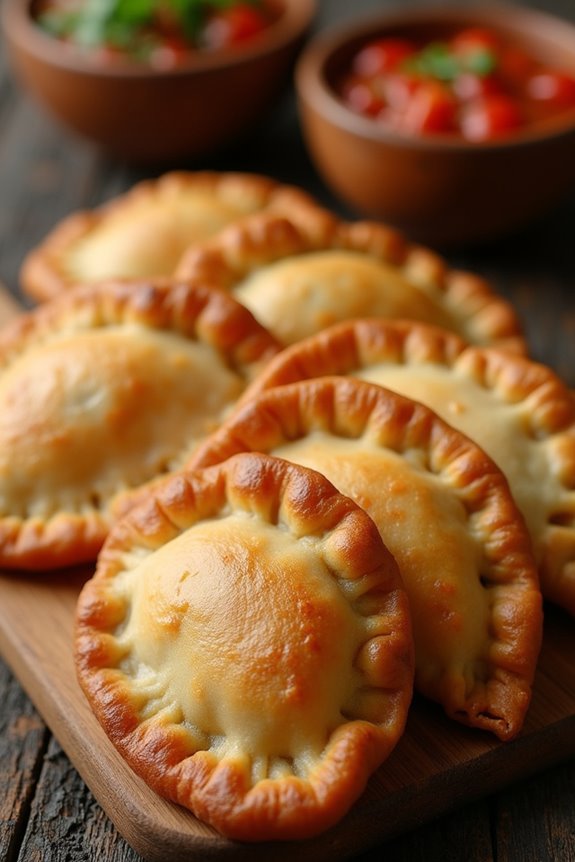
Colombian empanadas are a delicious and popular snack that can be enjoyed any time of the day. These savory pastries are made from a cornmeal dough, filled with a variety of ingredients, and then fried until golden brown and crispy. Empanadas can be filled with everything from seasoned beef and potatoes to cheese and vegetables, making them versatile and suitable for different taste preferences.
In Colombia, empanadas are often served with aji, a spicy salsa made from tomatoes, onions, and cilantro. They’re commonly enjoyed during celebrations, family gatherings, or as street food. Making empanadas at home can be a fun and rewarding experience, allowing you to customize the filling to your liking and share a taste of Colombian culture with family and friends.
Ingredients (Servings: 4-6)
- 2 cups of cornmeal (masa harina)
- 1 teaspoon of salt
- 1 ½ cups of warm water
- 1 tablespoon of vegetable oil
- 1 cup of cooked and shredded beef or chicken
- 1 cup of diced potatoes (cooked)
- 1 teaspoon of cumin
- ½ teaspoon of paprika
- ½ cup of diced onions
- ½ cup of grated cheese (optional)
- Oil for frying
Cooking Instructions
- Prepare the Dough: In a large bowl, mix the cornmeal and salt together. Gradually add warm water and vegetable oil, mixing until a smooth dough forms. Knead the dough for about 5 minutes until it’s pliable. Cover with a damp cloth and let it rest for about 30 minutes.
- Make the Filling: In a separate bowl, combine the cooked and shredded beef or chicken, diced potatoes, cumin, paprika, diced onions, and cheese (if using). Mix well until all ingredients are evenly incorporated. Taste and adjust seasoning as needed.
- Roll Out the Dough: After the dough has rested, divide it into small balls (about the size of a golf ball). On a floured surface, flatten each ball into a circle about ¼ inch thick. You can use a tortilla press or a rolling pin for this step.
- Fill the Empanadas: Place a spoonful of the filling in the center of each dough circle. Be careful not to overfill, as this may cause the empanadas to burst while frying. Fold the circle in half to create a half-moon shape and press the edges together to seal. You can crimp the edges with a fork for a decorative touch.
- Fry the Empanadas: Heat oil in a deep skillet or frying pan over medium heat. Once the oil is hot, carefully add the empanadas in batches, making sure not to overcrowd the pan. Fry for about 3-4 minutes on each side or until they’re golden brown and crispy. Remove them from the oil and place them on a paper towel-lined plate to drain excess oil.
- Serve: Enjoy the empanadas hot with a side of aji or your favorite dipping sauce. They’re perfect as an appetizer or a main dish paired with a fresh salad.
Extra Tips
When making empanadas, you can experiment with different fillings such as cheese, spinach, or even beans, depending on your preferences. For a lighter version, consider baking the empanadas instead of frying them.
Simply brush them with a little oil and bake at 375°F (190°C) for about 20-25 minutes until golden. Additionally, make sure the oil is hot enough before frying to achieve that perfect crispy texture. Enjoy your cooking adventure with these delightful Colombian empanadas!
Tamales

Tamales are a traditional Colombian dish that brings together the rich flavors of the Andes with a comforting texture that warms the heart. Typically made with masa (corn dough) and filled with various ingredients such as meats, vegetables, and spices, tamales are wrapped in banana leaves or corn husks before being steamed to perfection. This dish is often enjoyed during special occasions and family gatherings, adding a touch of festivity to any meal. The preparation can be labor-intensive, but the delicious results are well worth the effort.
In Colombia, tamales vary by region, with each area offering its unique twist on the classic recipe. Some may include chicken or pork, while others might incorporate beans, potatoes, or even cheese. The versatility of tamales allows for endless creativity in the kitchen, making them a beloved staple in Colombian households.
Whether served with a side of aji (a spicy sauce) or simply enjoyed on their own, tamales are a delightful and satisfying dish that showcases the culinary heritage of Colombia.
Ingredients (serving size: 4-6 people):
- 2 cups masa harina (corn flour)
- 1 cup chicken broth (or vegetable broth)
- 1 cup cooked, shredded chicken (or pork)
- 1 cup diced potatoes
- 1/2 cup green peas
- 1/4 cup diced carrots
- 1/4 cup chopped onions
- 1 tablespoon ground cumin
- 1 teaspoon salt
- 1/2 teaspoon black pepper
- 1/4 cup vegetable oil
- 6-8 banana leaves (or corn husks), softened and cut into rectangles
Cooking Instructions:
- Prepare the Filling: In a medium pan, heat a tablespoon of vegetable oil over medium heat. Add the chopped onions and sauté until translucent. Then, add the diced potatoes, carrots, and green peas, cooking until the vegetables are tender. Stir in the shredded chicken (or pork), ground cumin, salt, and pepper. Cook for an additional 5 minutes, allowing the flavors to meld together. Remove from heat and set aside.
- Make the Masa Dough: In a large bowl, combine the masa harina, remaining vegetable oil, and chicken broth. Mix thoroughly until a soft dough forms. The dough should be moist but not sticky. If it feels dry, add a little more broth until you achieve the right consistency.
- Assemble the Tamales: Lay out a banana leaf rectangle (or corn husk) on a flat surface. Place a generous spoonful of masa dough in the center and flatten it slightly. Add a spoonful of the filling on top of the masa. Fold the sides of the banana leaf over the filling, then roll it up tightly from the bottom to the top, securing it well. Repeat this process for the remaining ingredients.
- Steam the Tamales: In a large steamer pot or a pot with a steaming rack, add water and bring it to a boil. Arrange the tamales upright in the steamer, ensuring they aren’t overcrowded. Cover the pot with a lid and steam the tamales for about 1 to 1.5 hours, or until the masa is firm and easily pulls away from the banana leaf. Make sure to check the water level occasionally, adding more if necessary.
- Serve: Once cooked, carefully unwrap the tamales from the banana leaves or corn husks. Serve them warm, optionally accompanied by aji or your favorite salsa for an added kick. Enjoy the delightful flavors of homemade Colombian tamales!
Extra Tips:
When making tamales, feel free to customize the filling based on your preferences or what you have on hand. Some people enjoy adding cheese or different proteins such as beef or fish.
It’s also helpful to prepare the filling a day in advance, allowing the flavors to develop further. Additionally, if you’re not familiar with folding banana leaves, practice makes perfect—don’t worry if your first few tamales aren’t perfectly shaped!
Finally, try to keep the steam consistent throughout the cooking process for even results. Enjoy the experience of making tamales with family and friends!
Lechona
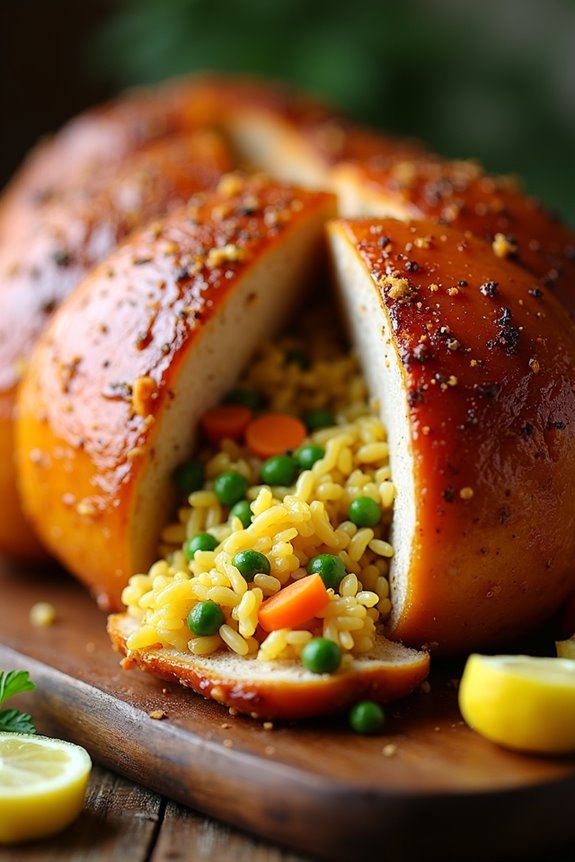
Lechona is a traditional Colombian dish that embodies the rich culinary heritage of the country. This festive dish typically consists of a whole roasted pig stuffed with rice, peas, and spices, creating a wonderfully flavorful and succulent meal that’s perfect for celebrations and family gatherings.
Originating from the Tolima region, lechona has become a beloved staple in Colombian cuisine, showcasing the country’s love for hearty, communal meals. The preparation of lechona can be a labor of love, often taking several hours to guarantee that every element is infused with flavor and cooked to perfection.
Making lechona at home can be an incredibly rewarding experience, allowing you to bring a taste of Colombia to your table. While the process may seem intimidating, breaking it down into manageable steps can make it more approachable.
Whether you’re hosting a large gathering or simply looking to try something new, this dish is sure to impress your guests and satisfy your taste buds with its crispy skin and tender meat. Gather your ingredients, roll up your sleeves, and get ready to commence on a culinary adventure that’s sure to be a hit!
Ingredients (Serves 4-6)
- 1 whole pig (about 10-12 pounds), cleaned and dressed
- 2 cups of rice
- 1 cup of green peas
- 1 cup of diced carrots
- 1 cup of diced onions
- 1 cup of diced green bell pepper
- 4 cloves of garlic, minced
- 2 teaspoons of cumin
- 2 teaspoons of paprika
- 1 teaspoon of black pepper
- 1 tablespoon of salt (or to taste)
- 1 cup of chicken broth
- 1/2 cup of fresh herbs (such as cilantro and parsley), chopped
- Olive oil for drizzling
- Banana leaves (optional, for wrapping)
- Lemon wedges for serving
Cooking Instructions
1. Prepare the Pig: Start by guaranteeing the pig is thoroughly cleaned and dressed. Rinse it with cold water and pat it dry with paper towels. This is essential for achieving crispy skin during roasting.
2. Make the Filling**: In a large pot, heat a splash of olive oil over medium heat. Add the diced onions, green bell pepper, and garlic, sautéing** until they soften. Then, stir in the diced carrots and cook for another few minutes.
Add the rice, peas, chicken broth, cumin, paprika, black pepper, and salt. Mix well and let it simmer until the rice is almost cooked (about 15 minutes).
3. Stuff the Pig: Once the rice mixture is ready, remove it from heat and allow it to cool slightly. Carefully stuff the pig’s cavity with the rice mixture, making sure it’s packed tightly. If desired, tie the pig’s legs together to keep the filling secure.
4. Preheat the Oven: Preheat your oven to 350°F (175°C). If you have a large enough roasting pan, place the pig on it. Otherwise, you may need to use a large grill or rotisserie for even cooking.
5. Roast the Pig: Drizzle the outside of the pig with olive oil and sprinkle additional salt and spices as desired. Cover the pig with banana leaves or aluminum foil for the first portion of cooking to retain moisture.
Roast in the oven for about 4-6 hours or until the internal temperature reaches at least 160°F (70°C). Uncover during the last hour to allow the skin to crisp up.
6. Serve: Once the pig is done cooking, let it rest for about 30 minutes before carving. Serve with lemon wedges on the side and enjoy the aromatic flavors of lechona with your guests.
Extra Tips
When preparing lechona, it’s important to choose a well-sourced pig to guarantee quality and flavor. If you’re short on time, consider using an oven bag or a rotisserie for easier cooking and cleanup.
Make sure to keep an eye on the internal temperature to avoid overcooking, which can lead to dryness. Additionally, serving lechona with a fresh salad or aji sauce can enhance the dish’s flavor profile.
Enjoy the cooking process, and remember that this dish is all about bringing people together!
Arroz Con Pollo
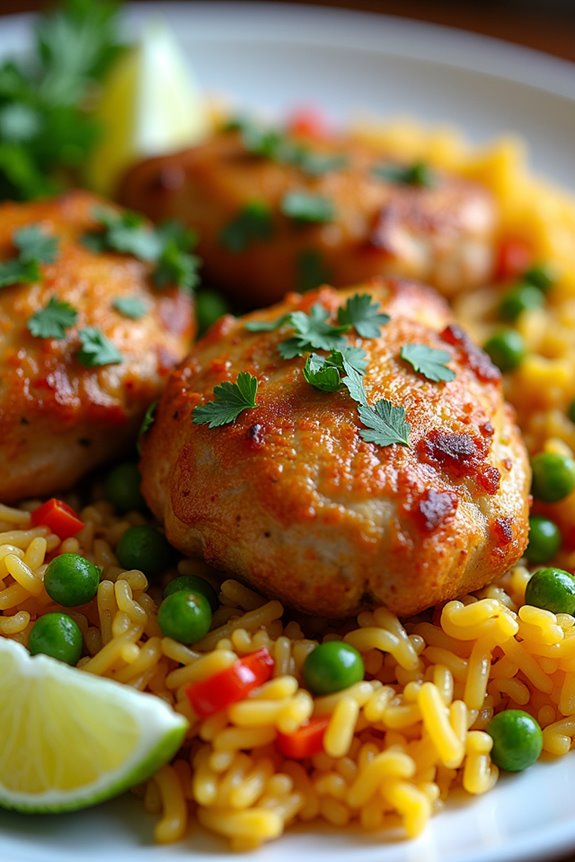
Arroz con Pollo, which translates to “rice with chicken,” is a beloved traditional dish found throughout Latin America, particularly in Colombia. This vibrant and hearty meal combines tender chicken pieces with savory rice, colorful vegetables, and fragrant spices, creating a comforting dish that’s perfect for family gatherings or celebrations.
The rich flavors and beautiful presentation make it a standout on any dinner table, representing the warmth and hospitality of Colombian cuisine.
The beauty of Arroz con Pollo lies in its versatility; each family may have its own twist on the recipe, often passed down through generations. Typically, this dish is cooked as a one-pot meal, allowing the rice to absorb all the delicious flavors of the chicken and seasoning.
It’s a wonderful way to bring friends and family together, as the aroma of this dish simmering on the stove will surely whet their appetites.
Ingredients (Serves 4-6)
- 4 chicken thighs, bone-in, skin-on
- 1 cup long-grain rice
- 2 cups chicken broth
- 1 medium onion, diced
- 2 garlic cloves, minced
- 1 red bell pepper, diced
- 1 green bell pepper, diced
- 1 cup frozen peas
- 2 tablespoons olive oil
- 1 teaspoon ground cumin
- 1 teaspoon paprika
- 1 teaspoon saffron threads (optional)
- Salt and pepper to taste
- Fresh cilantro, for garnish
- Lime wedges, for serving
Cooking Instructions
1. Sear the Chicken: In a large, deep skillet or Dutch oven, heat the olive oil over medium-high heat. Season the chicken thighs with salt and pepper, then add them to the pan, skin-side down. Sear the Chicken for about 5-7 minutes on each side, or until golden brown.
This will help to lock in moisture and flavor. Once browned, remove the chicken from the pan and set aside.
2. Sauté the Vegetables: In the same skillet, add the diced onion, garlic, and bell peppers. Sauté for about 5 minutes, or until the onions are translucent and the peppers are tender.
Stir occasionally to prevent sticking and maintain even cooking.
3. Add the Rice and Spices: Once the vegetables are cooked, add the rice to the skillet and stir to coat it with the oil and vegetable mixture. Toast the rice for about 2-3 minutes.
Then, add the ground cumin, paprika, and saffron (if using), stirring well to combine all the spices with the rice.
4. Combine Chicken and Broth: Return the seared chicken to the skillet and pour in the chicken broth. Bring the mixture to a boil, then reduce the heat to low.
Cover the skillet with a lid and let it simmer for about 20-25 minutes, or until the rice is tender and has absorbed all the liquid. Avoid lifting the lid too often, as this will release steam and affect cooking time.
5. Add Peas and Finish Cooking: After the rice is cooked, gently fold in the frozen peas. Cover again and let it sit for an additional 5 minutes off the heat to allow the peas to warm through.
This step adds a pop of color and sweetness to the dish.
6. Serve and Garnish****: Fluff the rice with a fork and carefully plate the Arroz con Pollo. Garnish with freshly chopped cilantro and serve with lime wedges on the side for an added zing.
Extra Tips
For enhanced flavor, marinate the chicken in a mixture of garlic, cumin, and lime juice for a few hours before cooking.
You can also customize the dish by adding other vegetables like carrots or corn, or adjusting the spices to suit your taste. If you prefer a spicier version, consider adding chopped jalapeños or a dash of hot sauce.
Sudado De Pollo
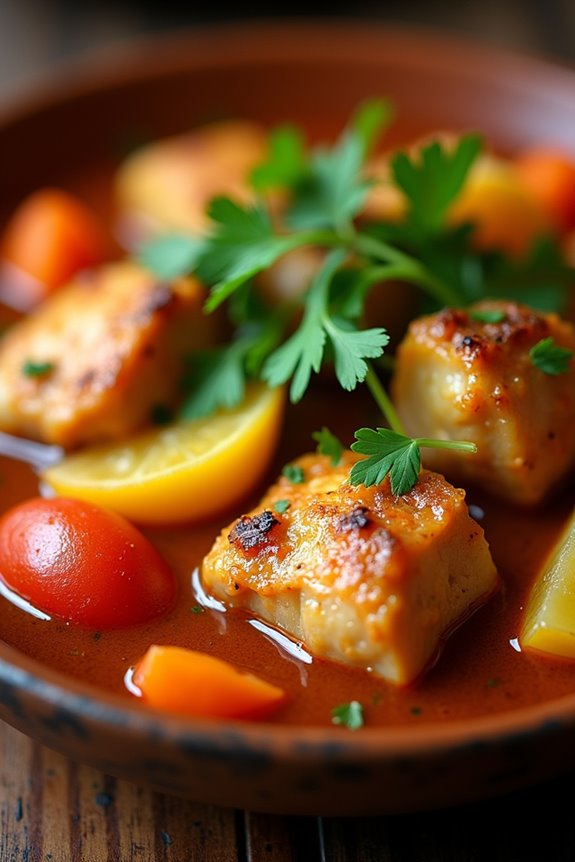
Sudado De Pollo, or Chicken Stew, is a beloved dish in Colombian cuisine known for its rich flavors and comforting texture. This hearty stew is typically made with chicken, vegetables, and a blend of spices, creating a warm and satisfying meal that’s perfect for family gatherings or cozy dinners. The dish is often served with rice and avocado, making it a complete and nutritious meal.
The slow cooking process allows the chicken to become tender and infused with the flavors of the accompanying ingredients, making it a must-try for those wanting to explore Colombian flavors. The beauty of Sudado De Pollo lies not only in its delicious taste but also in its versatility. You can adjust the vegetables and spices according to your preferences, making it a customizable dish that can cater to different tastes.
Whether you’re cooking for a crowd or just for a small family, this recipe serves 4-6 people and is sure to delight everyone at the table. So, let’s plunge into the ingredients and cooking instructions.
Ingredients:
- 2 lbs chicken pieces (legs, thighs, or breasts)
- 2 tablespoons vegetable oil
- 1 onion, chopped
- 2 garlic cloves, minced
- 1 bell pepper, chopped
- 2 tomatoes, diced
- 1 cup of chicken broth
- 1 cup of water
- 2 medium potatoes, peeled and diced
- 1 carrot, sliced
- 1 teaspoon cumin
- 1 teaspoon paprika
- Salt and pepper to taste
- Fresh cilantro, chopped (for garnish)
- Lime wedges (for serving)
Cooking Instructions:
- Prepare the Chicken: Rinse the chicken pieces under cold water and pat them dry with paper towels. Season the chicken with salt, pepper, cumin, and paprika, making sure to coat each piece evenly. This will enhance the flavor of the chicken as it cooks.
- Sauté the Aromatics: In a large pot, heat the vegetable oil over medium heat. Add the chopped onion and minced garlic, cooking them until they become translucent and fragrant, about 3-4 minutes. This step builds the base flavor of the stew.
- Cook the Chicken: Increase the heat to medium-high and add the seasoned chicken pieces to the pot. Brown the chicken on all sides for about 5-7 minutes. This step adds depth to the flavor and guarantees the chicken is well-seared before simmering.
- Add the Vegetables: Stir in the chopped bell pepper, diced tomatoes, diced potatoes, and sliced carrot. Cook for another 5 minutes, allowing the vegetables to soften slightly and absorb some of the flavors from the chicken and spices.
- Simmer the Stew: Pour in the chicken broth and water, making certain that all ingredients are submerged. Bring the mixture to a boil, then reduce the heat to low. Cover the pot and let it simmer for 30-40 minutes, or until the chicken is tender and the vegetables are cooked through. Stir occasionally to prevent sticking.
- Final Touches: Once the chicken is cooked, taste the stew and adjust the seasoning with more salt and pepper if needed. If you prefer a thicker sauce, you can simmer it uncovered for an additional 10 minutes.
- Serve: Ladle the Sudado De Pollo into bowls, garnishing with fresh cilantro. Serve hot with lime wedges on the side for squeezing over the stew, and pair it with rice and avocado for a complete meal.
Extra Tips:
When making Sudado De Pollo, feel free to experiment with different vegetables such as peas or corn to suit your taste. You can also use bone-in chicken for additional flavor.
If you have leftovers, this stew tastes even better the next day as the flavors meld together. Make sure to store it in an airtight container in the refrigerator for up to 3 days, or freeze it for longer storage. Enjoy this comforting dish with your family and friends, and don’t forget to add a squeeze of lime for a revitalizing finish!
Buñuelos

Buñuelos are a traditional Colombian treat that are enjoyed during festive celebrations, especially around Christmas. These delightful cheese fritters are made from a simple dough that’s rolled into balls and deep-fried until golden brown and crisp on the outside, while remaining soft and airy on the inside.
The combination of cheese and a hint of sugar makes them irresistibly delicious, and they’re often served with a hot drink like chocolate or coffee, making for a perfect pairing.
Making buñuelos is a straightforward process that requires a few basic ingredients. The secret to achieving the perfect texture lies in the right balance of cheese and dough. This recipe yields about 4 to 6 servings, making it perfect for sharing with family and friends. Once you master the technique, you’ll want to whip up these tasty treats for any occasion!
Ingredients
- 1 cup of arepa flour (masarepa)
- 1 cup of fresh cheese (e.g., queso fresco or mozzarella), crumbled
- 1/2 teaspoon of baking powder
- 1/4 teaspoon of salt
- 1 tablespoon of sugar
- 1/4 cup of warm water
- Oil for frying (enough to submerge the buñuelos)
Cooking Instructions
- Prepare the Dough: In a large mixing bowl, combine the arepa flour, crumbled cheese, baking powder, salt, and sugar. Mix these dry ingredients together thoroughly to guarantee the cheese is evenly distributed throughout the flour mixture.
- Add Water: Gradually add warm water to the dry mixture, stirring with your hands or a spoon until a dough forms. The dough should be smooth and slightly tacky but manageable. If it’s too dry, add a bit more water, a tablespoon at a time.
- Shape the Buñuelos: Once the dough is ready, take small portions (about the size of a golf ball) and roll them into smooth balls. Make sure there are no cracks on the surface to prevent them from breaking apart while frying.
- Heat the Oil: In a deep pot or frying pan, heat enough oil over medium heat to submerge the buñuelos. To test if the oil is hot enough, drop a small piece of dough into it; if it sizzles and rises to the surface, the oil is ready.
- Fry the Buñuelos: Carefully place the formed buñuelos into the hot oil, making sure not to overcrowd the pot. Fry them for about 4-5 minutes, or until they turn golden brown. Turn them occasionally to guarantee they cook evenly on all sides.
- Remove and Drain: Once the buñuelos are golden and crispy, use a slotted spoon to remove them from the oil. Allow them to drain on a paper towel-lined plate to remove excess oil.
- Serve: Serve the buñuelos warm, ideally with a hot beverage, and enjoy their delightful texture and flavor!
Extra Tips
When making buñuelos, it’s important to use fresh cheese for the best flavor and texture. If you can’t find fresh cheese, a mild mozzarella works well as a substitute.
Additionally, be cautious with the oil temperature; if the oil is too hot, the buñuelos can burn on the outside while remaining raw inside. Conversely, if the oil is too cool, they’ll absorb excess oil and become greasy.
Finally, you can experiment with adding spices or herbs to the dough for a unique twist on this classic recipe!
Natilla
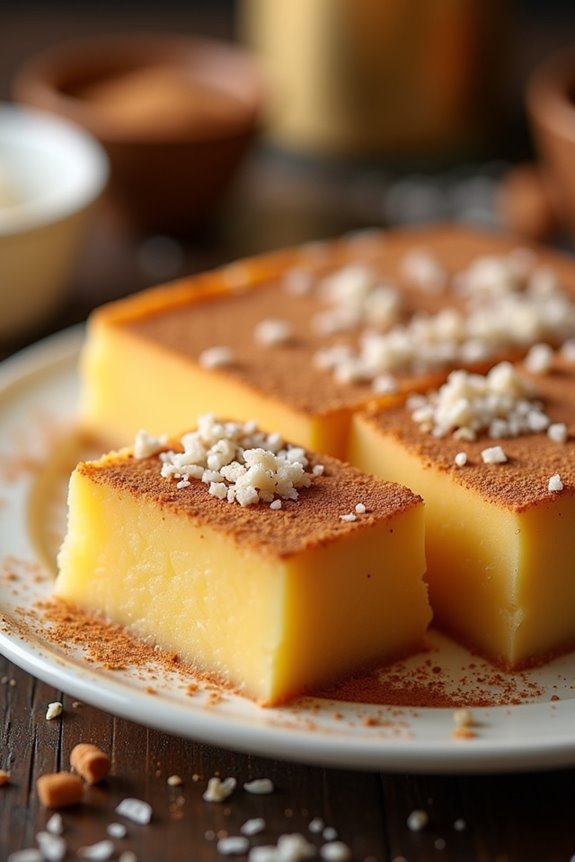
Natilla is a traditional Colombian dessert that’s particularly popular during the Christmas season. This creamy custard-like dish is made with milk, cornstarch, and a hint of cinnamon, giving it a delightful flavor and smooth texture. It’s often served with a sprinkle of cinnamon on top and is a staple at Colombian holiday gatherings. The dish is comforting, easy to make, and brings a taste of Colombia into your home.
The preparation of natilla is quite simple, but it requires attention to detail to achieve the perfect consistency. The key is to gradually add the cornstarch mixture to the boiling milk while constantly stirring to prevent lumps from forming. Once it has thickened, it’s poured into a mold and allowed to cool before being sliced and served. This dessert pairs wonderfully with buñuelos, another Colombian holiday treat.
Ingredients (Serves 4-6):
- 4 cups whole milk
- 1 cup sugar
- 1 cup cornstarch
- 1 teaspoon vanilla extract
- 1 teaspoon ground cinnamon
- 1/4 teaspoon salt
- 1/2 cup grated coconut (optional, for garnish)
- Additional ground cinnamon (for sprinkling on top)
Cooking Instructions:
- Prepare the Milk Mixture: In a large saucepan, pour in 4 cups of whole milk and add 1 cup of sugar. Stir the mixture over medium heat until the sugar is completely dissolved. Make sure not to let the milk boil at this stage, as it can scorch.
- Combine Cornstarch and Water: In a separate bowl, mix 1 cup of cornstarch with 1 cup of cold water. Stir until the cornstarch is completely dissolved. This will be used to thicken the milk mixture.
- Heat the Milk: Once the sugar has dissolved in the milk, increase the heat and bring the mixture to a gentle boil. Stir continuously to avoid burning the milk on the bottom of the pan.
- Thicken the Mixture: Slowly pour the cornstarch mixture into the boiling milk while whisking constantly. This helps to prevent any lumps from forming. Continue to stir for about 5-7 minutes, or until the mixture thickens and starts to pull away from the sides of the pan.
- Add Flavorings: Once thickened, remove the saucepan from heat. Stir in 1 teaspoon of vanilla extract, 1 teaspoon of ground cinnamon, and 1/4 teaspoon of salt. Mix well to combine all the flavors.
- Mold the Natilla: Pour the natilla mixture into a greased rectangular or square mold. Use a spatula to smooth the top. Allow it to cool at room temperature for about 30 minutes, then transfer it to the refrigerator to chill for at least 2 hours, or until fully set.
- Serve: Once chilled and set, carefully remove the natilla from the mold by inverting it onto a serving platter. Cut it into squares or slices and sprinkle additional ground cinnamon on top. If desired, garnish with grated coconut.
Extra Tips:
When making natilla, it’s important to whisk continuously while adding the cornstarch mixture to the milk to guarantee a smooth texture without any lumps.
If you prefer a richer flavor, you can substitute some of the whole milk with coconut milk. Additionally, let the natilla cool completely before slicing to ensure clean edges.
You can also experiment with adding different flavorings like nutmeg or even chocolate for a unique twist on this classic dessert.
