

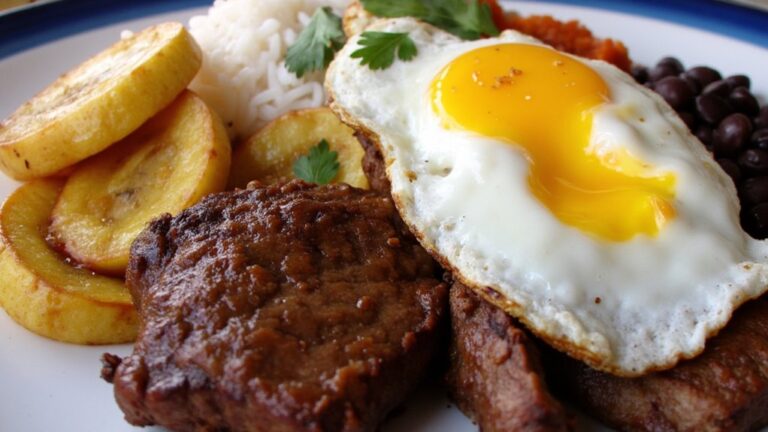
Looking to add some excitement to your dinner routine?
Peruvian cuisine is bursting with bold flavors and unique combinations that are sure to impress.
From the savory anticuchos to the flavorful lomo saltado, each dish offers a delightful experience.
These 13 rich meat recipes will elevate your meals and tantalize your taste buds.
Trust me, you won’t want to miss out on these delicious options!
Anticuchos: Grilled Beef Heart Skewers
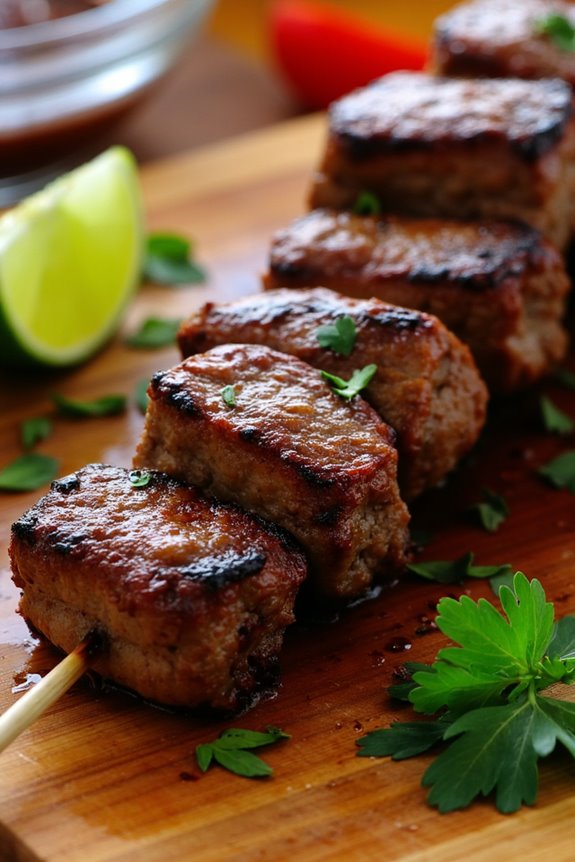
Anticuchos are a traditional Peruvian dish that showcases the rich flavors and unique textures of beef heart. These skewers are marinated in a blend of spices and vinegar, then grilled to perfection, resulting in tender and flavorful bites that are often served with a side of potatoes or corn. This dish isn’t only a street food favorite in Peru but also a delicious way to celebrate the culinary heritage of the country.
With a few simple ingredients and steps, you can bring this authentic taste of Peru to your kitchen. The combination of spices, garlic, and vinegar in the marinade infuses the beef heart with a depth of flavor that elevates this dish to a whole new level. Grilling the skewers over an open flame adds a delightful smoky char that enhances the overall taste.
Anticuchos are typically enjoyed with a zesty sauce, such as aji verde, which complements the rich meat beautifully. Gather your ingredients and get ready to experience the vibrant flavors of Peruvian cuisine through these delicious grilled beef heart skewers.
Ingredients (serving size: 4-6 people)
- 2 lbs beef heart, cleaned and cut into 1-inch cubes
- 1/2 cup red wine vinegar
- 1/4 cup vegetable oil
- 4 cloves garlic, minced
- 1 tablespoon paprika
- 1 tablespoon cumin
- 1 tablespoon dried oregano
- 1 teaspoon black pepper
- 1 teaspoon salt
- 1 teaspoon chili powder (optional, for heat)
- 12-15 wooden or metal skewers
- Fresh parsley (for garnish)
- Lime wedges (for serving)
Cooking Instructions
- Prepare the Beef Heart: Start by cleaning the beef heart thoroughly. Rinse it under cold water, removing any fat or membranes. Cut the beef heart into 1-inch cubes to guarantee even cooking. This step is essential as it affects the tenderness and flavor of the meat.
- Make the Marinade: In a large mixing bowl, combine the red wine vinegar, vegetable oil, minced garlic, paprika, cumin, oregano, black pepper, salt, and chili powder (if using). Whisk the ingredients together until well blended. This marinade will infuse the beef heart with flavor and help tenderize the meat.
- Marinate the Beef Heart: Add the cubed beef heart to the marinade, making sure each piece is well coated. Cover the bowl with plastic wrap and refrigerate for at least 2 hours, or ideally overnight. This allows the flavors to penetrate the meat deeply, enhancing its taste.
- Prepare the Skewers: If you’re using wooden skewers, soak them in water for about 30 minutes to prevent them from burning on the grill. If you’re using metal skewers, you can skip this step. Once soaked, thread the marinated beef heart cubes onto the skewers, leaving a little space between each piece for even cooking.
- Preheat the Grill: Preheat your grill to medium-high heat. A hot grill is critical for achieving that beautiful char on the outside while keeping the inside tender.
- Grill the Anticuchos: Place the skewers on the grill and cook for about 10-15 minutes, turning occasionally until the beef heart is cooked through and has a nice char. The internal temperature should reach at least 140°F for medium-rare. Adjust the cooking time based on your preference for doneness.
- Serve: Once grilled to perfection, remove the skewers from the grill and let them rest for a few minutes. Garnish with fresh parsley and serve with lime wedges for squeezing over the anticuchos. A side of aji verde sauce can also add a nice kick to the dish.
Extra Tips
When preparing anticuchos, using fresh and high-quality beef heart is key to achieving the best flavor and texture. If you’re new to working with organ meats, don’t be intimidated; the marinade plays an essential role in masking any strong flavors and tenderizing the meat.
Additionally, feel free to customize the spice levels in the marinade according to your taste. Serve these skewers at your next gathering as an exciting and unique dish that’s sure to impress your guests!
Lomo Saltado: Stir-Fried Beef With Vegetables
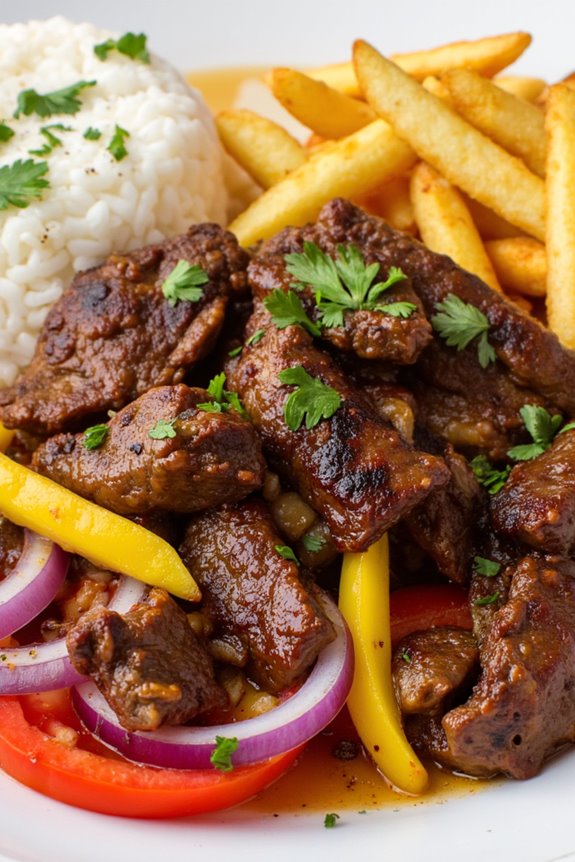
Lomo Saltado is a classic Peruvian dish that beautifully blends the flavors of Chinese and Peruvian cuisines. This stir-fried beef dish features tender strips of marinated beef, vibrant vegetables, and a rich sauce, all served over a bed of fluffy rice and crispy French fries. The dish reflects the cultural fusion that’s characteristic of Peruvian cooking, showcasing the best of both worlds with its hearty components and bright flavors.
The key to a successful Lomo Saltado lies in the quality of the ingredients and the technique used in the stir-frying process. The beef should be tender and juicy, while the vegetables should retain their crispness. By cooking the ingredients over high heat and for a short amount of time, you’ll achieve the perfect balance of textures and flavors. This recipe serves 4-6 people, making it ideal for family dinners or gatherings with friends.
Ingredients:
- 1.5 lbs flank steak, sliced into strips
- 3 tablespoons soy sauce
- 2 tablespoons red wine vinegar
- 1 tablespoon vegetable oil
- 1 medium red onion, sliced
- 1 medium tomato, sliced into wedges
- 1 medium yellow bell pepper, sliced
- 2 cloves garlic, minced
- 1 teaspoon ground cumin
- 1 tablespoon fresh cilantro, chopped (for garnish)
- Salt and pepper to taste
- 4 servings of cooked white rice
- 4 servings of French fries (preferably homemade)
Cooking Instructions:
- Marinate the Beef: In a large bowl, combine the sliced flank steak with soy sauce, red wine vinegar, ground cumin, and a pinch of salt and pepper. Let the beef marinate for at least 15-30 minutes to absorb the flavors.
- Prepare the Vegetables: While the beef is marinating, slice the red onion, yellow bell pepper, and tomato. Confirm you have all your ingredients ready at hand since stir-frying requires quick cooking.
- Heat the Oil: In a large skillet or wok, heat the vegetable oil over high heat until it shimmers. This high temperature is essential for achieving that signature stir-fry effect.
- Cook the Beef: Add the marinated beef to the hot skillet in a single layer. Let it sear without moving it for about 2-3 minutes, then stir-fry for an additional 2-3 minutes until browned and cooked to your liking. Remove the beef from the skillet and set it aside.
- Sauté the Vegetables: In the same skillet, add the sliced red onion and garlic. Stir-fry for about 1 minute until fragrant, then add the yellow bell pepper and continue cooking for another 2-3 minutes. Finally, add the tomato and cook for an additional minute until just softened.
- Combine Everything: Return the cooked beef to the skillet with the vegetables. Toss everything together for about 1-2 minutes to combine and heat through. Taste and adjust seasoning if necessary.
- Serve: On each plate, serve a generous portion of the stir-fry over a bed of cooked white rice. Add a side of crispy French fries and garnish with fresh cilantro.
Extra Tips:
For an authentic touch, consider using Peruvian aji amarillo sauce or adding a splash of it during the stir-fry for an extra kick of flavor. Additionally, feel free to customize your vegetable selection based on what you have on hand or your personal preferences; zucchini and mushrooms are great alternatives.
Finally, confirm your cooking equipment is well-prepared and at the correct temperature to achieve that perfect stir-fry without steaming the ingredients. Enjoy your Lomo Saltado!
Aji De Gallina: Shredded Chicken in Spicy Sauce
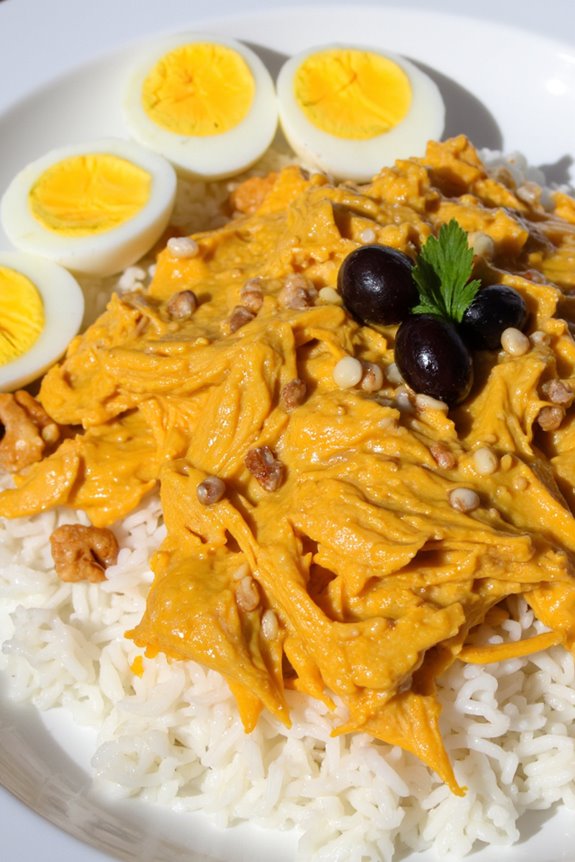
Aji De Gallina is a classic Peruvian dish that showcases the country’s rich culinary heritage. This comforting meal features tender, shredded chicken enveloped in a creamy, spicy sauce made with aji amarillo peppers. The dish is often served over rice and garnished with boiled eggs and olives, making for a colorful and satisfying presentation.
Whether you’re hosting a dinner party or simply enjoying a family meal, Aji De Gallina is sure to impress with its vibrant flavors and textures.
The preparation of Aji De Gallina involves a few key components: poaching the chicken, creating the sauce, and combining the two for a deliciously rich experience. The aji amarillo peppers provide a unique taste and a hint of heat, while the bread and nuts help create a smooth, velvety sauce. By following this recipe, you’ll be able to recreate this traditional dish that’s loved by many and is often served on special occasions.
Ingredients (Serves 4-6):
- 2 medium-sized chicken breasts
- 1 medium onion, chopped
- 2 cloves garlic, minced
- 2 cups chicken broth
- 2-3 aji amarillo peppers, seeds removed and chopped
- 2 slices of white bread, crusts removed
- 1/2 cup walnuts, chopped
- 1 cup evaporated milk
- 1 tablespoon vegetable oil
- Salt and pepper to taste
- 4 boiled eggs, for garnish
- Black olives, for garnish
- Cooked white rice, for serving
Cooking Instructions:
1. Poach the Chicken: In a large pot, place the chicken breasts and cover them with water. Add a pinch of salt and bring to a gentle boil over medium heat. Once boiling, reduce heat to low and cover the pot. Let the chicken simmer for about 20-25 minutes until fully cooked.
Once done, remove the chicken and reserve the broth for later use. Allow the chicken to cool, then shred it into bite-sized pieces.
2. Prepare the Sauce Base: In a skillet, heat the vegetable oil over medium heat. Add the chopped onion and sauté until it becomes translucent, about 5-7 minutes. Add the minced garlic and continue cooking for another minute until fragrant.
3. Blend the Sauce: In a blender, combine the sautéed onions and garlic, aji amarillo peppers, white bread, walnuts, and about 1 cup of the reserved chicken broth. Blend until smooth and creamy. This will be the base of your sauce.
4. Combine Ingredients: Pour the blended mixture back into the skillet over medium heat. Stir in the evaporated milk and season with salt and pepper to taste. Allow the sauce to simmer for about 5-10 minutes, stirring occasionally until it thickens slightly.
5. Add Chicken to Sauce: Once the sauce has thickened, add the shredded chicken to the skillet. Stir well to combine, ensuring that the chicken is fully coated with the sauce. Cook for an additional 5 minutes to heat through.
6. Serve: To serve, place a generous scoop of Aji De Gallina over a bed of white rice on each plate. Garnish with slices of boiled eggs and black olives for an authentic touch.
Extra Tips:
When cooking Aji De Gallina, using fresh aji amarillo peppers is ideal for the best flavor, but if they’re unavailable, you can substitute with aji amarillo paste.
Be cautious with the amount of salt, as the chicken broth can be salty. Additionally, you can adjust the spiciness by using more or fewer peppers according to your preference. For extra richness, consider adding a dash of cheese to the sauce before serving.
Enjoy this dish with a side of salad or your favorite Peruvian sides for a complete meal!
Pollo a La Brasa: Peruvian Roast Chicken
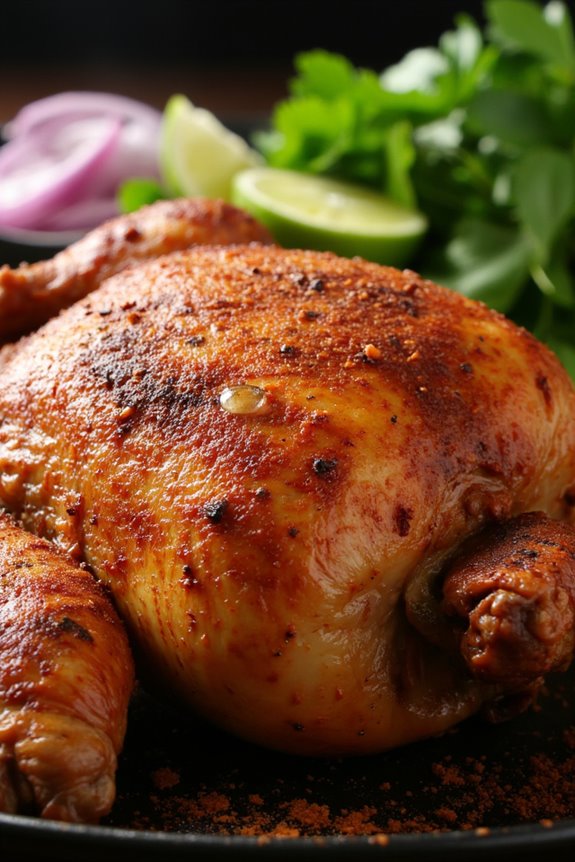
Pollo a La Brasa, or Peruvian roast chicken, is a beloved dish that embodies the vibrant flavors of Peru. Known for its juicy and tender meat with a crispy, flavorful skin, this dish is often served with a variety of sides, including fries and a tangy green sauce known as aji verde. The marinade typically includes garlic, spices, and vinegar, allowing the chicken to absorb a medley of flavors that make it irresistible.
It’s a popular choice for family gatherings and celebrations, providing a taste of Peru right in your home.
To achieve the perfect Pollo a La Brasa, marinating the chicken is key. The traditional method involves using a charcoal rotisserie for an authentic smoky flavor, but you can achieve similar results using an oven or grill. Regardless of the cooking method, this dish is sure to impress with its delicious aroma and mouthwatering taste.
Let’s explore the ingredients and cooking instructions to recreate this Peruvian classic.
Ingredients (Serves 4-6):
- 1 whole chicken (about 4-5 pounds)
- 1/4 cup soy sauce
- 1/4 cup red wine vinegar
- 1/4 cup vegetable oil
- 4 cloves garlic, minced
- 2 tablespoons paprika
- 1 tablespoon ground cumin
- 1 tablespoon dried oregano
- 1 teaspoon black pepper
- 1 teaspoon salt
- 1 teaspoon chili powder (optional for spice)
- Juice of 2 limes
- Fresh cilantro for garnish (optional)
Cooking Instructions:
- Prepare the Marinade: In a large bowl, combine the soy sauce, red wine vinegar, vegetable oil, minced garlic, paprika, cumin, oregano, black pepper, salt, chili powder, and lime juice. Whisk together until well blended.
- Marinate the Chicken: Rinse the chicken under cold water and pat it dry with paper towels. Place the chicken in a large resealable plastic bag or a dish and pour the marinade over it, ensuring the chicken is well coated. Seal the bag or cover the dish, and refrigerate for at least 4 hours, preferably overnight for maximum flavor.
- Preheat the Oven or Grill: If using an oven, preheat it to 425°F (220°C). If grilling, prepare the grill for indirect cooking by heating one side and leaving the other side cooler for roasting.
- Prepare the Chicken for Cooking: Remove the marinated chicken from the refrigerator and let it sit at room temperature for about 30 minutes. This helps the chicken cook evenly. If desired, truss the chicken legs with kitchen twine for a more uniform cook.
- Cook the Chicken: For oven roasting, place the chicken breast side up on a roasting rack in a baking dish. Roast for about 1 hour and 15 minutes, or until the internal temperature reaches 165°F (74°C) and the skin is crispy. For grilling, place the chicken on the cooler side of the grill, cover, and cook for about 1.5 hours, rotating occasionally, until fully cooked.
- Rest and Serve: Once cooked, remove the chicken from the oven or grill and let it rest for 15 minutes. This allows the juices to redistribute. Carve the chicken and serve with sides like French fries and aji verde for dipping.
Extra Tips:
For the best flavor, make sure to marinate the chicken for as long as possible; overnight is ideal. If you prefer a more intense flavor, consider adding spices like cayenne or smoked paprika to the marinade.
When cooking, keeping the chicken covered with foil for the first half of the cooking process can help retain moisture, resulting in even juicier meat. Finally, don’t forget to serve with a fresh salad or some grilled vegetables to complement the meal. Enjoy your homemade Pollo a La Brasa!
Seco De Cordero: Lamb Stew With Cilantro
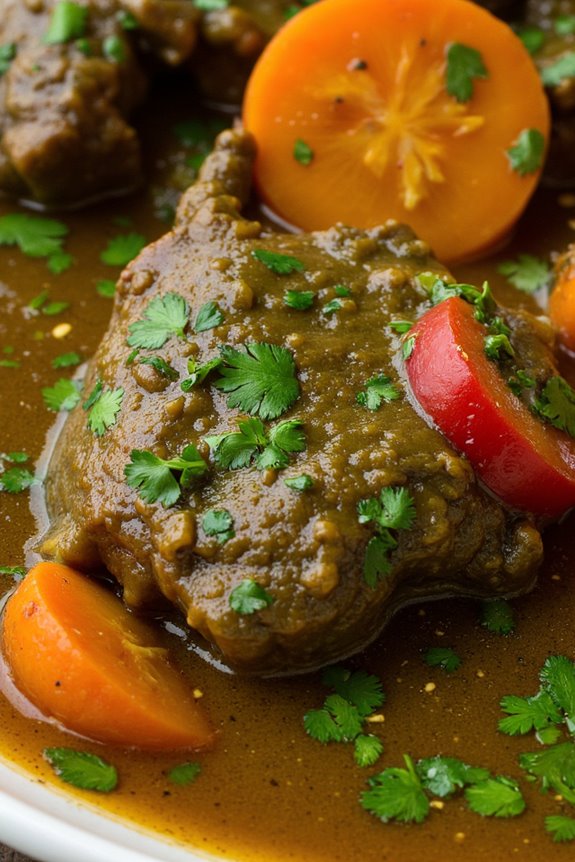
Seco de Cordero is a traditional Peruvian dish that beautifully showcases the rich flavors of lamb combined with the vibrant essence of cilantro. This hearty stew is perfect for a family gathering or a special occasion, as it not only warms the body but also tantalizes the taste buds with its unique blend of spices.
The dish gets its signature green color from the generous use of fresh cilantro, which infuses the meat and sauce with a revitalizing herbal note that complements the richness of the lamb.
Cooking Seco de Cordero can be an enjoyable experience, as the process of slow-cooking allows the flavors to meld together beautifully. The addition of vegetables and spices creates a complex flavor profile, while the tender lamb becomes infused with the aromatic sauce.
Serve this dish with rice or potatoes to soak up the delicious sauce, and you’ll have a comforting meal that will impress your family and friends.
Ingredients (Serves 4-6):
- 2 pounds lamb shoulder, cut into chunks
- 1 large onion, finely chopped
- 4 cloves garlic, minced
- 1 cup cilantro leaves, packed
- 1/2 cup green beer or lager
- 2 cups beef broth
- 2 medium carrots, sliced
- 1 red bell pepper, chopped
- 1 teaspoon ground cumin
- 1 teaspoon paprika
- 1/2 teaspoon black pepper
- Salt to taste
- 2 tablespoons vegetable oil
- 1 bay leaf
- 1 tablespoon vinegar
- 1 tablespoon tomato paste
Cooking Instructions:
- Marinate the Lamb: In a large bowl, combine the lamb chunks with cumin, paprika, black pepper, and salt. Allow the lamb to marinate for at least 30 minutes to absorb the flavors.
- Prepare the Cilantro Sauce: In a blender, combine the cilantro leaves, garlic, and vinegar. Blend until smooth and set aside. This will be added later to give the stew its vibrant flavor.
- Sear the Lamb: In a large pot or Dutch oven, heat vegetable oil over medium-high heat. Add the marinated lamb chunks in batches and sear them on all sides until browned. This will help to lock in the flavor. Remove the lamb and set it aside.
- Sauté the Aromatics: In the same pot, add the chopped onion and cook until translucent, about 5-7 minutes. Then add the sliced carrots and chopped red bell pepper, and sauté for another 3-4 minutes until the vegetables begin to soften.
- Deglaze the Pot: Pour in the green beer, scraping the bottom of the pot to release any browned bits. This adds depth of flavor to the stew.
- Combine Ingredients: Return the seared lamb to the pot and add the cilantro sauce, beef broth, bay leaf, and tomato paste. Stir to combine all ingredients well.
- Simmer the Stew: Bring the mixture to a boil, then reduce the heat to low. Cover and let it simmer for about 1.5 to 2 hours, or until the lamb is tender. Stir occasionally, adding more broth if necessary to prevent sticking.
- Final Adjustments: Once the lamb is tender, taste the stew and adjust the seasoning with salt and pepper as needed. Remove the bay leaf before serving.
Extra Tips:
For an even richer flavor, consider adding a touch of Peruvian ají amarillo paste or fresh ají peppers for a bit of heat.
Additionally, allowing the stew to rest for a few hours or even overnight in the refrigerator can enhance the flavors even more, as they continue to meld together.
When ready to serve, gently reheat the stew on the stove and enjoy it with a side of steamed rice or crusty bread to fully enjoy the delightful sauce.
Tacu Tacu: Rice and Beans With Steak
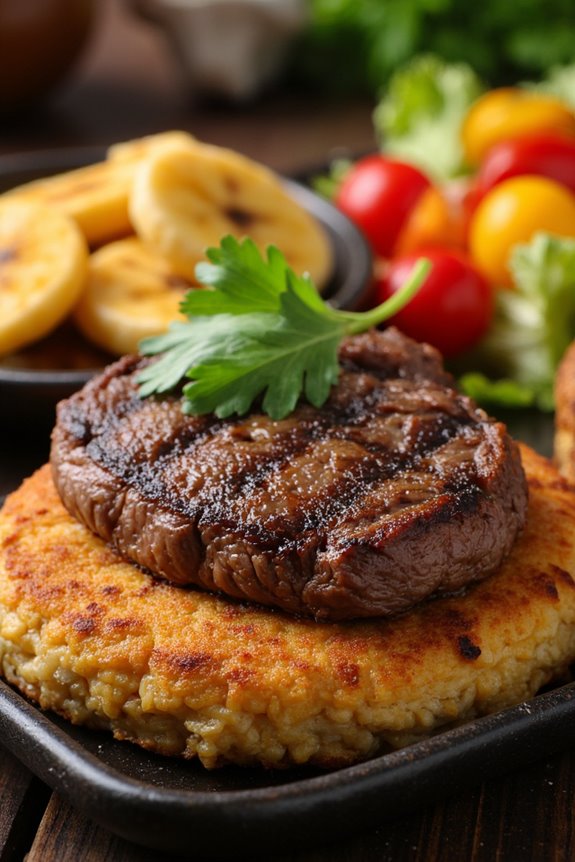
Tacu Tacu is a traditional Peruvian dish that beautifully combines rice and beans, creating a hearty and flavorful base that’s often served with a juicy steak. This dish reflects the rich culinary heritage of Peru, showcasing the use of simple, yet delicious ingredients that pack a punch in flavor.
Tacu Tacu isn’t only a great way to use leftover rice and beans, but it also provides a nutritious meal that can be enjoyed any time of the day.
To make Tacu Tacu, the rice and beans are cooked together with spices and then shaped into a cake that’s pan-fried to achieve a golden crust. Topped with a perfectly cooked steak, this dish is a delightful fusion of textures and flavors.
It can be served with a side of fried plantains or a fresh salad, making it a versatile meal suitable for gatherings or a cozy family dinner.
Ingredients (Serves 4-6):
- 2 cups cooked white rice
- 1 can (15 oz) black beans, drained and rinsed
- 1 small onion, finely chopped
- 2 cloves garlic, minced
- 1 teaspoon cumin
- 1 tablespoon vegetable oil
- 1 teaspoon salt
- 1/2 teaspoon black pepper
- 4-6 steaks (sirloin or ribeye)
- Salt and pepper for seasoning the steaks
- Fresh cilantro for garnish (optional)
Cooking Instructions:
- Prepare the Rice and Beans Mixture: In a large mixing bowl, combine the cooked rice and black beans. Mash the mixture lightly with a fork or potato masher, making sure that some beans remain whole for texture. Add the chopped onion, minced garlic, cumin, salt, and black pepper. Mix well until all ingredients are combined.
- Form the Tacu Tacu Cakes: Heat a large non-stick skillet over medium heat and add a tablespoon of vegetable oil. Once the oil is hot, take a portion of the rice and beans mixture and shape it into a patty, about 1 inch thick. Carefully place the patty in the skillet. Repeat this process for the remaining mixture, making sure not to overcrowd the pan.
- Cook the Tacu Tacu: Fry the patties for about 4-5 minutes on each side, or until they’re golden brown and crispy. Once cooked, transfer the patties to a paper towel-lined plate to absorb excess oil while you cook the remaining patties.
- Cook the Steaks: In the same skillet, after removing the Tacu Tacu cakes, add a little more oil if necessary and heat over medium-high heat. Season the steaks with salt and pepper. Cook the steaks to your desired doneness, about 4-5 minutes per side for medium-rare. Use a meat thermometer for accuracy, aiming for an internal temperature of 135°F (57°C).
- Assemble the Dish: Place a Tacu Tacu patty on each plate and top with a steak. Garnish with fresh cilantro if desired and serve immediately, perhaps alongside fried plantains or a fresh salad.
Extra Tips:
When preparing Tacu Tacu, feel free to experiment with the addition of other seasonings or spices to enhance the flavor profile. You can also use different types of beans, such as pinto or cannellini, depending on your preference.
For the steaks, marinating them for a few hours before cooking can add an extra layer of flavor. Finally, make certain that the oil is hot before frying the Tacu Tacu cakes to achieve that perfect crispy exterior.
Enjoy your cooking adventure!
Arroz Con Pollo: Chicken and Rice
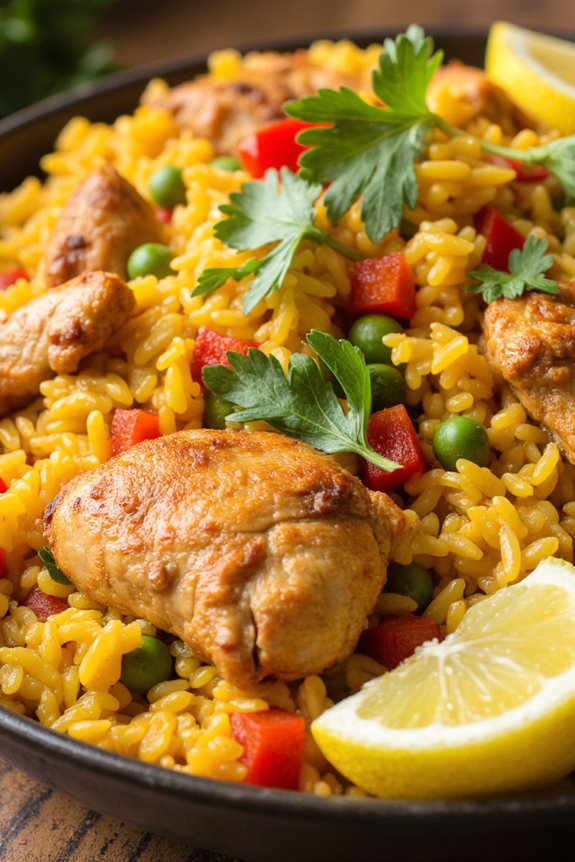
Arroz Con Pollo is a beloved Peruvian dish that showcases the vibrant flavors and rich culinary heritage of the country. This one-pot meal combines succulent chicken, fragrant rice, and a medley of spices, making it a perfect choice for gatherings or a family dinner. The dish isn’t only delicious but also visually appealing with its beautiful golden hue, thanks to the use of saffron or turmeric. Each bite is a celebration of the bold flavors that are characteristic of Peruvian cuisine.
To prepare Arroz Con Pollo, you’ll need to take your time to marinate the chicken and allow the rice to absorb all the flavorful broth. This recipe serves 4-6 people, making it an excellent option for sharing with friends and family. The combination of tender chicken and perfectly cooked rice, infused with herbs and spices, will have everyone coming back for seconds!
Ingredients:
- 4-6 pieces of chicken (thighs or drumsticks)
- 2 cups of long-grain rice
- 4 cups of chicken broth
- 1 medium onion, finely chopped
- 2 cloves of garlic, minced
- 1 red bell pepper, diced
- 1 cup of frozen peas
- 1 teaspoon of cumin
- 1 teaspoon of paprika
- 1/2 teaspoon of saffron or turmeric
- 1/4 cup of olive oil
- 1/4 cup of fresh cilantro, chopped
- Salt and pepper to taste
- Lemon wedges for serving
Cooking Instructions:
- Marinate the Chicken: In a large bowl, combine the chicken pieces with salt, pepper, cumin, and paprika. Let the chicken marinate for at least 30 minutes to absorb the flavors.
- Sauté the Aromatics: In a large skillet or Dutch oven, heat the olive oil over medium heat. Add the chopped onion and garlic, cooking until the onion becomes translucent, about 5 minutes.
- Brown the Chicken: Add the marinated chicken pieces to the skillet and cook until they’re browned on all sides, about 5-7 minutes. This step adds depth of flavor to the dish.
- Add Vegetables: Stir in the diced red bell pepper and cook for another 3-4 minutes, allowing the peppers to soften.
- Incorporate the Rice: Add the rice to the skillet, stirring it in with the chicken and vegetables for about 2 minutes. This helps to toast the rice and enhances its flavor.
- Pour in the Broth: Carefully add the chicken broth and saffron or turmeric to the skillet. Bring the mixture to a boil, then reduce the heat to low, cover, and simmer for about 20-25 minutes or until the rice is cooked and has absorbed most of the liquid.
- Add Peas and Cilantro: Once the rice is cooked, gently fold in the frozen peas and chopped cilantro. Allow it to sit covered for an additional 5 minutes to let the peas heat through.
- Serve: Fluff the rice with a fork, garnish with additional cilantro if desired, and serve with lemon wedges on the side for a fresh squeeze of flavor.
Extra Tips:
For an extra layer of flavor, consider adding a bay leaf during the simmering process and remove it before serving. Additionally, you can customize the dish by including other vegetables such as carrots or corn. For a spicier kick, feel free to add diced jalapeños or a dash of hot sauce.
Remember that letting the dish rest for a few minutes after cooking allows the flavors to meld even further, making each bite more delicious. Enjoy your homemade Arroz Con Pollo!
Carapulcra: Dried Potato and Meat Stew
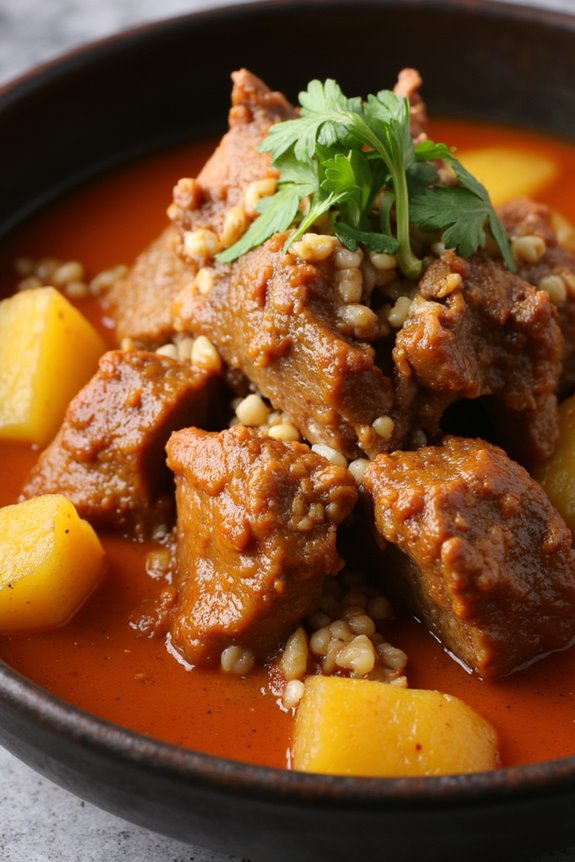
Carapulcra is a traditional Peruvian dish that beautifully combines the heartiness of dried potatoes with the richness of meat, often pork or chicken. This stew isn’t just a meal but a representation of Peruvian culinary heritage, showcasing ingredients that have been staples in the Andes for centuries.
The dried potatoes, known as “papa seca,” lend a unique texture and flavor, absorbing the spices and juices of the meat as they cook together. This dish is perfect for gatherings, as it serves 4-6 people and is sure to impress with its robust flavors.
The combination of spices, including cumin and paprika, along with the savory meat, creates a decadent stew that pairs wonderfully with rice or a simple salad. Whether you’re cooking for family or friends, Carapulcra will transport your taste buds to the vibrant streets of Peru.
Ingredients (Serves 4-6)
- 1 pound dried potatoes (papa seca)
- 1 pound pork shoulder, cut into cubes
- 1 medium onion, finely chopped
- 3 cloves garlic, minced
- 1 teaspoon cumin
- 1 teaspoon paprika
- 1 teaspoon oregano
- 1 bay leaf
- 4 cups chicken or beef broth
- 2 tablespoons vegetable oil
- Salt and pepper to taste
- Fresh cilantro for garnish (optional)
Cooking Instructions
- Prepare the Dried Potatoes: Rinse the dried potatoes under cold water to remove any dust or impurities. Soak them in warm water for about 30 minutes to soften. After soaking, drain and set aside.
- Brown the Meat: In a large pot, heat the vegetable oil over medium-high heat. Add the cubed pork shoulder and season with salt and pepper. Brown the meat on all sides, which should take about 5-7 minutes. This step adds depth of flavor to the dish.
- Sauté the Aromatics: Once the meat is browned, add the chopped onion and minced garlic to the pot. Sauté for about 5 minutes until the onion becomes translucent and fragrant. This creates a flavorful base for the stew.
- Add Spices: Stir in the cumin, paprika, and oregano. Cook for another minute to toast the spices, enhancing their flavor and aroma.
- Combine Ingredients: Add the soaked dried potatoes to the pot along with the bay leaf. Pour in the chicken or beef broth, making sure the potatoes are fully submerged. Bring the mixture to a boil.
- Simmer the Stew: Once boiling, reduce the heat to low, cover the pot, and let it simmer for about 1 hour. Stir occasionally to prevent sticking, and check if the potatoes are tender. If necessary, add more broth or water to maintain a stew-like consistency.
- Finish and Serve: After the cooking time, taste and adjust seasoning with salt and pepper if needed. Remove the bay leaf before serving. Garnish with fresh cilantro if desired. Serve hot with rice or a side salad.
Extra Tips
When preparing Carapulcra, it’s essential to guarantee that the dried potatoes are soaked adequately to achieve the desired texture.
Adjust the seasoning according to your taste preference, and feel free to experiment with additional vegetables or spices to make the dish your own. For a heartier stew, consider adding some carrots or bell peppers during the simmering stage.
Enjoying this dish the next day can enhance its flavor, as the ingredients have more time to meld together.
Causa Rellena: Layered Potato and Chicken Dish
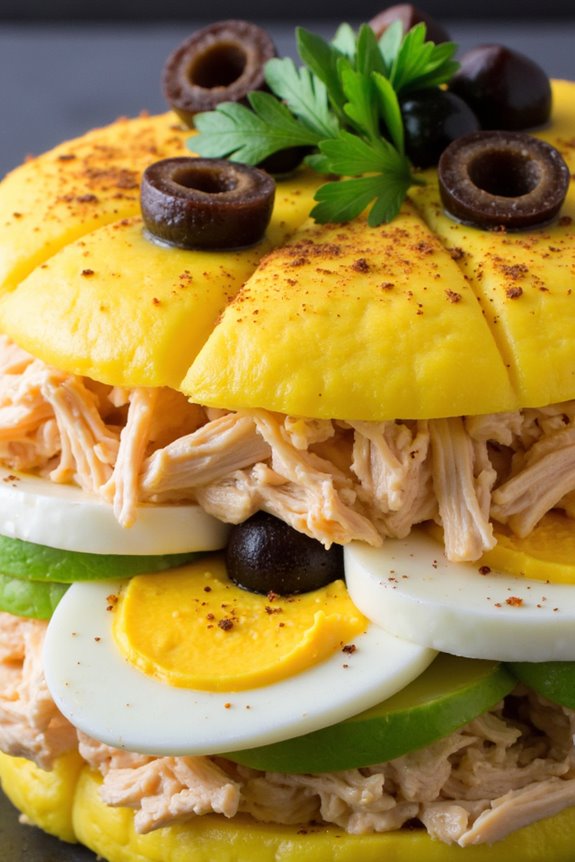
Causa Rellena is a traditional Peruvian dish that showcases the unique flavors and ingredients of the country’s cuisine. This delightful layered dish features smooth, seasoned mashed potatoes combined with a savory filling, often made with shredded chicken, avocado, and a zesty lime dressing.
The vibrant yellow color of the potatoes, derived from the use of yellow Peruvian potatoes or aji amarillo (yellow chili pepper), adds visual appeal and a hint of spice to the dish, making it a favorite for both locals and visitors alike.
This dish isn’t only delicious but also versatile; it can be served as an appetizer or a main course, making it perfect for any occasion. Causa Rellena is typically garnished with olives, hard-boiled eggs, and a sprinkle of parsley, which enhances its presentation and flavor.
Whether you’re celebrating a special event or simply want to enjoy a taste of Peru at home, this layered potato and chicken dish is sure to impress your family and friends.
Ingredients (serving size: 4-6 people)
- 1 kg yellow potatoes
- 300 g cooked chicken breast, shredded
- 1 avocado, sliced
- 1/2 cup mayonnaise
- 1/4 cup lime juice
- 1 medium red onion, finely chopped
- 2 tablespoons aji amarillo paste (or yellow chili paste)
- Salt and pepper to taste
- 4 hard-boiled eggs, sliced (for garnish)
- Black olives (for garnish)
- Fresh parsley, chopped (for garnish)
Cooking Instructions
- Prepare the Potatoes: Begin by boiling the yellow potatoes in salted water until they’re fork-tender, which usually takes about 20-30 minutes. Once cooked, drain the potatoes and let them cool slightly before peeling.
- Mash the Potatoes: In a large mixing bowl, combine the peeled potatoes with aji amarillo paste, lime juice, salt, and pepper. Mash the potatoes until they reach a smooth and creamy consistency. Set aside to cool completely.
- Make the Chicken Filling: In another bowl, mix the shredded chicken with mayonnaise, chopped red onion, salt, and pepper. Make sure the mixture is well combined and adjust the seasoning to your taste.
- Assemble the Layers: In a rectangular dish or individual serving cups, start by placing a layer of the mashed potato mixture at the bottom. Press it down gently to create an even layer. Next, add a layer of the chicken filling, spreading it evenly over the potatoes.
- Add the Avocado: Place the sliced avocado on top of the chicken layer, allowing the creamy texture to complement the dish. Follow this with another layer of the mashed potatoes, spreading it evenly to cover the avocado.
- Chill the Dish: Cover the assembled dish with plastic wrap and place it in the refrigerator for at least 1 hour to allow the flavors to meld and the dish to firm up.
- Garnish and Serve: Once chilled, carefully remove the dish from the refrigerator. Garnish the top with slices of hard-boiled eggs, black olives, and a sprinkle of fresh parsley. Slice and serve chilled for a revitalizing and flavorful experience.
Extra Tips
When making Causa Rellena, it’s important to use yellow potatoes for their distinct flavor and color, but any starchy potato can work in a pinch.
You can also customize the filling by adding ingredients like diced vegetables or replacing chicken with tuna for a different twist. For an extra kick, consider adding a few drops of hot sauce to the mayonnaise mixture.
Finally, serve the dish chilled, as it enhances the flavors and provides a rejuvenating taste, especially on warm days. Enjoy your culinary adventure into Peruvian cuisine!
Chicharrón: Fried Pork Belly
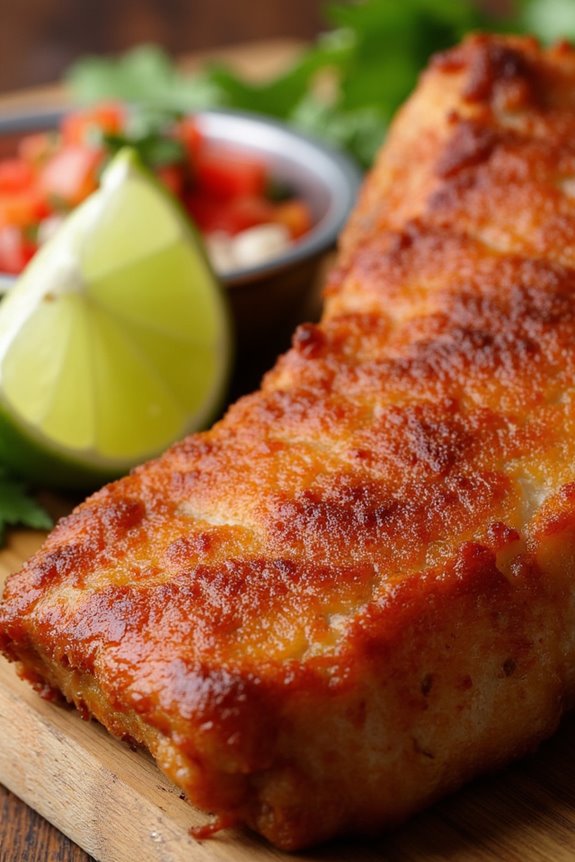
Chicharrón is a beloved dish in Peru, cherished for its crispy texture and savory flavor. This traditional dish features succulent pieces of pork belly that are fried to perfection, resulting in a crunchy outer layer while maintaining juicy, tender meat inside.
Often enjoyed as a snack, appetizer, or part of a larger meal, chicharrón is frequently served alongside sides like boiled potatoes, corn, or a revitalizing salsa criolla. The dish can also be found in various other Latin American countries, each with its unique twist, but the Peruvian version is renowned for its simplicity and flavor.
Preparing chicharrón is a straightforward process that involves marinating the pork belly and then frying it until crispy. The key to achieving that perfect crunch lies in the cooking technique and the quality of the pork. It’s best to use fresh pork belly with a good balance of meat and fat.
This recipe will guide you through making chicharrón from scratch, guaranteeing that you impress your family and friends with this delightful Peruvian dish.
Ingredients (serving size: 4-6 people):
- 2 pounds pork belly, skin on
- 1 tablespoon salt
- 1 teaspoon black pepper
- 1 teaspoon garlic powder
- 1 teaspoon cumin
- 1 cup water
- Vegetable oil for frying
- Lime wedges (for serving)
- Salsa criolla (optional, for serving)
Cooking Instructions:
- Prepare the Pork Belly: Begin by rinsing the pork belly under cold water. Pat it dry with paper towels. This step is essential as it helps the skin become crispy during frying. Cut the pork belly into 2-inch cubes, making sure to include some skin on each piece.
- Marinate the Pork: In a large bowl, combine the salt, black pepper, garlic powder, and cumin. Rub this spice mixture all over the pork belly pieces, making sure they’re evenly coated. Allow the pork to marinate for at least 30 minutes at room temperature, or for deeper flavor, refrigerate for a few hours or overnight.
- Prepare for Frying: In a large, heavy-bottomed pot or deep-fryer, heat about 2 inches of vegetable oil over medium-high heat. To test if the oil is ready, drop a small piece of pork into the oil; if it sizzles immediately, the oil is hot enough.
- Cook the Pork Belly: Carefully add the marinated pork belly pieces to the hot oil, making sure not to overcrowd the pot. Fry the pork for about 10-15 minutes, turning occasionally until the skin becomes golden brown and crispy. If necessary, fry in batches to maintain the oil temperature.
- Drain and Serve: Once the chicharrón is cooked, use a slotted spoon to transfer the pieces to a plate lined with paper towels to drain excess oil. Serve hot with lime wedges and salsa criolla on the side for a revitalizing contrast.
Extra Tips:
For the best results, choose pork belly that has a good ratio of meat to fat, as this will guarantee a juicy texture. If you prefer a more intense flavor, consider adding additional spices to the marinade, such as paprika or oregano.
When frying, keep an eye on the temperature of the oil; if it gets too hot, the skin may burn before the meat is cooked through. Enjoy your chicharrón with a cold beverage for an authentic Peruvian experience!
Adobo De Cerdo: Pork Marinated in Spices
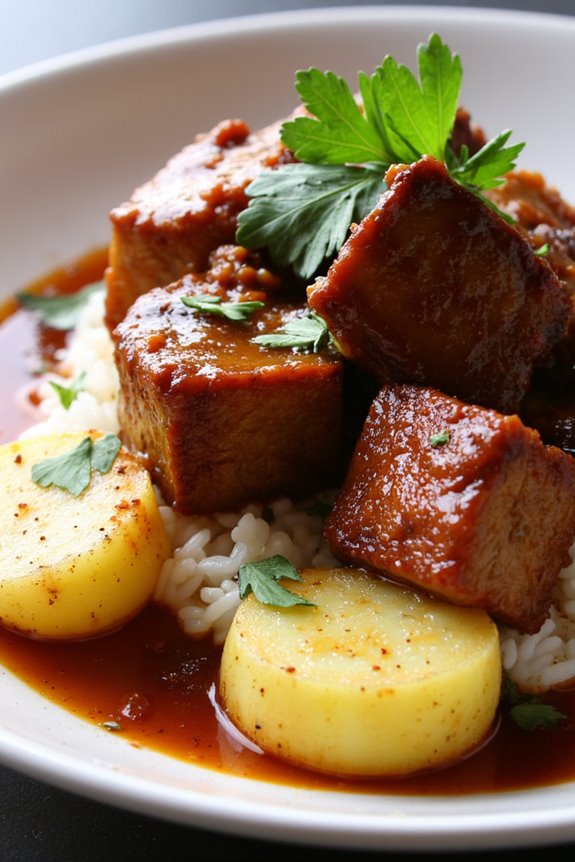
Adobo De Cerdo, a classic Peruvian dish, features pork marinated in a rich blend of spices that infuse the meat with deep flavors. This dish is a wonderful representation of Peruvian culinary traditions, showcasing how simple ingredients can come together to create something truly exceptional.
The marinated pork is typically slow-cooked, allowing the flavors to meld beautifully while keeping the meat tender and juicy. Served with rice or potatoes, Adobo De Cerdo offers a hearty and satisfying meal that’s perfect for family gatherings and special occasions.
The key to a great Adobo De Cerdo lies in the marination process. The pork is usually marinated overnight, allowing the spices to penetrate the meat thoroughly. In this recipe, you’ll find a combination of garlic, cumin, and aji panca, a Peruvian red pepper that adds both color and a mild, smoky flavor.
Once marinated, the pork is cooked to perfection, and the resulting dish is a symphony of flavors that will have everyone asking for seconds.
Ingredients (Serves 4-6):
- 2 pounds pork shoulder, cut into cubes
- 1/4 cup soy sauce
- 1/4 cup vinegar (white or red)
- 6 cloves garlic, minced
- 1 tablespoon ground cumin
- 1 tablespoon aji panca paste
- 1 teaspoon black pepper
- 2 tablespoons vegetable oil
- 1 onion, chopped
- 1 cup chicken broth
- 2 bay leaves
- Salt to taste
- Fresh cilantro for garnish
Cooking Instructions:
- Marinate the Pork: In a large bowl, combine the pork cubes, soy sauce, vinegar, minced garlic, ground cumin, aji panca paste, black pepper, and salt. Mix well to guarantee the pork is evenly coated. Cover the bowl with plastic wrap and refrigerate for at least 4 hours, preferably overnight to enhance the flavors.
- Sear the Pork: Heat the vegetable oil in a large pot or Dutch oven over medium-high heat. Once hot, add the marinated pork cubes (reserve the marinade) in batches to avoid overcrowding the pot. Sear the pork on all sides until browned, approximately 5-7 minutes. Remove the browned pork and set aside.
- Sauté the Onion: In the same pot, add the chopped onion and sauté until softened and translucent, about 5 minutes. Scrape the bottom of the pot to release any browned bits from the pork, as this adds flavor to the dish.
- Combine and Simmer: Return the seared pork to the pot, along with the reserved marinade, chicken broth, and bay leaves. Stir well to combine all the ingredients. Bring the mixture to a boil, then reduce the heat to low, cover the pot, and let it simmer for about 1.5 to 2 hours or until the pork is tender and the flavors have melded.
- Final Adjustments: Taste the sauce and adjust seasoning with more salt or pepper if needed. If the sauce is too thin, you can remove the lid and simmer for an additional 10-15 minutes to thicken it.
- Serve: Once the pork is tender, remove the bay leaves and discard them. Serve the Adobo De Cerdo hot, garnished with fresh cilantro, alongside rice or boiled potatoes.
Extra Tips:
For an added depth of flavor, consider adding a splash of red wine or a tablespoon of brown sugar to the marinade. This can balance the acidity and create a richer sauce.
Additionally, if you like a bit of heat, feel free to add some chopped fresh chili peppers to the pot while sautéing the onions. Don’t rush the marination process; the longer the pork sits in the spices, the more flavorful your dish will be!
Pescado a La Chorrillana: Fish With Spicy Onion Sauce
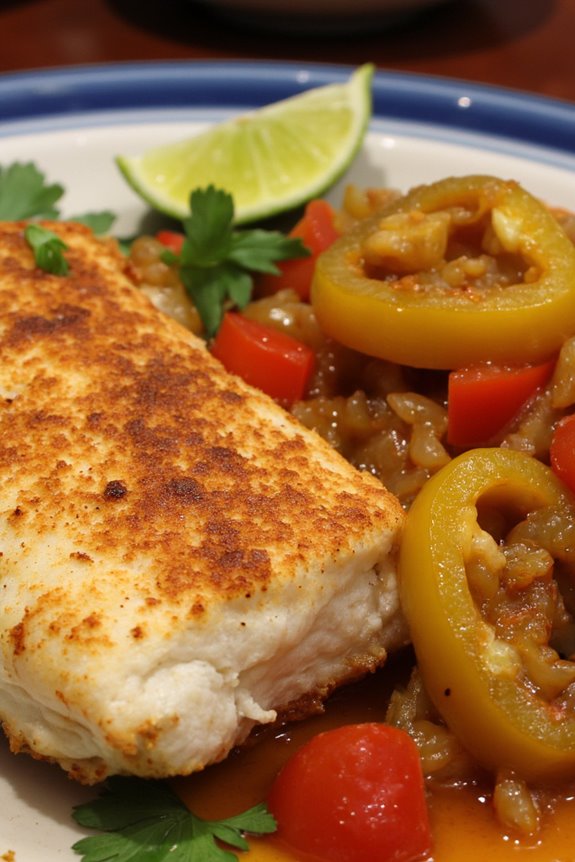
Pescado a La Chorrillana is a traditional Peruvian dish that showcases the rich flavors of the sea combined with a vibrant and spicy onion sauce. This dish is commonly enjoyed along the coastal regions of Peru, where fresh fish is readily available.
The base is typically made with white fish, such as tilapia, cod, or sole, which is pan-fried to a golden brown and then topped with a flavorful sauce made from onions, tomatoes, and aji amarillo, a yellow chili pepper native to Peru. The combination of the crispy fish and the zesty sauce creates a delightful contrast that’s sure to please the palate.
In addition to its delicious taste, Pescado a La Chorrillana is relatively easy to prepare, making it an excellent choice for both special occasions and everyday meals. Paired with steamed rice or fried plantains, it makes for a satisfying and well-rounded dinner.
The dish isn’t only a demonstration of Peru’s culinary heritage but also a celebration of its abundant seafood. Now, let’s immerse ourselves in preparing this delightful dish for 4-6 people.
Ingredients
- 4-6 pieces of white fish fillets (tilapia, cod, or sole)
- 1 cup of all-purpose flour (for dusting)
- Salt and pepper (to taste)
- 2 tablespoons of vegetable oil (for frying)
- 2 medium onions (sliced thinly)
- 1 medium tomato (chopped)
- 1-2 aji amarillo peppers (sliced thinly)
- 3 cloves of garlic (minced)
- 1 teaspoon of ground cumin
- 1/2 teaspoon of paprika
- 1/4 cup of fresh cilantro (chopped, for garnish)
- 1 lime (cut into wedges, for serving)
Cooking Instructions
- Prepare the Fish: Rinse the fish fillets under cold water and pat them dry using paper towels. Season both sides with salt and pepper. Lightly coat each fillet with all-purpose flour, shaking off any excess flour to provide a light coating.
- Fry the Fish: In a large skillet, heat the vegetable oil over medium-high heat. Once the oil is hot, carefully add the fish fillets to the skillet. Fry them for about 3-4 minutes on each side or until they’re golden brown and cooked through. Remove the fish from the skillet and place them on a paper towel-lined plate to drain excess oil.
- Make the Sauce: In the same skillet, add the sliced onions and sauté for about 5 minutes until they become soft and translucent. Add the minced garlic and sliced aji amarillo peppers, stirring for an additional minute until fragrant.
- Combine Ingredients: Add the chopped tomato, ground cumin, and paprika to the skillet. Stir everything together and cook for another 3-4 minutes, allowing the tomatoes to soften and release their juices. Adjust seasoning with salt and pepper as needed.
- Serve the Dish: Arrange the fried fish fillets on a serving platter and spoon the spicy onion sauce generously over the top. Garnish with chopped cilantro and serve with lime wedges on the side for an added burst of flavor.
Extra Tips
When preparing Pescado a La Chorrillana, it’s crucial to choose the freshest fish possible for the best flavor and texture.
If you can’t find aji amarillo peppers, you can substitute them with other mild chili peppers to add some heat without overpowering the dish. Additionally, feel free to adjust the spice level according to your taste by adding more or fewer chili peppers.
This dish is best enjoyed immediately after cooking, but any leftovers can be stored in the refrigerator and reheated gently. Enjoy this flavorful journey into Peruvian cuisine!
Bistec a Lo Pobre: Steak With Fried Egg and Plantains
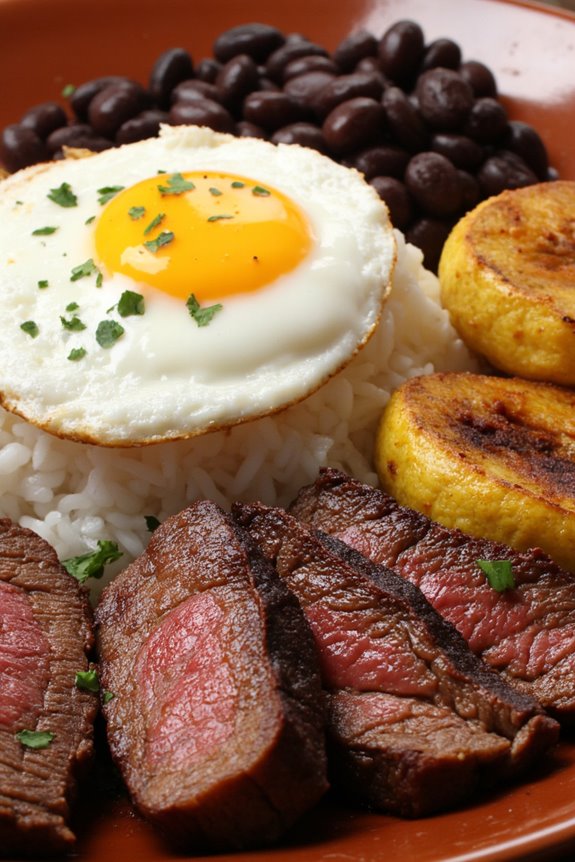
Bistec a Lo Pobre is a beloved Peruvian dish that translates to “Steak in the Poor Man’s Style.” This hearty meal is a true representation of Peruvian comfort food, combining juicy steak, sweet fried plantains, and a perfectly cooked fried egg. Typically served with rice and beans, this dish packs a flavor punch while also being satisfying and filling. It’s a favorite among locals and tourists alike, showcasing the rich culinary traditions of Peru.
The combination of textures and flavors makes Bistec a Lo Pobre a well-rounded dish. The succulent steak is enhanced by the sweetness of the fried plantains and the richness of the egg, creating a delightful harmony on your plate. When prepared correctly, this dish not only warms the belly but also brings a taste of Peru into your home.
Whether you’re hosting a gathering or enjoying a family dinner, this recipe will surely impress.
Ingredients (Serves 4-6)
- 2 lbs beef steak (sirloin or flank steak)
- 4 large ripe plantains
- 4 large eggs
- 2 cups cooked white rice
- 1 cup cooked black beans (optional)
- 4 cloves garlic, minced
- 1 medium onion, sliced
- 1 teaspoon cumin
- Salt and pepper to taste
- Vegetable oil (for frying)
- Fresh cilantro (for garnish, optional)
Cooking Instructions
- Prepare the Steak: Begin by seasoning the beef steak with salt, pepper, and cumin. Make sure to rub the spices into the meat for maximum flavor. Let the steak marinate for about 30 minutes to enhance the taste.
- Cook the Rice and Beans: If you haven’t already done so, cook the white rice and black beans according to package instructions. Set them aside and keep warm.
- Fry the Plantains: Peel the ripe plantains and slice them diagonally into thick pieces. In a large skillet, heat vegetable oil over medium heat. Once hot, add the plantain slices and fry until they’re golden brown and crispy on the outside, about 3-4 minutes per side. Remove the fried plantains and place them on a paper towel to drain excess oil.
- Cook the Steak: In the same skillet, add a bit more oil if needed and increase the heat to medium-high. Add the marinated steak and cook for about 4-5 minutes on each side for medium-rare doneness. Adjust the cooking time based on your preferred level of doneness. Once cooked, remove the steak from the skillet and let it rest for a few minutes before slicing.
- Fry the Eggs: In a separate small skillet, heat a little oil over medium heat. Crack the eggs into the skillet and fry them until the whites are set but the yolks remain runny, about 2-3 minutes. Season with salt and pepper.
- Assemble the Dish: On each plate, serve a generous portion of white rice and black beans (if using). Top with sliced steak, followed by the fried plantains, and finish with a fried egg on top. Garnish with fresh cilantro if desired.
Extra Tips
When preparing Bistec a Lo Pobre, choose a good quality cut of beef for the best flavor and tenderness. Letting the steak rest after cooking is essential, as it allows the juices to redistribute, resulting in a more flavorful bite.
If you’re short on time, you can also use a meat tenderizer to speed up the marination process. Additionally, feel free to customize the dish with your favorite sides or add a spicy salsa for an extra kick. Enjoy your culinary journey to Peru!
